
Editorial Disclosure:This travel credit card analysis provides independent editorial guidance based on official issuer documentation, MITC tariff terms, and verified travel spend models. Card rules and lounge access conditions are subject to change by respective issuing banks.MoreLess
If I were flying out of India next week, I would not try to find one “perfect” international travel credit card. I would carry three: one for zero forex, one for lounges and rewards, and one as a network backup.
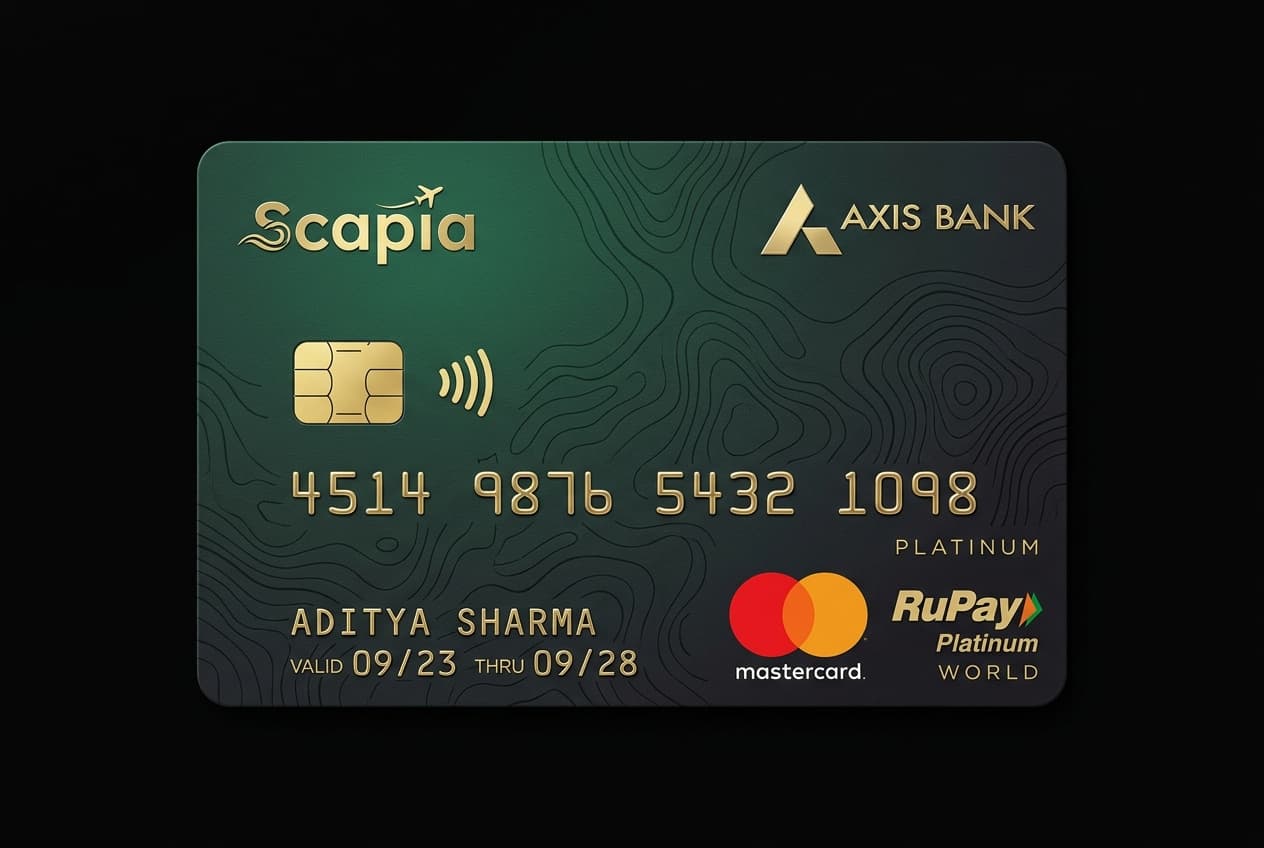
Scapia Axis Bank Credit Card
Lifetime Free Travel Credit Card with 0% Forex Markup & Unlimited Lounge Access
Updated: October 15, 2026
If I were flying out of India next week, I would not try to find one “perfect” international travel credit card.
I would carry three.
One card would handle most of my foreign-currency spending.
One would handle lounges and serious travel rewards.
And one would sit in my wallet purely as a backup from a different bank and preferably a different card network.
That sounds excessive until you actually travel.
The card that gives you the best rewards while booking your flight may charge 3.5% forex once you land abroad.
The card with zero forex may have no international lounge access.
The premium card with unlimited lounges may still charge 2% forex — but earn enough rewards to offset most of it.
And the Diners Club card that looks brilliant on paper is not the card I would want to depend on as my only payment method in a small shop somewhere in Europe or Southeast Asia.
So instead of asking:
“What is the best international travel credit card in India?”
I think the better question is:
“Which card should I use at each stage of the trip?”
That is how I would build my travel wallet in 2026.
My International Travel Card Strategy in One Table
| Job | Card I Would Consider |
|---|---|
| Zero-forex everyday spending abroad | Scapia Axis / ixigo AU / IDFC FIRST Wealth |
| Zero forex + international rewards | IDFC FIRST Mayura |
| Premium lounges + strong rewards | HDFC Infinia / Diners Club Black Metal |
| Low-forex premium alternative | AU Zenith+ |
| Booking flights and hotels | Axis Atlas / HDFC SmartBuy cards depending on the booking |
| Thomas Cook holiday package | Whichever eligible card currently gives the best instant bank offer |
| Backup abroad | Visa or Mastercard from a different bank |
The important point is that I would not automatically use the same card for every row.
Why Forex Markup Is the First Thing I Check
International spending becomes expensive surprisingly quickly when a card charges 3%–3.5% forex markup.
GST is also applicable on the markup.
For ₹1 lakh of foreign-currency spending, the approximate issuer cost looks like this:
| Forex Markup | Markup | Approx. Cost Including 18% GST on Markup |
|---|---|---|
| 0% | ₹0 | ₹0 |
| 0.99% | ₹990 | ₹1,168 |
| 2% | ₹2,000 | ₹2,360 |
| 3.5% | ₹3,500 | ₹4,130 |
That is why I no longer get excited simply because a travel card gives “2% rewards”.
If the same card charges around ₹4,130 in forex-related cost on ₹1 lakh of overseas spending, that reward rate may not mean very much.
You need to look at:
reward earned − forex cost
rather than the reward headline in isolation.
For a Lifetime-Free Zero-Forex Card, Scapia Axis Is Hard to Ignore
If I wanted a card primarily for swiping abroad without worrying about annual fees or forex markup, the Scapia Axis Bank Credit Card would be high on my shortlist.
The proposition is simple:
- ₹0 joining fee;
- ₹0 annual fee;
- zero forex markup;
- zero DCC markup under the current Axis structure;
- travel-focused rewards;
- domestic airport privileges after meeting the applicable monthly spend requirement.
That makes it very easy to keep as a dedicated travel card even if it is not your primary card in India.
Scapia's reward system uses Scapia Coins rather than normal cashback.
The Mastercard version can generate roughly 2% effective travel value on eligible everyday spending, because 5 Scapia Coins equal ₹1 of value inside the Scapia ecosystem.
But I would not choose Scapia for foreign spending because of the rewards.
I would choose it because:
0% forex + lifetime free = almost no cost to keep it available for travel.
The domestic lounge proposition is also useful. Under the current structure, spending around ₹20,000 in the qualifying monthly period unlocks unlimited eligible domestic airport lounge access.
There is no comparable international lounge programme on the card, so I would pair it with something else if international lounges are important.
My take on Scapia
Scapia Federal / Axis Bank Credit Card
Best For: Zero Forex Markup & Unlimited Lounges
Key Reward: 0% Forex Markup + 10% to 20% Travel Coins + Unlimited Lounges on ₹20k/mo spend
Annual Fee: ₹0 (Zero Annual Fee)
Best role in my wallet: international spending card and domestic lounge card.
What I would not expect it to do: replace a premium international lounge card.
ixigo AU Is Another Excellent Zero-Forex Backup
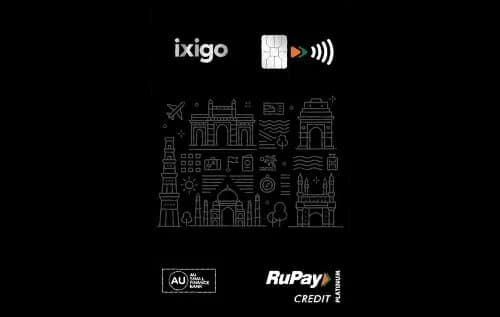
The ixigo AU Credit Card remains one of the easiest travel cards to understand.
It is currently offered lifetime free and provides:
- zero forex markup;
- 2 domestic lounge visits per quarter after meeting the current spend condition;
- 1 complimentary international Priority Pass visit each year;
- railway lounge access;
- ixigo travel benefits.
The catch is that the domestic lounge condition is now fairly significant.
You need ₹50,000 of eligible spending in the previous calendar quarter to unlock two domestic visits in the following quarter.
So if you get ixigo AU only for one international holiday every year and barely use it otherwise, don't assume your domestic lounge benefit will automatically work when you arrive at the airport.
I would view ixigo AU primarily as:
a lifetime-free zero-forex card with useful secondary travel benefits.
The single international Priority Pass visit is a nice bonus, but not enough for someone who travels internationally several times a year.
IDFC FIRST Wealth Is Probably My Favourite LTF “Everything Travel” Backup
The current IDFC FIRST Wealth Credit Card has become much more interesting after IDFC FIRST Bank moved to zero forex.
It is lifetime free and currently provides:
- zero forex markup;
- 1 domestic airport lounge visit per quarter;
- 1 international airport lounge visit per quarter;
- railway lounge access;
- travel insurance benefits.
Lounge access requires ₹20,000 of spend in the previous calendar month to activate the benefit for the following month.
For someone who can naturally meet that condition, that is potentially:
4 domestic + 4 international lounge visits per year
without paying an annual card fee.
That's an excellent combination.
But there is one major change to understand.
From October 26, 2026, IDFC FIRST Wealth's current terms say international transactions will no longer earn Reward Points.
So I would not get Wealth because I expect rewards while shopping abroad.
I would get it for:
0% forex + LTF + domestic lounges + international lounges.
That is still a very strong travel proposition.
If I Actually Wanted Rewards While Shopping Abroad, Mayura Gets Interesting
This is where things become more interesting.
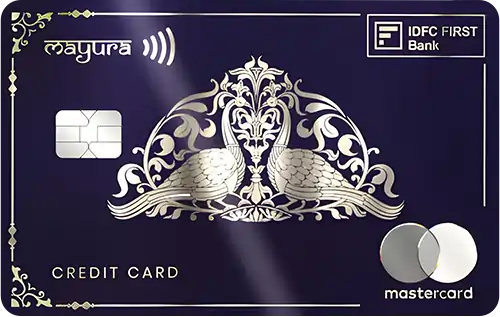
The IDFC FIRST Mayura Credit Card currently combines:
zero forex markup
with:
5X Reward Points on eligible international spending.
That is unusual.
Mayura earns 1 Reward Point per ₹150 at 1X, and international spending currently earns 5X.
So ₹150 of eligible international spend earns:
5 Reward Points
If you redeem those points for travel at the maximum ₹0.50 value per point:
5 × ₹0.50 = ₹2.50
₹2.50 ÷ ₹150 = approximately:
1.67% effective travel value
And because forex markup is zero, you're not losing 2%–4% in forex charges before you even count those rewards.
That makes Mayura one of the most interesting cards I found for someone who actually wants to earn something while shopping abroad, rather than merely avoid forex charges.
Mayura Is Expensive — But the Lounge Package Is Excellent
The problem is the annual fee.
Mayura costs:
₹5,999 + GST annually.
So this is not a card I would recommend to an occasional traveller simply because it has zero forex.
But look at the travel package:
- 4 domestic lounge visits per quarter;
- 4 international lounge visits per quarter;
- 1 domestic guest visit included within the quarterly entitlement;
- railway lounge visits;
- trip-cancellation protection;
- zero forex;
- international-spend rewards.
The lounge benefits activate after ₹20,000 of spending in the previous calendar month.
For a frequent traveller, that package is substantially stronger than what most lifetime-free cards offer.
My take on Mayura
If someone asked me:
“I want one premium card that gives me zero forex, international rewards, domestic lounges and international lounges.”
Mayura would be near the top of my current shortlist.
It is not cheap.
But at least the benefits fit the fee.
AU Zenith+ Is the Low-Forex Premium Alternative I Would Also Look At
AU Zenith+ takes a slightly different approach.
It doesn't eliminate forex completely.
Instead, it charges:
0.99% forex markup
which works out to roughly 1.17% after GST on the markup.
That is still dramatically cheaper than a conventional 3.5% forex card.
The card currently also offers:
- up to 2 Reward Points per ₹100 on dining, travel and international spending;
- 4 domestic airport lounge visits per quarter;
- 4 international airport lounge visits per quarter;
- airport Meet & Assist privileges;
- premium lifestyle benefits.
Annual fee:
₹4,999 + GST
with the current annual-fee waiver requiring substantial yearly spending.
I like Zenith+ because it sits between two extremes.
It doesn't give you the simplicity of 0% forex.
But its forex cost is low enough that rewards can offset a meaningful part of it, while its lounge package is much stronger than most free cards.
If I Already Had HDFC Infinia, I Would Definitely Carry It Abroad
This might sound strange because HDFC Infinia charges 2% forex markup.
Why carry it when zero-forex cards exist?
Because Infinia's reward economics are different.
The card earns:
5 Reward Points per ₹150
and those points can be worth:
₹1 each
when used for eligible SmartBuy flights and hotels.
That means the normal eligible reward rate can be approximately:
3.33%
Now compare that with the forex cost.
₹1 lakh of eligible foreign spending on Infinia
Approximate rewards:
₹3,333
2% forex markup:
₹2,000
GST on forex markup:
₹360
Total forex-related cost:
₹2,360
Theoretical net reward value:
₹973
or roughly:
0.97%
That is why the sentence:
“Never use a card with forex markup abroad.”
is too simplistic.
If the card earns enough valuable rewards, the economics can still work.
This calculation assumes:
- the transaction earns normal rewards;
- you value the points at ₹1;
- you actually redeem them at that value.
If you redeem poorly, the advantage disappears.
But if I already held Infinia, I would absolutely keep it in my international travel wallet.
And there is another major reason:
unlimited domestic and international airport lounge access.
For a frequent traveller, that can remove a lot of lounge-planning friction.
Diners Club Black Metal Is Similar — But I Would Never Carry Only Diners Abroad
The HDFC Diners Club Black Metal Edition follows similar reward economics:
- 5 Reward Points per ₹150;
- potentially ₹1/RP on eligible travel redemptions;
- 2% forex markup;
- unlimited airport lounge access.
Financially, it can be excellent.
But real travel isn't a spreadsheet.
Acceptance matters.
There are places where Visa and Mastercard acceptance is simply more predictable than Diners Club.
So if I were travelling with Diners Club Black, I would always carry:
a Visa or Mastercard backup from another bank.
That is not optional for me.
The worst travel-card strategy is having brilliant rewards and then discovering the merchant doesn't accept your network.
Axis Atlas Is a Card I Would Use to Book the Trip — Not Necessarily to Shop on the Trip
I like Axis Atlas.
But I would use it very differently.
Atlas currently earns:
5 EDGE Miles per ₹100
on eligible airline, hotel and Travel EDGE bookings.
It earns:
2 EDGE Miles per ₹100
on normal eligible spending.
That's an excellent travel-reward structure.
It also provides domestic and international lounge benefits depending on your Atlas tier.
The problem is overseas spending.
Forex markup is around:
3.5%
And once GST is included, that is roughly:
4.13% cost.
So if I am standing in a store in Paris buying something for ₹50,000 equivalent, Atlas probably would not be the first card I pull out.
I would rather use the zero-forex card.
But if I am sitting at home booking the airline ticket or hotel and Atlas gives me 5 EDGE Miles per ₹100?
That's where Atlas becomes interesting.
My Atlas rule
Use Atlas to book the trip.
Use the zero-forex card on the trip.
That distinction alone can save a surprising amount of money.
What If I Am Booking the Holiday Through Thomas Cook?
This is where I would stop thinking about forex completely.
If you're booking an international package through Thomas Cook India and paying the Indian entity in INR, that is fundamentally different from swiping a card at a foreign merchant.
At the time of writing, Thomas Cook is running an HDFC Bank card promotion for eligible holiday packages.
The current campaign offers, subject to the applicable transaction slabs:
up to ₹12,000 instant discount on eligible full-swipe HDFC credit-card transactions
and:
up to ₹15,000 on eligible HDFC EasyEMI transactions.
The campaign currently covers eligible Thomas Cook and SOTC domestic and international holiday packages and has its own eligibility, card and transaction restrictions.
This is exactly why I would never decide:
“Scapia has zero forex, so I'll book Thomas Cook with Scapia.”
Forex doesn't matter if Thomas Cook India is billing you in INR.
A ₹12,000 instant discount on a ₹2.5–3 lakh holiday package can easily beat an extra 1% or 2% of reward value.
One warning about EasyEMI
I would not take an EMI purely because the discount is ₹3,000 higher.
Always compare:
- interest;
- processing fee;
- GST;
- lost reward points;
- foreclosure conditions;
against the additional discount.
A ₹15,000 headline saving is not really a ₹15,000 saving if the financing costs eat most of it.
The Card I Use to Book the Trip May Not Be the Card I Carry Abroad
This is probably the most important takeaway from this entire comparison.
For example:
I might use Axis Atlas to book the airline.
I might use an eligible HDFC card for a Thomas Cook package because there is an instant discount.
I might carry Scapia Axis for normal foreign-currency purchases.
And I might carry IDFC FIRST Wealth or Mayura for lounge access.
There is nothing wrong with that.
Credit-card optimisation becomes much easier once you stop expecting one card to win every category.
How I Would Build a Low-Cost International Travel Wallet
If I wanted to minimise annual fees, I would probably build something around:
Card 1: Scapia Axis
Scapia Federal / Axis Bank Credit Card
Best For: Zero Forex Markup & Unlimited Lounges
Key Reward: 0% Forex Markup + 10% to 20% Travel Coins + Unlimited Lounges on ₹20k/mo spend
Annual Fee: ₹0 (Zero Annual Fee)
For:
0% forex + Mastercard acceptance + domestic airport benefits
Card 2: IDFC FIRST Wealth

IDFC FIRST Wealth Credit Card
Best For: Lifetime Free Domestic & International Lounges
Key Reward: 4 Domestic & 4 International Lounge Visits/Quarter + 10X Points above ₹30k/mo
Annual Fee: ₹0 (Lifetime Free)
For:
0% forex + domestic lounges + international lounges
Card 3: Another Visa/Mastercard From a Different Bank
Purely as:
backup
That third card does not need to give spectacular rewards.
Its job is to work if:
- one bank blocks the transaction;
- one network isn't accepted;
- your primary card gets lost;
- fraud controls temporarily freeze the account.
When you're thousands of kilometres from home, redundancy is worth more than an extra 0.5% reward.
How I Would Build a Mid-Premium Travel Wallet
For someone willing to pay for better travel benefits:
IDFC FIRST Mayura
IDFC FIRST Bank Mayura Metal Credit Card
IDFC FIRST Bank Mayura Metal Credit Card
Best For: Zero Forex Spends & International 5X Rewards
Key Reward: 0% Forex Markup + 5X Points on International Spend (~1.67%) + 16 Domestic & 16 International Lounges/yr
Annual Fee: ₹5,999 + GST
This would handle:
- foreign spending;
- foreign rewards;
- domestic lounges;
- international lounges.
Then I would still carry:
Scapia Axis or ixigo AU
Scapia Federal / Axis Bank Credit Card
Best For: Zero Forex Markup & Unlimited Lounges
Key Reward: 0% Forex Markup + 10% to 20% Travel Coins + Unlimited Lounges on ₹20k/mo spend
Annual Fee: ₹0 (Zero Annual Fee)
as the lifetime-free zero-forex backup.
That gives you two issuers and potentially two networks.
Simple and effective.
How I Would Build a Premium Travel Wallet
If I already held HDFC Infinia:
Infinia
would handle:
- SmartBuy bookings;
- high-value rewards;
- unlimited domestic lounges;
- unlimited international lounges;
- eligible foreign purchases where the reward economics make sense.
I would then add:
A zero-forex Mastercard from another issuer
such as Scapia Axis.
Why?
Because Infinia is Visa Infinite.
Carrying a Mastercard backup gives me both:
bank diversification + network diversification.
That's the kind of practical detail that matters once you're actually travelling.
Which Card Is Best for Shopping Abroad?
This depends on what you mean by “best”.
If I want zero cost and simplicity
I would choose:
Scapia Axis / ixigo AU / IDFC FIRST Wealth
because the issuer forex markup is zero.
If I want rewards as well
I currently find:
IDFC FIRST Mayura
more interesting because eligible international transactions continue earning 5X Reward Points while forex is zero.
If I already own Infinia
I would calculate the transaction rather than automatically avoiding it.
3.33% potential base reward value against roughly 2.36% forex + GST can still leave positive theoretical value.
If I have Axis Atlas
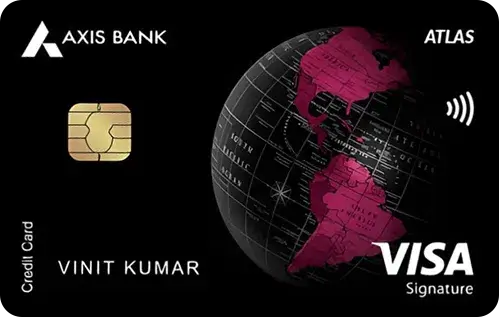
Axis Bank Atlas Credit Card
Best For: Air Miles & Frequent Flyers
Key Reward: 5 EDGE Miles / ₹100 on Flights & Hotels (Up to 10% Return)
Annual Fee: ₹5,000 + GST (Waived @ ₹15L spend)
I would normally use something else for foreign shopping because the 3.5% forex markup is too high for me unless a specific promotion changes the calculation.
Before You Travel, Check the Lounge — Not Just the Card
This deserves its own section because lounge benefits have become messy.
A card may advertise:
“8 lounge visits per year”
but that tells you almost nothing.
You still need to know:
- domestic or international;
- current airport;
- current terminal;
- participating lounge;
- spend requirement;
- previous month or previous quarter;
- Priority Pass vs physical card;
- guest eligibility;
- whether the quota has already been used.
Before every trip, I would run the card through the CardRecommend Airport Lounge Checker instead of assuming an old blog post or screenshot is still correct.
This is especially important now because Indian issuers keep changing lounge spend thresholds.
ixigo AU, Regalia Gold, AU Zenith and several other cards now have spend-linked domestic lounge programmes.
A lounge benefit that isn't activated when you reach the airport is worth exactly ₹0.
My Rule Abroad: Always Choose the Local Currency
If a card terminal in Dubai asks:
₹22,400 INR
or:
1,000 AED
I would normally choose:
AED.
If I'm in Europe:
choose euros.
Japan:
choose yen.
US:
choose dollars.
This avoids Dynamic Currency Conversion, where the merchant or payment provider converts the transaction into INR using its own rate and potentially adds another fee.
Even a zero-forex card cannot protect you from a bad merchant-side DCC conversion if you voluntarily choose to pay in INR.
The simple rule is:
zero forex card + local currency.
Zero Forex Does Not Mean Free ATM Cash Withdrawals
This is another common mistake.
Credit-card purchases and credit-card cash withdrawals are completely different.
A card can have:
0% forex markup
while still charging:
- cash-advance fee;
- ATM operator fee;
- interest;
- taxes.
Some premium cards structure overseas cash withdrawals more favourably than others, but I would never assume.
For most trips I would carry some emergency cash and use cards for purchases.
My Actual Ranking by Use Case
| Use Case | My Pick |
|---|---|
| Best LTF zero-forex card | Scapia Axis |
| Best LTF zero-forex + international lounges | IDFC FIRST Wealth |
| Best LTF alternative | ixigo AU |
| Best zero-forex card for overseas rewards | IDFC FIRST Mayura |
| Best premium low-forex alternative | AU Zenith+ |
| Best card if you already own it | HDFC Infinia |
| Best premium lounge card | Infinia / DCB Metal |
| Best for booking travel | Axis Atlas / HDFC SmartBuy card depending on booking |
| Best Thomas Cook booking card | Whichever eligible bank offer gives the highest real discount at booking time |
CardRecommend's Take
The best international travel strategy in 2026 is not finding one perfect card.
It is avoiding expensive mistakes.
The first mistake is paying 3.5% forex when a zero-forex card could do the same job.
The second is choosing a zero-forex card and assuming it also gives great rewards.
The third is paying for an expensive premium travel card and never using the lounge, milestone or travel benefits that justify the fee.
And the fourth is carrying only one card abroad.
If I were travelling internationally tomorrow, my priorities would be:
1. Zero or very low forex.
2. At least one reliable Visa/Mastercard.
3. A second issuer as backup.
4. Enough domestic and international lounge access for the actual trip.
5. Rewards only after the first four are solved.
For a low-cost setup, I think Scapia Axis + IDFC FIRST Wealth is currently extremely difficult to beat.
For someone willing to pay a premium fee, Mayura becomes interesting because it combines zero forex + international rewards + strong lounge access.
For someone who already holds Infinia, I would not rush to replace it. Its reward rate and unlimited lounge access remain strong enough that paying 2% forex can still make mathematical sense on eligible purchases.
And Axis Atlas?
I like it.
But I like it more before the flight than after I land.
That's the difference between choosing a travel credit card based on marketing and actually building a travel wallet.
Frequently Asked Questions
Which credit card is best for international travel from India in 2026?
There isn't one best card for every traveller.
For zero forex and low fees, Scapia Axis, ixigo AU and IDFC FIRST Wealth are strong options.
For premium travellers who want zero forex, rewards and lounges together, IDFC FIRST Mayura is particularly interesting.
Existing HDFC Infinia holders may also get strong value because of the card's high reward rate and unlimited lounge access despite its 2% forex markup.
Which lifetime-free credit card is best for foreign spending?
Scapia Axis is one of the strongest current LTF options because it combines zero joining and annual fees with zero forex markup.
ixigo AU and IDFC FIRST Wealth are also worth considering.
Which credit card gives zero forex plus international lounge access?
IDFC FIRST Wealth currently combines zero forex with both domestic and international lounge visits while charging no annual fee.
Mayura offers a much larger lounge allowance with zero forex, but carries a premium annual fee.
Which card gives rewards on international spending?
IDFC FIRST Mayura currently earns 5X Reward Points on eligible international transactions while charging zero forex markup.
HDFC Infinia also earns normal rewards on eligible foreign spending, although the card charges 2% forex markup.
Always check the latest card-specific exclusions before making a large purchase.
Is zero forex always better than a card with rewards?
No.
A zero-forex card is usually simpler, but a high-reward premium card can sometimes offset its forex charge.
For example, Infinia's potential 3.33% travel-redemption value can exceed its approximate 2.36% forex cost including GST on the markup.
The answer depends on reward eligibility and how you redeem the points.
Which card should I use for a Thomas Cook international holiday package?
Don't choose based on forex.
If Thomas Cook India bills you in INR, compare the current bank instant discounts first.
At the time of writing, eligible HDFC credit cards have a Thomas Cook campaign offering discounts of up to ₹12,000 on qualifying full-swipe bookings and up to ₹15,000 on qualifying EasyEMI bookings.
Offers change, so verify the live campaign before paying.
Should I use EasyEMI just to get a larger travel discount?
Not automatically.
Compare the EMI interest, processing fee, GST and any lost rewards with the additional discount.
A larger headline discount can still be worse financially after financing costs.
Which card is best for airport lounges?
For premium unlimited access, HDFC Infinia and Diners Club Black Metal are among the strongest options.
IDFC FIRST Mayura provides 4 domestic and 4 international visits per quarter after meeting the applicable spend condition.
For LTF users, IDFC FIRST Wealth provides a smaller but valuable domestic and international lounge allowance.
Before travelling, check your exact airport, terminal, lounge and spend eligibility using the CardRecommend Airport Lounge Checker.
Should I carry only one credit card abroad?
I wouldn't.
I prefer at least two cards from different banks, and ideally different card networks.
If your main card is Visa, carrying a Mastercard backup is sensible.
If your main card is Diners Club, carrying Visa or Mastercard becomes even more important.
Should I pay in INR when a foreign merchant offers currency conversion?
Usually, no.
Choose the local currency.
Paying in INR can trigger Dynamic Currency Conversion and result in an unfavourable exchange rate or separate DCC charges.
Does zero forex apply to ATM withdrawals?
Zero forex markup does not automatically mean zero cash-withdrawal cost.
ATM withdrawals can involve separate cash-advance fees, ATM operator fees and interest.
Check the specific card terms before withdrawing cash abroad.
Final Verdict
If I had an international trip coming up, I would stop looking for one card that claims to do everything.
I would build a small travel wallet.
For most people, the foundation should be a zero-forex card with no or low annual fee.
Then add the lounge card.
Then add the backup.
If I wanted to keep costs low, my current preference would be something like:
Scapia Axis + IDFC FIRST Wealth + one backup card from another bank.
If I travelled often enough to justify a premium annual fee:
IDFC FIRST Mayura + a lifetime-free zero-forex backup would be a very strong combination.
And if I already owned Infinia:
I would carry it without hesitation — but still keep a zero-forex Mastercard beside it.
Because the best international travel credit-card strategy isn't maximizing every last reward point.
It's making sure the right card is in your hand when you actually need it.
Apply for Scapia Axis Bank Credit Card
Zero forex markup on all international transactions, zero joining or annual fees, and unlimited domestic airport lounge access on eligible monthly spends.
Cards Evaluated in This Guide
Compare verified annual fees, lounge perks, and apply directly through authorized portals.
Best for: Zero Forex Markup, Travel Bookings & RuPay UPI
No complimentary lounge access
AU Zenith+ Credit Card
Best for: Luxury Travelers, Frequent International Flyers, High Spenders & Golf Enthusiasts
No complimentary lounge access
Renewal fee waived on ₹8,00,000 annual spend
Axis Bank ATLAS Credit Card
Best for: Frequent Flyers, Hotel Loyalty Maximizers & High Spenders seeking Air Miles Transfers
No complimentary lounge access

Best for: Affluent corporate executives, luxury hotel loyalists, and frequent flyers seeking maximum travel reward multipliers paired with premium lifestyle memberships.
No complimentary lounge access
Renewal fee waived on ₹8,00,000 annual spend

HDFC Bank INFINIA Metal Credit Card
Best for: Ultra-high-net-worth individuals, luxury frequent flyers, and high spenders seeking the highest reward return on travel bookings in India.
No complimentary lounge access
Renewal fee waived on ₹10,00,000 annual spend
Best for: Affluent globetrotters, international shoppers, and metal card connoisseurs seeking zero foreign currency exchange fees, exceptional global lounge/spa coverage, and never-expiring reward points.
No complimentary lounge access
Renewal fee waived on ₹9,00,000 annual spend
Best for: High-income earners, corporate executives, and global travelers looking for comprehensive airport lounge and golf privileges without paying recurring annual credit card maintenance fees.
No complimentary lounge access
Best for: Budget International Travelers, Train & Flight Bookers, Online Shoppers & UPI Commuters
No complimentary lounge access
Frequently Asked Questions
Verified answers to common applicant questions
Q1Which credit card is best for international travel from India in 2026?
Q2Which lifetime-free credit card is best for foreign spending?
Q3Which credit card gives zero forex plus international lounge access?
Q4Which card gives rewards on international spending?
Q5Is zero forex always better than a card with rewards?
Q6Which card should I use for a Thomas Cook international holiday package?
Q7Should I use EasyEMI just to get a larger travel discount?
Q8Which card is best for airport lounges?
Q9Should I carry only one credit card abroad?
Q10Should I pay in INR when a foreign merchant offers currency conversion?
Q11Does zero forex apply to ATM withdrawals?
CardRecommend bases all reward percentages, fee policies, and milestone thresholds on official issuer MITCs, schedule of charges, and RBI circulars.
Already have credit cards in your wallet?
Check which ones grant complimentary entry at your departure airport and terminal with verified quarterly spend hurdle criteria.
.jpeg&w=1920&q=75&dpl=dpl_ArBHYoH31WhwmH35kA2ndM5jyiZ5)
Founder & Editor, CardRecommend
Founder & Editor of CardRecommend. Dedicated to researching credit card reward structures, fee waivers, airport lounge policies, and calculating real user value across Indian financial products.
Recommended Research & Comparisons
Expand your card strategy with related category breakdowns.
Credit Card Review
HDFC Regalia Gold Credit Card Review 2026: Still Worth the ₹2,500 Fee After the Devaluation?
Analyzing the new 5 RP/₹200 reward rate, ₹60K quarterly lounge hurdle, milestone vouchers, and whether HDFC's popular travel card still delivers value in 2026.
News & Regulatory Updates
AU Zenith & Vetta Credit Cards Devalued: Forex Markup Jumps to 3.49%, Fuel Waiver Slashed From October 2026
AU Small Finance Bank has increased forex markup to 3.49% on AU Zenith and Vetta, while reducing monthly fuel-surcharge waiver limits to ₹100 from October 1, 2026.
News & Regulatory Updates
YES BANK Niyo Credit Card Launched: Lifetime Free, 0% Forex & International Lounge Access
Niyo and YES BANK launch their first unsecured credit card with 0% forex markup, lifetime-free pricing, Niyo Coins rewards and international lounge access.
News & Regulatory Updates
IDFC FIRST Bank Credit Cards Get Zero Forex Markup — And International Spends Continue Earning Rewards
IDFC FIRST Bank has extended zero forex markup across its credit card portfolio while retaining applicable reward points on international transactions. Here's what changed, fee comparisons, DCC cautions, and the October 26 discrepancy cardholders must watch.

Best Cards / Top Picks
Best Travel & Air Miles Credit Cards in India (2026): Ranked by Net Value
From high-yield airline partner transfers and hotel milestone vouchers to zero forex markup and luxury privileges.

Comprehensive Guide
Best Credit Cards for Airport Lounge Access in India (2026 Guide)
Analyzing 2026 quarterly spend thresholds, unlimited lounge tiers, Priority Pass guest rules, and zero-spend access cards.