Executive Summary
If your card is charged but a PoS or online payment fails, RBI rules may require reversal within T+5 calendar days. If the deadline is missed, ₹100 per day compensation can apply — but only in specific failed-transaction scenarios.
In This Guide
A card payment fails. The merchant says the transaction did not go through, but your credit card or bank account still shows the amount charged.
Most customers wait for the money to come back.
What many do not realise is that RBI already prescribes a deadline for reversing certain failed payment transactions — and if the responsible bank or payment-system participant misses that deadline, the customer may be entitled to ₹100 for every day of delay.
This is not a new October 2026 RBI rule.
The compensation framework dates back to RBI's September 2019 circular on failed transactions using authorised payment systems and took effect from 15 October 2019.
Fresh coverage in October 2026 has simply brought the rule back into attention.
For failed card payments at a physical merchant or on an e-commerce website, the key deadline is generally:
T + 5 calendar days
If the eligible failed transaction has still not been reversed after that deadline, compensation is:
₹100 per day of delay beyond T+5.
RBI says the compensation should be credited suo motu — automatically — without waiting for the customer to make a claim.
Rules verified: 20 October 2026
The Short Answer
You may be entitled to ₹100 per day if:
- your card/account was actually debited or charged
- the payment was not successfully confirmed at the merchant
- the transaction falls within RBI's failed-transaction framework
- the required reversal does not happen within the prescribed TAT
- the transaction is a domestic transaction covered by the framework
For a failed PoS or e-commerce card transaction, the prescribed auto-reversal period is:
T+5 calendar days
The ₹100 compensation starts only after that deadline is missed.
It is not ₹100 simply because a card payment failed.
This Rule Has Existed Since 2019
RBI issued its harmonised Turn Around Time, or TAT, framework on 20 September 2019.
It became effective on 15 October 2019.
The framework covers unsuccessful transactions across several payment systems, including:
- card payments
- ATMs
- UPI
- IMPS
- certain prepaid payment instruments
- other covered authorised payment systems
RBI introduced the framework to create uniform reversal and compensation timelines for failed transactions.
So headlines suggesting RBI suddenly introduced ₹100-per-day compensation in October 2026 are misleading.
The consumer protection is old.
The renewed attention is new.
When Does the ₹100 Rule Apply to a Failed Credit Card Payment?
For a normal card purchase, there are two particularly important RBI categories.
1. Failed Point-of-Sale Transaction
This covers a card-present payment at a physical merchant where:
- the customer's account/card is debited
- but the merchant does not receive transaction confirmation
- and the transaction is not successfully completed
The required auto-reversal period is:
T + 5 days
Compensation for delay beyond that deadline:
₹100 per day
2. Failed E-commerce Card Transaction
RBI separately covers Card Not Present, or CNP, transactions such as e-commerce payments.
The relevant situation is:
- the customer's account/card is debited
- but confirmation is not received by the merchant's system
Again:
Auto-reversal: T + 5 days
Compensation after T+5: ₹100 per day of delay.
What Does T+5 Actually Mean?
RBI defines T as the calendar date of the transaction.
So T+5 means five calendar days after the transaction date — not five working days.
Suppose an eligible failed e-commerce transaction happens on 1 October.
T = 1 October.
The reversal should be completed within:
T+5 = 6 October
If the money is finally reversed on 10 October, the delay beyond the prescribed timeline is four days.
Potential compensation:
4 × ₹100 = ₹400
The compensation is separate from the reversal of the original transaction amount.
You are not choosing between getting the money back and getting compensation.
Where the rule applies, the original failed transaction must be reversed and the delay compensation is additional.
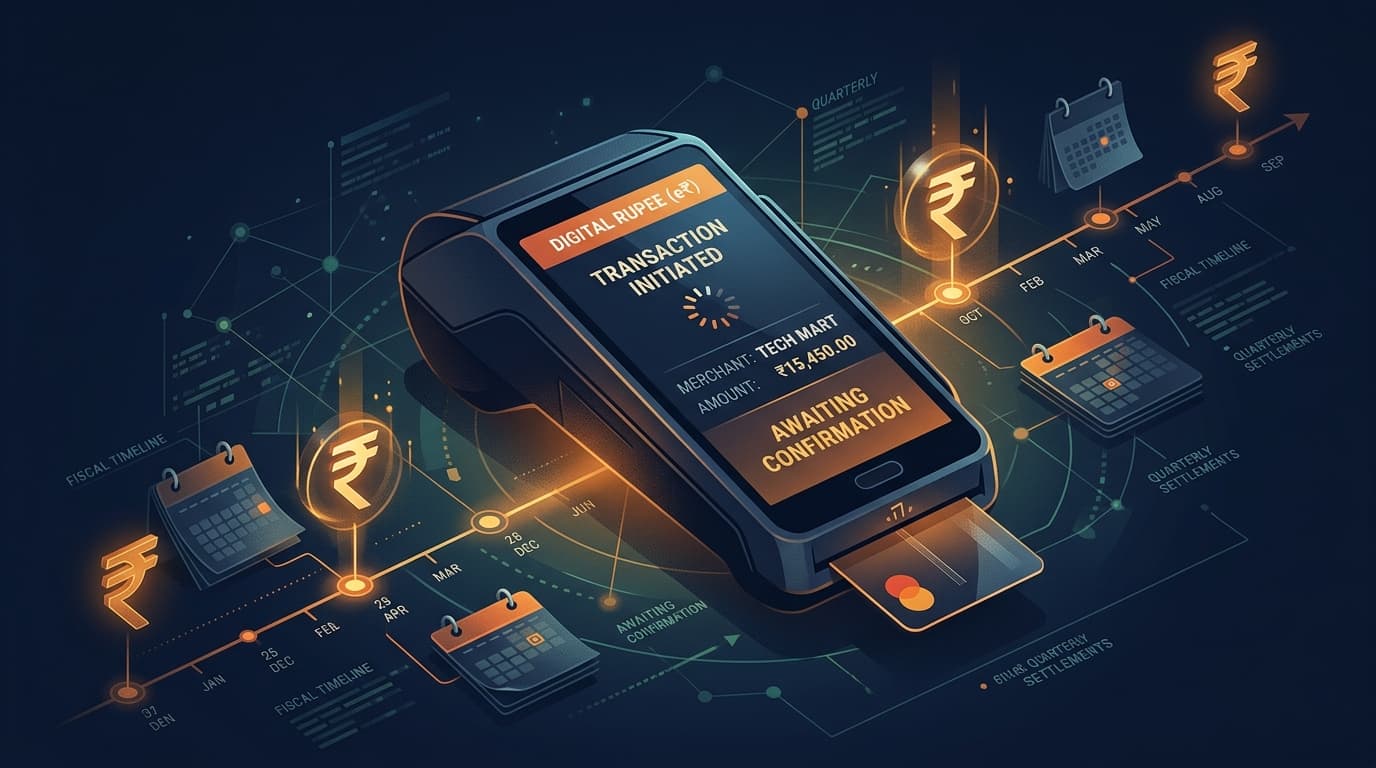
### Check Your Failed Transaction Timeline - Transaction Date (T): Note the calendar date your card or account was charged (e.g. 1 October). - Transaction Type: Physical PoS swipe, online e-commerce payment, ATM cash failure, or UPI merchant transaction. - Mandatory Reversal Deadline: T + 5 calendar days (e.g. 6 October). - Days Delayed: Count each calendar day elapsed beyond T+5 until the reversal reaches your account. - Compensation Rate: ₹100 per calendar day of delay beyond T+5, credited suo motu (automatically).
Not Every Failed-Looking Card Transaction Qualifies
This is the most important limitation.
The ₹100 rule is not a blanket penalty covering every situation where you are waiting for money from a bank or merchant.
The RBI framework deals with unsuccessful transactions that have not been fully completed for reasons not attributable to the customer.
For card payments, the relevant PoS/e-commerce scenario is a debit without successful merchant confirmation.
That is different from several other common situations.
A Merchant Refund Is Not the Same as a Failed Transaction
Suppose you buy something successfully and later cancel the order.
The merchant agrees to refund ₹10,000.
That is a merchant refund after a successful transaction.
It is not automatically the same thing as the failed card-payment scenario covered by the T+5 rule.
Likewise, if you return a product or cancel a hotel booking after the original card payment completed successfully, do not automatically assume the ₹100-per-day failed-transaction compensation applies.
The original transaction succeeded.
The subsequent refund is a different process.
A Chargeback or Merchant Dispute Is Also Different
Consider another situation.
You pay ₹20,000 to a merchant.
The merchant receives the payment, but:
- the product never arrives
- the service is not provided
- the amount is wrong
- you dispute the transaction
That may give rise to a card dispute or chargeback.
But it is not the same as:
card charged + merchant never received successful transaction confirmation
The T+5 auto-reversal framework should therefore not be treated as a shortcut for every merchant dispute.
Fraudulent Transactions Are a Separate Consumer-Protection Issue
An unauthorised transaction on your card is also different.
RBI has separate customer-protection rules dealing with unauthorised electronic banking transactions and customer liability.
Do not confuse those rules with the failed-transaction ₹100-per-day compensation framework.
One concerns a payment that failed technically.
The other concerns a transaction you say you did not authorise.
The correct complaint process and liability questions can therefore be different.
What About a Pending Credit Card Transaction?
A pending card authorisation can look like a charge even when the transaction has not yet fully posted.
That can happen at hotels, petrol pumps, online merchants and other businesses.
The failed-card rule specifically concerns the relevant failed-payment scenario where the account/card is debited without successful confirmation at the merchant.
So if your banking app merely shows a temporary pending authorisation, first establish:
- whether the amount has actually posted/debited
- whether the merchant received the transaction
- whether the transaction actually failed
Do not calculate compensation solely from a "pending" label in an app.
The Rule Applies to Covered Domestic Transactions
RBI's harmonised TAT framework applies to covered domestic transactions where both the originator and beneficiary are within India.
So do not automatically apply the T+5/₹100 framework to an overseas card transaction simply because an Indian bank issued the card.
International transactions can involve different settlement, card-network and dispute rules.
The Bank Should Not Wait for You to Ask for Compensation
One of the strongest parts of the RBI framework is that compensation is supposed to be automatic.
RBI says where financial compensation is involved, it should be credited to the customer's account suo motu without waiting for a complaint or claim.
In simple terms:
The bank should not be able to say:
"You didn't ask for ₹100 per day, so we didn't pay it."
If the prescribed reversal deadline has been breached in a qualifying failed transaction, the framework expects the compensation to be credited automatically.
That does not mean customers should stay silent if it does not happen.
Keep records and complain.
RBI Deadlines for Other Common Failed Transactions
Credit cards are only one part of the failed-transaction framework.
| Failed transaction | Maximum reversal timeline | Compensation after deadline |
|---|---|---|
| ATM: account debited, cash not dispensed | T+5 days | ₹100/day |
| Card-to-card transfer: debited but beneficiary card not credited | T+1 day | ₹100/day |
| PoS card payment: debited, merchant confirmation not received | T+5 days | ₹100/day |
| E-commerce card payment: debited, merchant confirmation not received | T+5 days | ₹100/day |
| IMPS: debited, beneficiary not credited | T+1 day | ₹100/day |
| UPI funds transfer: debited, beneficiary not credited | T+1 day | ₹100/day |
| UPI merchant payment: debited, merchant confirmation not received | T+5 days | ₹100/day |
These timelines are outer limits.
Banks and payment-system participants should endeavour to resolve failed transactions faster.
UPI Has Different Deadlines Depending on What Failed
This distinction is easy to miss.
If you send money through UPI and:
your account is debited but the beneficiary is not credited
the applicable deadline is generally:
T+1
But if you make a UPI merchant payment and:
your account is debited but the merchant does not receive confirmation
the deadline is:
T+5
Both can attract ₹100 per day after the applicable deadline is exceeded.
So "failed UPI transaction" does not always mean the same turnaround time.
ATM Failed Transactions Also Use T+5
If an ATM debits your account but does not dispense the cash, the applicable failed-transaction framework requires a proactive reversal within a maximum of:
T+5 calendar days
Delay beyond that period attracts:
₹100 per day
What Should You Do After a Failed Card Transaction?
Even though reversal and compensation are supposed to happen automatically, document the issue immediately.
Keep:
- transaction date and time
- amount
- card used
- merchant name
- transaction/reference number
- SMS or app debit alert
- screenshot showing the charge
- merchant confirmation that the payment failed, if available
- bank complaint number
- reversal date
- bank correspondence
Then count from the actual transaction date using the applicable RBI TAT.
For a qualifying failed PoS/e-commerce card payment:
Transaction date = T
Deadline = T+5 calendar days
If the transaction remains unreversed after that, raise the missed TAT and compensation issue specifically with the card issuer.
Do not complain only that:
"My refund hasn't come."
If the facts genuinely match the RBI definition, state clearly that you are reporting a failed card transaction covered by the RBI TAT framework.
What If the Bank Reverses the Amount but Doesn't Pay the ₹100 Per Day?
The compensation obligation does not disappear merely because the original amount eventually comes back.
If a qualifying transaction was reversed after the applicable RBI deadline, the delay itself is what triggers compensation.
Example:
Required reversal:
T+5
Actual reversal:
T+9
Delay beyond prescribed timeline:
4 days
Potential compensation:
₹400
If the transaction meets the framework and compensation is missing, raise a complaint with the bank/payment provider and include:
- transaction date
- required deadline
- actual reversal date
- number of delayed days
- compensation calculation
What If the Bank Says "Merchant Reconciliation Is Pending"?
RBI's framework was designed to impose uniform turnaround times across authorised payment systems.
The TAT is an outer limit.
Internal reconciliation between participating entities should not become an indefinite reason for keeping customer funds stuck beyond the applicable framework.
The consumer-facing question remains:
Did this qualify as an RBI-defined failed transaction, and was the required reversal completed within the prescribed TAT?
If not, compensation may apply.
How to Escalate the Complaint
The first step is to complain to the bank or other relevant regulated entity.
Keep the complaint/reference number.
If the complaint is not resolved within the applicable timeline, or the bank gives a response you are dissatisfied with, the matter can be escalated through RBI's Ombudsman/Complaint Management framework, subject to the current eligibility and waiting rules.
Use CardRecommend's separate RBI complaint/escalation guide if available.
Do not reproduce an entire Ombudsman procedure here if a dedicated internal guide already exists.
### See How to Escalate a Credit Card Complaint - Step 1 (Internal Redressal): Lodge a formal complaint with your card issuer's Customer Care or Principal Nodal Officer and retain your docket number. - Step 2 (RBI Ombudsman): If the complaint is unresolved after 30 days or rejected, escalate to the Reserve Bank of India via the CMS portal at cms.rbi.org.in.
Do Not Wait Months Assuming the Bank Will Fix It Eventually
The ₹100-per-day framework exists because failed digital transactions should not leave customer funds stuck indefinitely.
The safest approach is still to report the issue promptly.
The RBI rule requiring automatic reversal does not stop you from logging a complaint on day one.
Doing so creates an audit trail and gives you evidence if the applicable TAT later expires.
CardRecommend Verdict
The ₹100-per-day compensation rule is real, useful and widely misunderstood — but it is much narrower than some headlines make it sound.
A failed credit-card payment does not automatically earn ₹100 every day.
For PoS and e-commerce card transactions, the key RBI scenario is:
your card/account was debited, the merchant did not receive successful transaction confirmation, and the required reversal did not arrive within T+5 calendar days.
Once that deadline is breached in a qualifying domestic failed transaction, the compensation is:
₹100 per day of additional delay
and RBI says it should be credited automatically.
The most important thing for consumers is therefore to identify what kind of problem they actually have.
If the original transaction succeeded and you are waiting for a merchant refund, this is not automatically the same rule.
If you are disputing a purchase, that may be a chargeback issue.
If the transaction was fraudulent, separate customer-liability protections apply.
But if it genuinely was a failed card transaction covered by RBI's TAT framework, do not accept an indefinite "please wait" response from the bank.
Check the transaction date.
Check the applicable deadline.
Keep the evidence.
And if the bank misses the prescribed reversal timeline, ask not only for the reversal — ask why the automatic ₹100-per-day compensation has not been credited.
Frequently Asked Questions
Is ₹100-per-day compensation for failed card transactions a new RBI rule in 2026?
No. The relevant RBI failed-transaction TAT and compensation framework dates to 2019 and took effect on 15 October 2019. Fresh 2026 coverage has brought attention back to the existing rule.
How long can a bank take to reverse a failed credit-card transaction?
For a qualifying failed PoS or e-commerce card transaction where the account is debited but the merchant does not receive successful confirmation, the prescribed auto-reversal period is: T+5 calendar days.
How much compensation do I get if the reversal is late?
For covered failed-card scenarios, the framework prescribes: ₹100 per day of delay beyond the applicable TAT.
Do I need to claim the ₹100 compensation?
The RBI framework says applicable compensation should be credited suo motu, meaning automatically without waiting for the customer to claim it.
Does the rule apply if an online order was successfully paid and later cancelled?
Not automatically. A refund following a successfully completed purchase is different from a qualifying failed card transaction.
Does the rule apply to an unauthorised credit-card transaction?
Do not assume so. Unauthorised electronic transactions are governed by separate customer-protection and liability rules.
Does the rule apply to international card transactions?
Do not automatically apply it. The RBI framework discussed here covers specified domestic transactions.
What should I do if my bank misses the T+5 deadline?
Raise a complaint with the bank, provide the transaction date and reversal details, and specifically refer to the failed-transaction TAT and applicable compensation. If the complaint remains unresolved, use the applicable RBI complaint/escalation mechanism.

Founder & Editor, CardRecommend
Founder & Editor of CardRecommend. Dedicated to researching credit card reward structures, fee waivers, airport lounge policies, and calculating real user value across Indian financial products.