Executive Summary
The SBM ZET Credit Card looks almost perfect for someone who has never had a credit card: start with a ₹2,000 FD, no income proof, RuPay UPI support, and ₹0 annual fee. But new late fees, a 2-year closure penalty of ₹499 + GST, and 42% revolving interest change how beginners should approach it.
In This Guide
The SBM ZET Credit Card looks almost perfect for someone who has never had a credit card.
You can start with a fixed deposit of only ₹2,000.
You don't need conventional income proof or an existing credit history.
The card runs on RuPay, works with UPI, has ₹0 joining fee and ₹0 annual fee, and the FD continues earning interest while securing the credit limit.
But “lifetime free” does not mean completely fee-free.
From 23 October 2026, SBM Bank made two changes that matter especially to the exact audience ZET targets.
Its late-payment charge changed from a flat ₹299 to:
5% of total outstanding, minimum ₹50 and maximum ₹1,000, plus GST.
And if you close the ZET card during the first:
two years after activation
SBM now charges:
₹499 + GST.
That second change matters because a secured card is often supposed to be temporary.
The usual plan is:
build a credit history → qualify for an unsecured card → release the FD.
ZET still does that job well.
But it now works best for someone willing to keep the card for at least two years, pay every statement in full, and treat the cashback programme as optional rather than the primary reason to apply.
Terms verified: 25 October 2026
Quick CardRecommend Take
The SBM ZET Credit Card remains one of the easiest ways to begin building a credit profile with very little capital.
Its strongest features are:
₹2,000 minimum FD
90% of the FD as credit limit
₹0 joining and annual membership fee
RuPay + UPI
no conventional income-proof requirement
Its biggest weaknesses are:
₹499 + GST early-closure fee for two years
42% annual revolving interest
2.49% forex markup
and the fact that its headline 2% UPI cashback requires a paid ZET Plus subscription.
If you need a credit card with only ₹2,000–₹10,000 available for an FD, ZET remains genuinely useful.
If you can comfortably lock ₹20,000 or more and care about zero forex, stronger rewards or travel benefits, there are better secured cards.
SBM ZET Credit Card at a Glance
| Feature | Current SBM ZET proposition |
|---|---|
| Card type | FD-backed secured credit card |
| Network | RuPay |
| Minimum FD | ₹2,000 |
| Credit limit | 90% of FD |
| Physical card | From ₹5,000 FD; lower FD receives virtual card |
| Joining fee | ₹0 |
| Annual fee | ₹0 |
| Renewal fee | ₹0 |
| FD interest | ZET advertises up to 7% p.a. |
| UPI support | Yes, through RuPay / ZET UPI |
| Headline UPI cashback | 2% with active ZET Plus |
| Forex markup | 2.49% |
| Late-payment fee | 5% outstanding; ₹50 minimum / ₹1,000 maximum + GST |
| Early cancellation | ₹499 + GST within first 2 years |
| Revolving interest | 3.5% monthly / 42% annually |
| Rent fee | 1% + GST |
| Education fee | 1% + GST |
| Lounge access | No current complimentary lounge proposition found |
| Income proof | Not required under current ZET positioning |
| Main use case | Building/rebuilding credit |
SBM's current secured-card terms confirm the 90%-of-FD limit and ₹0 annual pricing, while ZET's current application page advertises the ₹2,000 entry deposit and no-income-proof positioning.
The ₹2,000 Minimum FD Is ZET's Real Competitive Advantage
A lot of secured credit cards become unattractive for beginners because you first need to lock ₹10,000, ₹20,000 or even more into an FD.
ZET starts at:
₹2,000.
Because SBM sets the ZET limit at 90% of the linked FD:
| FD | Approximate credit limit |
|---|---|
| ₹2,000 | ₹1,800 |
| ₹5,000 | ₹4,500 |
| ₹10,000 | ₹9,000 |
| ₹20,000 | ₹18,000 |
| ₹50,000 | ₹45,000 |
That makes ZET useful for someone who simply wants a reported credit line without tying up much capital.
You do not need a ₹1 lakh credit limit to start building credit.
A ₹5,000 or ₹10,000 FD can be enough if you use the card conservatively and pay every bill in full.
₹2,000 Gets You the Card — But Not the Physical Card
This is an easy detail to miss.
SBM's current MITC distinguishes between:
FD below ₹5,000 → virtual ZET card
and:
FD of ₹5,000 or more → physical card
with no separate physical-card issuance fee under the current ZET schedule.
So although the real minimum FD is ₹2,000, someone who specifically wants a physical card should think of:
₹5,000
as the practical entry point.
What Happens to Your FD?
The FD is collateral.
That means it is not simply an ordinary deposit sitting freely available while you use the card.
SBM says the linked deposit is placed on auto-renewal, and the ZET card exists because that deposit remains pledged to the bank.
The FD continues earning interest.
But you cannot treat the pledged principal as emergency cash while keeping the secured card active.
SBM's current terms say that when the secured credit card is closed, the linked FD is also closed. Any card outstanding is deducted, and the remaining FD principal plus applicable earned interest is returned to the source account.
That makes the card and FD economically connected.
You cannot close one and simply expect the other to continue unchanged.
The FD Can Also Have a Premature-Closure Cost
SBM's ZET card agreement goes further.
It says the linked FD remains on auto-renewal while the secured card continues, and it does not permit partial withdrawal of the pledged deposit.
If the FD is liquidated before completion of its tenure, SBM's ZET agreement describes a 1% penalty on accrued interest for premature liquidation.
So a customer closing ZET early can potentially face two separate economic effects:
Card cancellation fee
and:
premature FD interest adjustment
depending on when the linked deposit is terminated.
That is why the new two-year card-closure rule matters.
How Much Interest Does the ZET FD Earn?
ZET currently advertises:
up to 7% p.a.
on the linked fixed deposit.
The exact applicable rate depends on the deposit tenure and terms offered when the FD is booked.
At exactly 7%, before tax:
₹2,000 FD → about ₹140/year
₹10,000 FD → about ₹700/year
₹20,000 FD → about ₹1,400/year
₹50,000 FD → about ₹3,500/year
This interest is not a credit-card reward.
It is the return on your own deposit.
Also note that SBM Bank's general retail FD rate table can contain rates different from ZET's advertised “up to 7%” proposition.
CardRecommend should therefore store the ZET-linked FD rate separately from SBM's generic highest FD rate rather than assuming the bank's best public FD rate automatically applies to every ZET deposit.
Is ZET Actually Lifetime Free?
Yes — in the conventional credit-card sense.
SBM's current terms show:
Membership fee: ₹0
Annual maintenance fee: ₹0
Renewal fee: ₹0
There is no annual-spend condition required to retain that ₹0 annual fee.
So CardRecommend should continue classifying ZET as:
Lifetime Free: Yes
But that should not be interpreted as:
“You can never pay a fee for owning or leaving ZET.”
There are several other charges.
The most important is now the early-cancellation fee.
The October 23 Change Makes Early Exit More Expensive
Until 22 October 2026, SBM charged:
₹499
if ZET was cancelled within the first year of activation.
Effective 23 October 2026, that same fee applies if the card is cancelled within:
two years of activation.
GST applies to SBM's fees.
At the current 18% GST rate:
₹499 + ₹89.82 = ₹588.82
So a person taking ZET for 12–18 months purely to establish a credit history should now include roughly:
₹589
in the cost of exiting early.
That does not make ZET expensive.
But it changes the economics of using it as a temporary bridge.
The New Late Fee Can Be Cheaper — or Much More Expensive
ZET's old late-payment fee was:
₹299
The new structure is:
5% of outstanding
with:
₹50 minimum
and:
₹1,000 maximum
plus GST.
The old and new base fees meet at:
₹299 ÷ 5% = ₹5,980
So:
| Outstanding balance | New base late fee |
|---|---|
| ₹500 | ₹50 minimum |
| ₹1,000 | ₹50 |
| ₹2,000 | ₹100 |
| ₹5,000 | ₹250 |
| ₹5,980 | ₹299 |
| ₹10,000 | ₹500 |
| ₹15,000 | ₹750 |
| ₹20,000+ | ₹1,000 maximum |
Below roughly ₹5,980, the new fee is actually cheaper than the old ₹299.
Above it, the charge becomes more expensive.
At ₹20,000 outstanding:
₹1,000 + 18% GST = ₹1,180
versus the old:
₹299 + GST = ₹352.82
That is a major increase.
But the Bigger Problem Is the 42% Interest Rate
Late fees should not determine whether you choose a credit card.
If you pay on time, you never pay them.
The real danger is carrying a balance.
SBM currently charges ZET:
3.5% per month
or:
42% per annum
on POS/e-commerce balances after the interest-free period.
That means ZET should not be used as cheap borrowing.
It should be used as:
a payment instrument that builds credit history.
Pay the full statement every month.
If you regularly revolve balances, the entire secured-card strategy stops making financial sense.
ZET Is Good for Credit Building — But It Cannot Guarantee a Score
ZET heavily markets the card as a tool to build a 750+ or 800+ credit score.
The underlying mechanism is legitimate.
A secured credit card creates a credit account.
Your usage and repayment behaviour can be reported to credit bureaus.
Paying on time and keeping utilisation sensible can help build a positive credit history. ZET itself says it reports card usage and repayments to credit bureaus.
But CardRecommend should never promise:
“Take ZET and you will reach 800 in six months.”
A credit score depends on your entire credit file.
ZET can help establish history.
It cannot guarantee a particular CIBIL or Experian score.
How Should a Beginner Use ZET?
A secured credit card is most useful when you keep things boring.
Suppose you open a:
₹10,000 FD
giving approximately:
₹9,000 credit limit.
Instead of spending ₹8,000 every month just because you can, use the card for ₹1,000–₹2,000 of normal spending and pay the full statement on time.
That keeps utilisation much more manageable.
The purpose is to build a clean record.
Not to maximise the amount of credit you can extract from the FD.
ZET Is a RuPay Card With UPI Support
For Indian everyday use, this is one of ZET's best practical features.
The current ZET FD card supports credit-card payments through:
ZET UPI
and the RuPay network.
That means a user building credit can route ordinary merchant QR payments through the card rather than needing a physical POS machine.
For someone new to credit cards, that makes the card much easier to use regularly.
But there is a major difference between:
UPI support
and:
2% free UPI cashback.
The 2% UPI Cashback Is Not Free
ZET currently advertises:
flat 2% cashback on ZET UPI payments
but only for users with an active:
ZET Plus subscription.
The live ZET page currently describes Plus as costing roughly:
₹3/day
while also displaying monthly tiers of:
₹49/month
and:
₹99/month
before GST.
Because the page simultaneously exposes different subscription presentations, CardRecommend should not hardcode one universal ZET Plus price without checking which plan the user is actually offered in-app.
The important point is simpler:
2% is a paid reward tier.
Is Paying for ZET Plus Worth It?
It depends on UPI spending.
Suppose the applicable plan shown to you costs:
₹99 + GST/month.
At 18% GST:
₹116.82
If you earn 2% cashback, the monthly UPI spending needed merely to recover that subscription cost is:
₹116.82 ÷ 2% = ₹5,841
So at:
₹3,000/month UPI
2% cashback:
₹60
You would lose money versus a ₹116.82 subscription.
₹10,000/month UPI
Gross cashback:
₹200
Less ₹116.82 subscription:
₹83.18 net
₹20,000/month UPI
Gross cashback:
₹400
Less ₹116.82:
₹283.18 net
This is only an illustration using the ₹99 tier currently displayed by ZET.
If your app offers a different qualifying subscription tier, the break-even changes.
There Is Also a ZCoins Cap
ZET says its basic plan has a monthly ZCoins cap of:
1,000
while ZET Plus increases that to:
2,000
and gives Plus ZCoins lifetime validity.
However, the live public page does not present enough reward-ledger detail beside those caps for CardRecommend to safely translate:
2,000 ZCoins = ₹X
as a universal rupee cap.
So the card page should preserve the ZCoin cap itself rather than inventing a cash equivalent.
ZET does say cashback can be converted into cash and transferred to the user's bank account.
Voucher Rewards Are Better Than the Base Card Rewards
Without ZET Plus, the card's reward story is primarily built around the ZET marketplace rather than ordinary card spending.
ZET currently advertises:
- 5% cashback on selected Amazon Pay and Flipkart vouchers
- up to 15% cashback across 80+ brand vouchers
- discounts with brands such as Swiggy, Zomato, Instamart and BookMyShow.
Those offers can be valuable if you were going to buy the vouchers anyway.
But they do not make ZET a flat-reward cashback card.
There is a meaningful difference between:
earning 2% on every normal card transaction
and:
getting higher cashback through selected vouchers and a paid UPI programme.
ZET belongs in the second category.
Rent and Education Payments Now Cost Extra
Another 2026 change matters for users trying to route large spends through the card.
From 15 July 2026, SBM applies:
1% fee on eligible rental transactions
and:
1% fee on eligible education transactions
for ZET, plus applicable GST.
So ZET should not be used as a workaround to earn credit history from large rent or education spends without first checking the economics.
ZET Is Not a Travel Card
The current ZET proposition does not advertise complimentary airport-lounge access, and SBM's current ZET MITC does not list a lounge entitlement.
That is completely reasonable.
A ₹2,000-FD credit builder does not need to pretend to be a premium travel card.
But readers should not confuse:
RuPay card
with:
RuPay Select premium benefits.
ZET is not a RuPay Select lounge product.
The 2.49% Forex Markup Is Also Too High for a Travel Card
ZET currently charges:
2.49% forex markup
on foreign-currency transactions.
GST also applies to the fee.
For ₹1 lakh equivalent of international spending:
Forex markup:
₹2,490
GST at 18%:
₹448.20
Approximate issuer forex-related cost:
₹2,938.20
That is far better than nothing, but substantially worse than secured cards offering:
0% forex.
If you travel internationally, ZET should not be your reason for avoiding a separate travel card.
Physical Cash Withdrawal Is Even More Expensive
SBM's current terms charge ZET:
3.5% of the cash withdrawn or ₹300, whichever is higher
for ATM cash withdrawal, with interest applying from the transaction date.
This is an emergency facility.
Not a benefit.
Avoid withdrawing cash on the card unless absolutely necessary.
What Happens If You Stop Paying?
The FD protects the bank.
It does not protect your credit score.
SBM's ZET agreement says that if card dues remain unpaid for 60 days past the due date, the bank can liquidate the FD and use the proceeds to recover the outstanding balance.
It can also report the delinquency to credit bureaus.
That means:
“It's FD-backed, so missing payments doesn't matter”
is completely wrong.
You can lose FD value and damage the credit history you opened ZET to improve.
Closing ZET Also Means Closing the Linked FD
This is one of the most useful facts to understand before applying.
SBM states that when the secured ZET card is closed:
the linked FD is also closed.
After card dues are adjusted, the remaining FD amount and applicable earned interest are settled back to the source account.
So if your plan is:
“I'll build credit for a year, close the card and keep the same FD running.”
that is not how SBM's current secured-card structure is written.
The card and FD are linked.
The Two-Year Exit Fee Changes the Best Holding Strategy
Before the October change, keeping ZET for around one year could be a sensible credit-building plan.
Now the cleaner strategy is:
if you take the card, plan to keep it for at least two years unless you have a strong reason to leave earlier.
That does not mean you must actively spend on it for two years.
Once you obtain a better unsecured card, ZET can become a low-activity backup credit line.
But if you close before the two-year point, the cancellation fee can apply.
Does ZET Have Any Income Requirement?
ZET currently markets the FD card as:
no income proof needed
and suitable for people without an established credit history.
That is exactly why the product exists.
The FD substitutes for the bank taking unsecured credit risk.
This makes ZET relevant for:
- students
- first-time earners
- homemakers
- freelancers without conventional salary documents
- people rebuilding a damaged credit profile
- people repeatedly rejected for normal unsecured cards
Final issuance remains subject to applicable KYC and issuer processes.
One Important 2026 Application Detail: Check the Issuer
ZET's current website now promotes FD-backed cards with multiple banking partners, including:
SBM Bank, DCB Bank and Indian Overseas Bank.
This article is specifically about the:
SBM Bank ZET Credit Card.
Do not assume every ZET-branded application flow now produces the exact same card terms.
Before opening the FD, confirm:
- issuing bank
- network
- KFS
- FD rate
- fees
- reward terms
on the actual application screen.
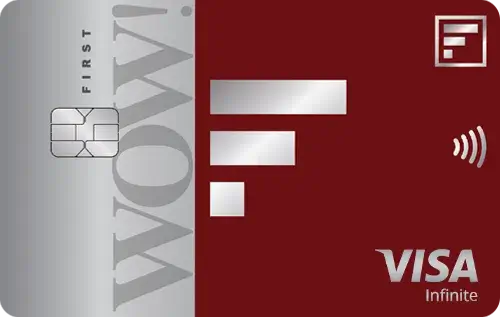
ZET vs IDFC FIRST WOW!
IDFC FIRST WOW! is probably the most important alternative if you can afford a larger FD.
Its current proposition requires:
₹20,000 minimum FD
instead of ZET's ₹2,000.
But IDFC currently offers:
- ₹0 joining fee
- ₹0 annual fee
- credit limit equal to 100% of the FD
- zero forex markup
- rewards that do not expire
- stronger international-spending economics.
Pick ZET if:
Your priority is the lowest possible FD requirement and RuPay/UPI credit building.
Pick FIRST WOW! if:
You can comfortably lock ₹20,000 and want a secured card that is substantially better for international spending.
For someone with only ₹5,000 available:
ZET wins easily.
For someone with ₹20,000 already available:
FIRST WOW! deserves serious consideration.
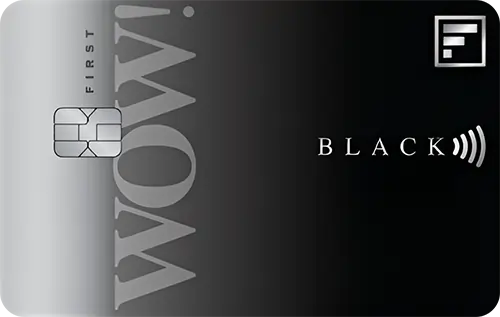
ZET vs IDFC FIRST WOW! Black
WOW! Black is a different level of secured card.
It requires:
₹20,000 FD
and charges:
₹750 + GST joining and annual fee, with renewal fee waived after ₹1.5 lakh annual spending.
But it provides:
- zero forex
- Mastercard international acceptance
- complimentary UPI-enabled RuPay line
- rewards on international spending
- domestic lounge access after the applicable spend trigger
- travel-booking bonus rewards.
ZET is cheaper and easier to enter.
WOW! Black is a much better actual travel-and-rewards card.
ZET vs Kotak 811 Dream Different
Kotak's secured 811 #DreamDifferent card now requires a minimum term deposit of:
₹10,000.
That means it sits between ZET and FIRST WOW! in capital commitment.
For someone who prefers keeping their secured-card relationship with a larger mainstream bank and is comfortable depositing ₹10,000, Kotak is worth comparing.
ZET still wins on the minimum amount required to start.
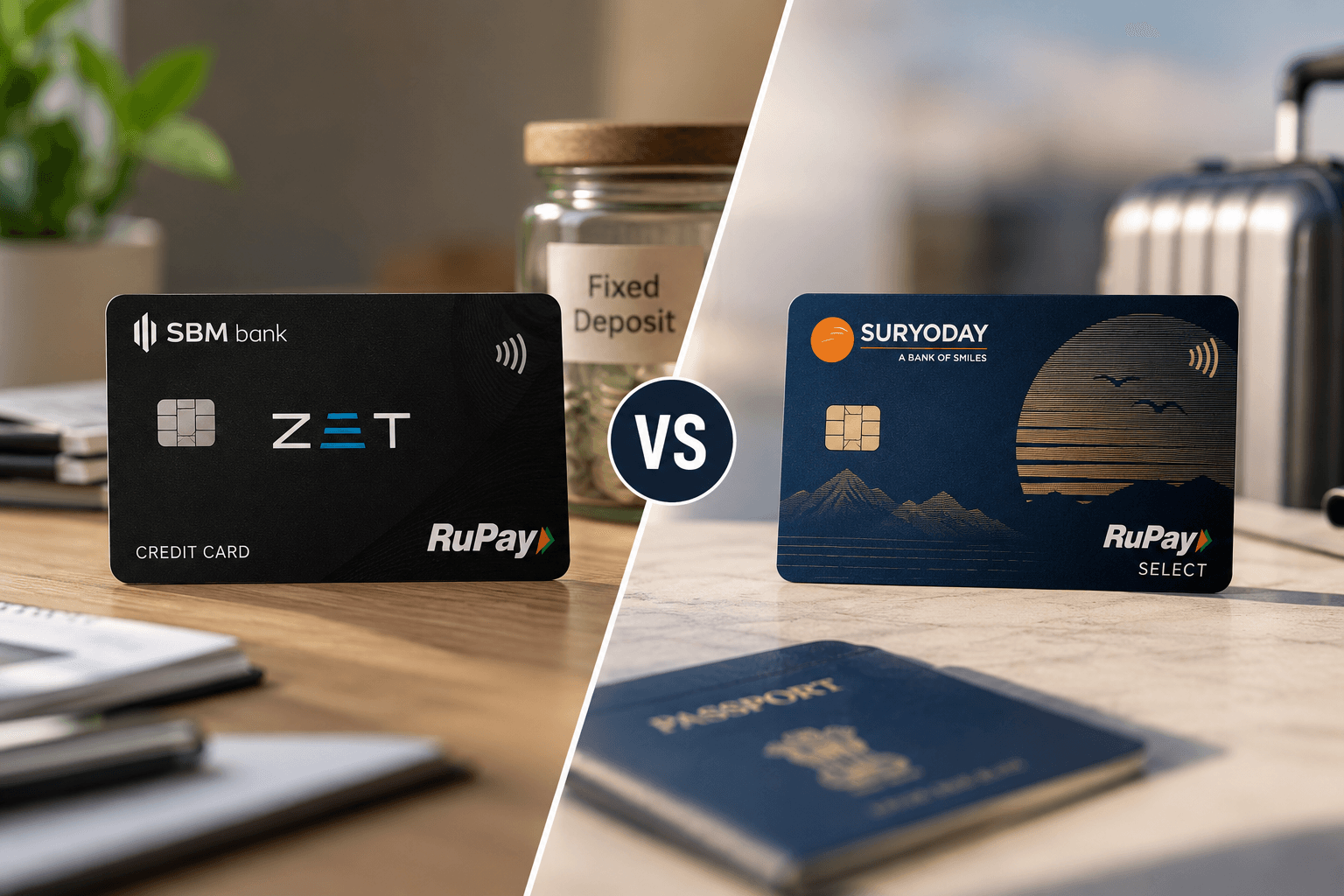
ZET vs Suryoday RuPay Select
Suryoday's Select card is aimed at a completely different secured-card customer.
It requires a much larger FD and offers a more premium RuPay proposition with cashback and lifestyle/travel benefits.
Suryoday's secured-card policy allows a credit limit of up to 90% of the pledged FD, while the Select tier targets a six-figure deposit rather than ZET's ₹2,000 entry point.
If all you want is to establish credit:
ZET makes far more sense.
If you were already going to maintain a substantial FD and want actual card privileges:
Suryoday Select is the richer product.
Who Should Apply for SBM ZET?
ZET makes sense if:
- you have no established credit history
- you have been rejected for unsecured cards
- you do not have conventional income proof
- you want to start with only ₹2,000–₹10,000
- RuPay UPI usage matters
- you will pay every statement in full
- you can keep the card/FD relationship for at least two years
- credit building matters more than travel rewards
This is the customer ZET serves well.
View SBM ZET Credit Card or Compare Secured Options
Start building your credit history with as little as a ₹2,000 fixed deposit, or compare India's top FD-backed cards head-to-head.
Who Should Skip It?
I would skip ZET if:
- you already qualify for a decent unsecured card
- you regularly carry credit-card debt
- you expect to need the FD money soon
- you intend to close the card within a year
- you want complimentary airport lounges
- international spending is important
- you are applying primarily because you saw “2% UPI cashback”
- you can comfortably fund a stronger secured card and value its additional benefits
ZET is not a bad rewards card.
It is simply not primarily a rewards card.
View SBM ZET Credit Card or Compare Secured Options
Start building your credit history with as little as a ₹2,000 fixed deposit, or compare India's top FD-backed cards head-to-head.
Decision Path 1: Lowest Minimum Fixed Deposit
Start building credit with as little as ₹2,000 FD and 90% credit limit. Ideal if capital is limited and RuPay UPI usage matters.
Decision Path 2: Zero Forex & Global Travel
Lock ₹20,000+ to get 0% forex markup, 100% FD credit limit, non-expiring rewards, and no annual fees forever.
CardRecommend Verdict
The SBM ZET Credit Card is still one of the most sensible secured cards for someone who wants to start building credit with the smallest possible FD—but its “lifetime-free” label hides enough conditions that it should not be chosen blindly.
The good part is genuinely good.
You can start with:
₹2,000
get around:
90% of that deposit as your credit limit
pay:
₹0 joining fee
and:
₹0 annual fee
while using a RuPay credit card for everyday UPI transactions.
That is a very low barrier to entering the formal credit system.
For a student, freelancer or first-time borrower who only wants to establish a repayment history, I still like ZET.
But I would not choose it for the headline 2% UPI cashback.
That rate requires a paid ZET Plus subscription, and the real net return depends on your monthly UPI spending and the subscription plan currently offered in the app.
I would not choose it for international travel either.
A 2.49% forex markup plus GST is too expensive when secured zero-forex alternatives exist.
And the 23 October 2026 closure-fee change is a genuine negative.
A card built for people who eventually want to graduate to unsecured credit now charges ₹499 + GST if they leave during the first two years.
The linked FD is also not freely accessible while the card is active, and closing the secured card closes the associated FD.
So my recommendation is straightforward:
If you have only ₹2,000–₹10,000 available and need to build credit from scratch, ZET remains a strong entry point.
Use it lightly.
Keep utilisation sensible.
Pay every statement in full.
Keep it for at least two years if practical.
Then graduate to a better unsecured card once your credit profile allows it.
But if you can comfortably lock ₹20,000 or more, compare IDFC FIRST WOW! before applying.
If international travel, lounge access or serious rewards matter, ZET stops being the obvious choice.
The reason to get ZET in 2026 is not that it is an amazing credit card.
It is that very few credit cards let you start building a credit history with this little money.
Decision Path 1: Lowest Minimum Fixed Deposit
Start building credit with as little as ₹2,000 FD and 90% credit limit. Ideal if capital is limited and RuPay UPI usage matters.
Decision Path 2: Zero Forex & Global Travel
Lock ₹20,000+ to get 0% forex markup, 100% FD credit limit, non-expiring rewards, and no annual fees forever.
Decision Path 3: Premium Secured Benefits & Lounges
Need domestic lounge access, higher rewards, or premium lifestyle perks? Compare top premium secured cards side-by-side.
Recommended Alternatives
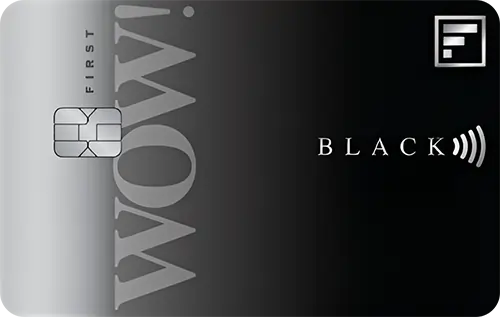
IDFC FIRST WOW! Black Credit Card
International travelers, overseas online shoppers, and affluent consumers seeking a luxury metal card with guaranteed approval and zero forex markup.
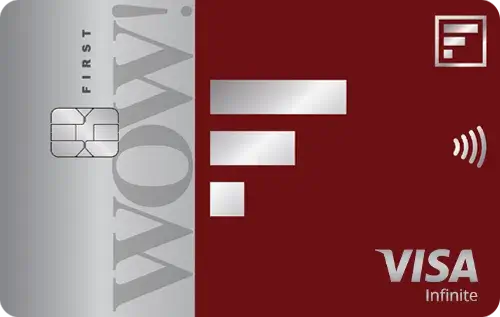
IDFC FIRST WOW! Credit Card
Credit builders, students, freelancers without income proof, and overseas travelers seeking a guaranteed-approval card with zero foreign exchange fees and high FD interest.
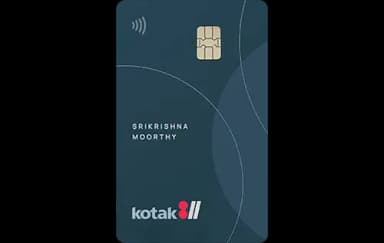
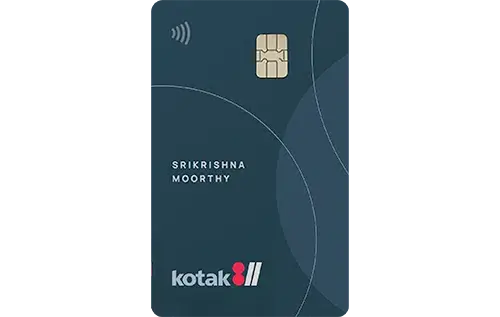
Kotak 811 #DreamDifferent Credit Card
Students, first-time credit card applicants, homemakers, freelancers, and individuals repairing low credit scores who want a zero-fee card backed by FD interest.
Cards Discussed in This Review
IDFC FIRST WOW! Credit Card
Kotak 811 #DreamDifferent Credit Card
Frequently Asked Questions
Is the SBM ZET Credit Card lifetime free?
Yes for membership pricing.
SBM currently charges:
₹0 joining fee
and:
₹0 annual/renewal fee.
Other fees still apply, including an early cancellation fee.
What is the minimum FD for ZET?
ZET currently advertises a minimum FD of:
₹2,000.
What credit limit will I receive?
SBM currently sets the ZET limit at:
90% of the linked FD amount.
A ₹10,000 FD therefore supports approximately a ₹9,000 credit limit.
Do I get a physical card with a ₹2,000 FD?
No under the current SBM schedule.
FDs below ₹5,000 receive a virtual card.
A physical ZET card is available from:
₹5,000 FD.
Does ZET require income proof?
ZET currently markets the secured card as not requiring conventional income proof or an existing credit history.
The FD serves as security.
Does ZET support UPI?
Yes.
It is a RuPay credit card and supports ZET UPI merchant payments.
Does ZET give 2% cashback on UPI?
Yes, but only with an active ZET Plus subscription under the current proposition.
The basic card should not be described as an unconditional flat-2%-UPI cashback card.
How much does ZET Plus cost?
ZET's current website displays ₹3/day messaging as well as ₹49/month and ₹99/month tiers before GST.
Check the current plan and included features in the ZET app before subscribing.
Does ZET have a rewards cap?
ZET currently says its basic plan has a 1,000-ZCoin monthly cap while ZET Plus increases this to 2,000.
Do not assume those figures are rupees without checking current redemption terms.
What is ZET's forex markup?
2.49%
plus applicable GST on the fee.
Does ZET offer airport lounge access?
No complimentary airport-lounge proposition is currently listed in ZET's core product page or SBM's current ZET terms.
What is the new late-payment fee?
Effective 23 October 2026:
5% of outstanding
with:
₹50 minimum
and:
₹1,000 maximum
plus applicable GST.
What is the ZET early-closure fee?
₹499 + GST
if the card is cancelled within two years of activation.
What happens to the FD when I close ZET?
SBM's current terms say that closing the secured card also closes the linked FD.
Outstanding card dues are deducted and the remaining deposit amount plus applicable earned interest is returned to the source account.
Can I withdraw part of the FD while keeping ZET?
SBM's ZET agreement says partial withdrawals from the linked FD are not permitted while it secures the card.
Can ZET help build my credit score?
Responsible use of a reported secured credit account can help build a credit history.
Pay on time and keep utilisation controlled.
Do not expect any card to guarantee a particular credit score or a fixed time in which you will reach it.
Is ZET better than IDFC FIRST WOW!?
ZET is better if your main constraint is the amount of FD you can lock.
FIRST WOW! requires more money but offers stronger international-spending economics, including zero forex.
For someone who can comfortably maintain a ₹20,000 FD, I would compare FIRST WOW! before choosing ZET.

Founder & Editor, CardRecommend
Founder & Editor of CardRecommend. Dedicated to researching credit card reward structures, fee waivers, airport lounge policies, and calculating real user value across Indian financial products.