Prefer to compare all RuPay UPI cards?
Browse and filter all 24 verified RuPay credit cards by apps, zero fees, and UPI reward rates in our live directory.
Cards Compared
Suryoday SFB RuPay Select Credit Card
Airport lounge access and UPI payments with zero annual fee against SFB Fixed Deposit
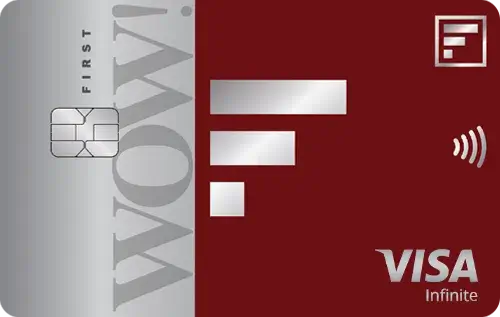
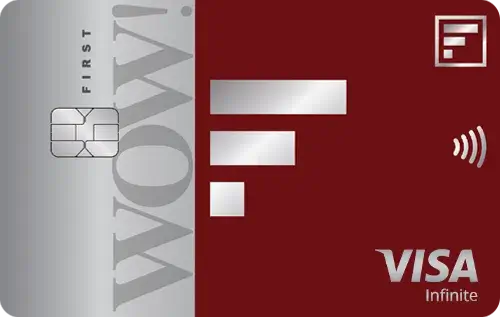
IDFC FIRST WOW! Credit Card
Credit builders, students, freelancers without income proof, and overseas travelers seeking a guaranteed-approval card with zero foreign exchange fees and high FD interest.
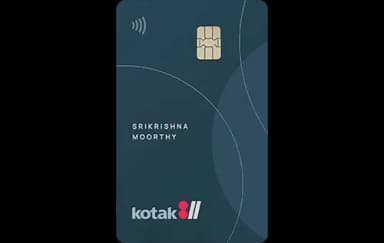
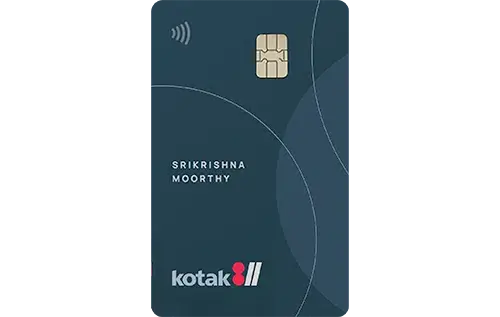
Kotak 811 #DreamDifferent Credit Card
Students, first-time credit card applicants, homemakers, freelancers, and individuals repairing low credit scores who want a zero-fee card backed by FD interest.
In This Guide
If you are applying for an FD-backed credit card because normal unsecured cards are not available yet, the decision should not begin with airport lounges or cashback.
It should begin with one question:
How much money are you comfortable locking in an FD simply to build your credit history?
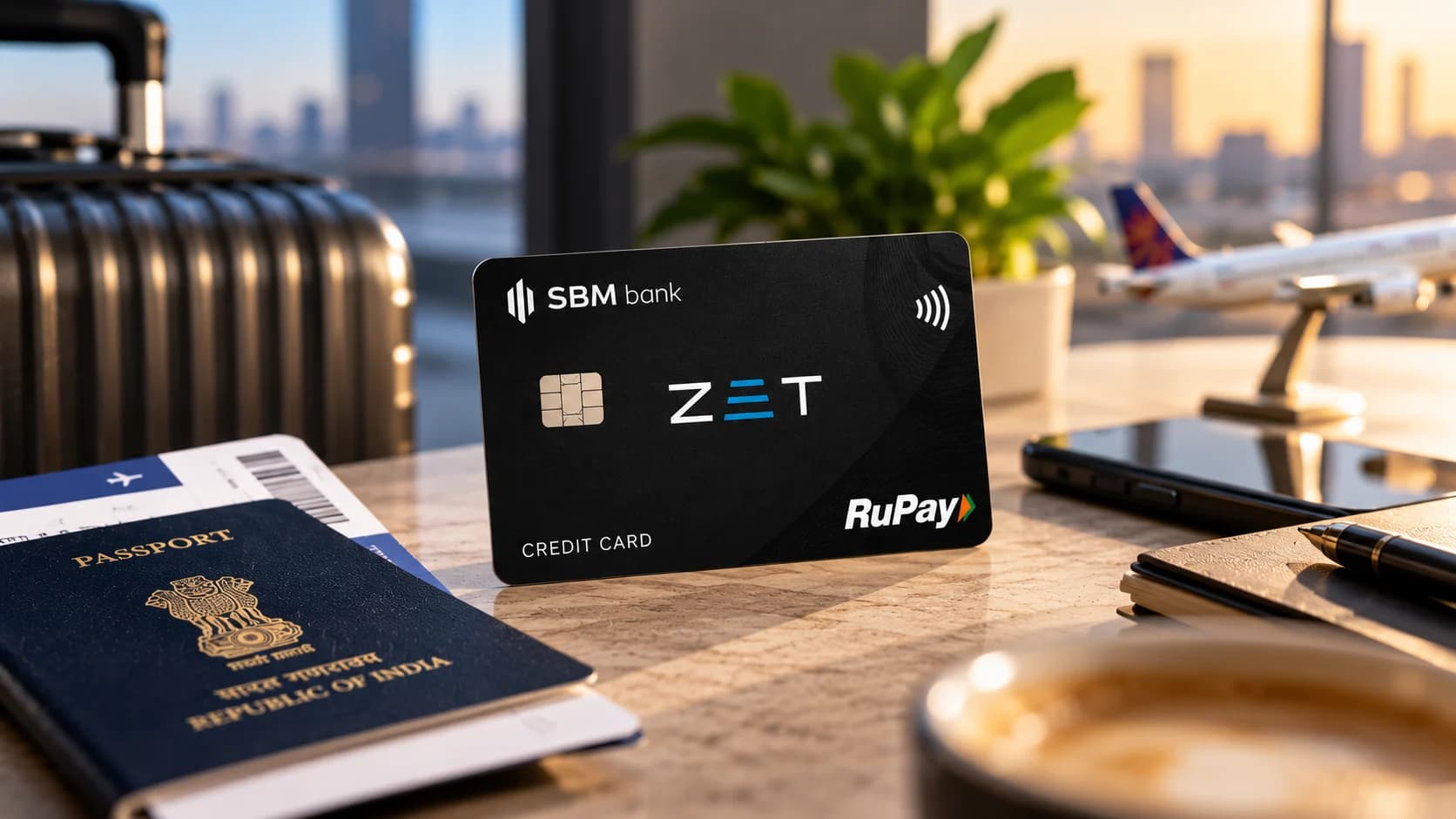
That question separates the SBM ZET Credit Card and Suryoday SFB RuPay Select Credit Card more clearly than almost any rewards comparison.
ZET lets you start with an FD of just:
₹2,000
and SBM Bank gives a credit limit of:
90% of the FD amount.
Suryoday's current Select card page, meanwhile, places the premium RuPay Select tier at:
FD above ₹1.15 lakh
with the bank's secured-card policy limiting the credit line to no more than 90% of the pledged FD.
That means these two secured cards are technically competitors, but they are targeting very different versions of the credit-building customer.
ZET is the easier way to start.
Suryoday Select is the better card once you are willing to commit serious FD capital and actually use premium benefits.
And after ZET's new 23 October 2026 late-payment and early-closure fees, that distinction is even more important.
Terms verified: 24 October 2026
The Short Answer
For someone who simply wants to establish a credit history with the smallest possible deposit:
Pick SBM ZET.
For someone already comfortable parking ₹1.15 lakh or more in an FD and who will use airport lounges, RuPay Select lifestyle benefits and cashback:
Suryoday RuPay Select is the much stronger product.
The major trade-off is this:
| Feature | SBM ZET | Suryoday RuPay Select |
|---|---|---|
| FD required | From ₹2,000 | Select tier shown for FD above ₹1.15 lakh |
| Credit limit | 90% of FD | Up to 90% of FD |
| Joining fee | ₹0 | ₹0 |
| Annual fee | ₹0 | ₹150 + GST, waived at ₹50,000 annual spend under current KFS |
| Physical-card fee | No separate issuance fee shown in current ZET KFS | ₹499 + GST |
| Network | RuPay | RuPay Select |
| UPI | Yes | Yes |
| Base rewards | Primarily ZET ecosystem / ZET Plus | 0.5% cashback on eligible transactions |
| Cashback cap | Depends on ZET programme | ₹3,000 per billing cycle |
| Lounge access | No major lounge proposition | RuPay Select lounge programme |
| Other premium benefits | Limited | Golf, spa/salon, gym, health checks, concierge, insurance |
| Forex markup | 2.49% | 2.50% |
| Late payment fee | 5%, ₹50 min / ₹1,000 max + GST | 1% or ₹250, whichever lower + GST |
| Early closure fee | ₹499 + GST within first 2 years | No comparable early-closure fee found in current KFS/MITC |
| Main strength | Lowest barrier to credit building | Premium benefits + FD-backed credit |
| Main weakness | New 2-year exit charge | Much higher FD commitment |
The biggest mistake would be choosing Suryoday solely because the benefits look better.
Locking more than ₹1 lakh in an FD just to obtain lounges and lifestyle benefits makes no sense unless that deposit itself fits your financial plan.
The Biggest Difference Is ₹2,000 vs ₹1.15 Lakh
ZET's strongest feature is not rewards.
It is accessibility.
The current ZET proposition allows an FD starting from:
₹2,000
with no income proof or prior credit history required.
SBM's current Key Fact Statement says the credit limit is:
90% of the fixed deposit amount.
So:
₹2,000 ZET FD
Approximate card limit:
₹1,800
₹10,000 ZET FD
Approximate card limit:
₹9,000
₹50,000 ZET FD
Approximate card limit:
₹45,000
That makes ZET genuinely accessible to someone starting from scratch.
Suryoday Select is a different proposition.
Its current card page shows the RuPay Select benefits for:
FD above ₹1,15,000.
At a 90% limit:
₹1.15 lakh FD
Maximum theoretical card limit around:
₹1,03,500
subject to Suryoday's final sanctioned limit and applicable policy.
That is a useful credit line.
But you have locked more than ₹1 lakh to obtain it.
For Pure Credit Building, ZET's Smaller FD Is a Huge Advantage
If your only objective is:
“I have little or no credit history and want a card that starts reporting responsible use.”
you do not need ₹1 lakh of secured credit.
You need:
- a small card limit
- regular eligible usage
- low utilisation
- full on-time payment
- patience
A ₹5,000 or ₹10,000 ZET FD can do that without locking a six-figure amount.
That gives ZET the better risk-adjusted proposition for a beginner.
You can keep the rest of your money available for emergency savings, investments or other goals instead of immobilising it merely to obtain a premium RuPay variant.
Suryoday Makes More Sense If You Wanted the FD Anyway
The logic changes completely if you were already planning to place ₹1.15 lakh or more into a fixed deposit.
In that case, the FD is not really the “cost” of the card.
You were going to hold the deposit anyway.
Suryoday then lets that money do two jobs:
earn FD interest
and:
secure a relatively high-limit RuPay Select credit card.
That is the scenario where Suryoday becomes much more compelling.
Suryoday Currently Has the Stronger FD-Return Story
Suryoday currently advertises domestic fixed-deposit rates of up to 8.50% p.a., although the exact rate depends on tenure, customer category and the specific deposit chosen.
ZET currently advertises up to:
7% interest
on the linked SBM Bank FD through its card proposition.
SBM Bank's broader current FD rate table, effective 18 September 2026, also shows rates varying materially by tenure.
Do not simply compare:
8.5% vs 7%
and assume that exact gap will apply to your card-linked deposit.
The correct comparison is the actual eligible FD tenure and rate offered at the moment you book it.
But as a general product proposition, Suryoday currently has the more aggressive FD-rate positioning.
Both Cards Give Around 90% of the FD as Credit
On this point, the products are broadly similar.
SBM explicitly sets the ZET limit at:
90% of the FD.
Suryoday's current secured-card policy says the credit limit:
shall not exceed 90% of the FD value at issuance.
So the card limit itself should not be the primary reason to pick one over the other.
The amount of FD you are prepared to pledge is what creates the difference.
ZET Is Truly ₹0 Annual Fee
SBM's current Key Fact Statement lists:
Membership fee: ₹0
Annual maintenance fee: ₹0
Renewal fee: ₹0
So ZET remains genuinely lifetime free from a joining/annual membership perspective.
But that statement now needs an important qualification.
From 23 October 2026, closing the card within two years of activation costs:
₹499 + GST.
At 18% GST:
₹588.82
So ZET costs nothing to keep annually.
But it is no longer completely free to use as a short 12–18 month credit-building bridge and then exit.
Suryoday's “Lifetime-Free” Marketing Needs an Asterisk
This is one of the most important findings in the research.
Suryoday's live Select product page repeatedly calls the card:
“Lifetime-free”
and even says:
“No Extra Cost.”
But the current Key Fact Statement for Select cards issued from 26 May 2026 says:
Joining fee: Nil
Annual fee: ₹150 + GST
with the annual fee waived only after:
₹50,000 of annual spending.
That is not unconditional lifetime-free pricing.
CardRecommend should follow the formal KFS for canonical fee data.
The correct way to present Suryoday Select today is:
₹0 joining fee; ₹150 + GST annual fee, waived on ₹50,000 annual spending under the current KFS.
The marketing page's lifetime-free wording should be recorded as a source conflict.
And the Physical Suryoday Card Costs ₹499 + GST
The current KFS also lists:
Physical card issuance fee: ₹499 + GST.
At 18% GST:
₹588.82
That matters because Suryoday's own Select benefits page says its lounge access is:
applicable only with the physical card.
So if airport lounge access is one of the reasons you want Select, the physical-card issuance fee is effectively part of your first-year economics.
That makes the “lifetime-free premium secured card” marketing less straightforward than it first appears.
Suryoday Has the Better Base Rewards
Suryoday currently advertises:
0.5% cashback on eligible credit-card transactions
with cashback capped at:
₹3,000 per billing cycle.
That is simple.
₹10,000 eligible spend:
₹50 cashback
₹50,000:
₹250
₹1 lakh:
₹500
The cashback credits back to the card account under Suryoday's published cashback framework.
It is not an extraordinary rewards rate.
But for a secured credit-builder card, 0.5% straightforward cashback is perfectly respectable.
ZET's 2% UPI Headline Requires a Subscription
ZET's reward proposition looks stronger at first:
2% cashback on ZET UPI.
But the current product page clearly says that requires an active:
ZET Plus subscription at ₹3 per day.
That means the card itself is free.
The headline cashback programme is not.
If you kept ZET Plus active for a 30-day month:
₹3 × 30 = about ₹90
At a 2% eligible cashback rate, you need approximately:
₹90 ÷ 2% = ₹4,500
of eligible monthly ZET UPI spending simply to recover the subscription cost from cashback alone.
That calculation ignores the other ZET Plus benefits, so it is not a complete valuation.
But it shows why I would not choose ZET primarily as a 2% cashback card.
Choose ZET primarily because the FD barrier is tiny.
For UPI Simplicity, ZET Still Has an Advantage
Both cards are RuPay credit cards and support credit-card-on-UPI functionality.
Suryoday explicitly says its secured card can be linked for UPI use, and its launch material describes linkage through BHIM or other eligible UPI apps.
ZET is also built around its own ZET UPI experience.
For a beginner, ZET feels more purpose-built around:
small FD → simple app → RuPay → UPI → build credit
Suryoday feels more like:
existing bank FD → secured credit line → RuPay Select ecosystem
Those are different user journeys.
Suryoday Destroys ZET on Premium Benefits
If you care about benefits rather than merely establishing a credit record, this is not close.
Suryoday Select currently advertises:
- airport lounge access
- RuPay flight discounts
- 100+ RuPay offers
- gym benefits
- spa and salon benefits
- golf sessions
- health check-ups
- 24/7 concierge
- personal accident/permanent disability cover up to ₹10 lakh.
ZET does not compete with that package.
Its value proposition is much narrower:
- low FD entry
- RuPay/UPI
- credit-building
- ZET Plus cashback
- merchant/voucher offers
So if your FD amount is already high enough for Suryoday Select, the benefits gap is enormous.
What Exactly Is the Suryoday Lounge Benefit?
Suryoday itself confirms complimentary airport lounge access for the RuPay Select card and says the benefit requires the physical card.
The current RuPay lounge programme for eligible Select credit cards provides:
- 2 domestic airport/railway lounge accesses per calendar quarter
- 2 international airport lounge accesses per calendar year
but RuPay explicitly says cardholders should verify eligibility with their issuer.
So CardRecommend should avoid representing those numbers as unconditional bank-guaranteed entitlements forever.
A safer presentation is:
Eligible under the current RuPay Select lounge programme; Suryoday confirms lounge access, physical card required. Current RuPay programme limits are up to 2 domestic/railway visits per quarter and 2 international visits per year, subject to issuer/program terms.
That is more accurate than simply saying “10 lounge visits.”
Lounge Access Alone Does Not Justify a ₹1.15 Lakh FD
This is where premium-benefit comparisons can become misleading.
Suppose you were otherwise going to keep only ₹20,000 in an FD.
Moving another ₹95,000 into Suryoday solely for a Select card because you want airport lounges is usually poor decision-making.
The extra FD remains your money, and it earns interest.
But it is still capital you cannot freely use while the card lien remains active.
Premium benefits should improve the value of money you were already comfortable depositing.
They should not dictate your emergency-fund allocation.
Suryoday Is Also Better If You Accidentally Pay Late
Neither card should ever be selected based on late-payment fees.
A credit-building customer should pay in full every month.
Still, the difference is significant.
ZET from October 23
Late fee:
5% of Total Outstanding Due
subject to:
₹50 minimum
₹1,000 maximum
plus GST.
Suryoday Select
Late fee:
1% of amount payable or ₹250, whichever is lower
plus GST.
Consider ₹20,000 overdue.
ZET
5% × ₹20,000:
₹1,000 + GST
Suryoday
1% × ₹20,000:
₹200 + GST
That is a major difference.
But the better lesson is:
do not be late on either card.
Suryoday Also Has a Lower Finance Charge
ZET currently charges:
3.5% per month / 42% per annum
on POS/e-commerce balances after the interest-free period.
Suryoday's current KFS lists:
2.95% per month / 35.40% per annum.
Suryoday is cheaper if you revolve a balance.
But once again, carrying debt on a secured credit card whose main purpose is building a clean credit history is a bad strategy.
The correct repayment target on both cards is:
Total Amount Due = paid in full.
ZET's New Two-Year Closure Fee Is a Real Weakness
This is particularly relevant in this comparison.
Many people obtain secured cards with the following plan:
- build credit
- get an unsecured card
- close the secured card
- release the FD
From 23 October, ZET charges:
₹499 + GST
if closed within:
two years of activation.
So if your plan is:
“I'll use ZET for 12 months and then graduate.”
the new exit fee makes that strategy more expensive.
I found no comparable card-closure charge in Suryoday Select's current KFS/MITC.
Suryoday's terms instead say that after the card is successfully cancelled and dues are cleared, the lien is removed from the FD.
That gives Suryoday the cleaner exit structure.
But you should not lock ₹1.15 lakh just to avoid a roughly ₹589 ZET exit cost.
The difference in required capital is far larger than the closure fee.
Forex Is Basically a Tie — and Neither Card Is Good for It
ZET forex markup:
2.49%
Suryoday Select:
2.50% + GST on the surcharge under its current KFS.
That 0.01 percentage-point difference is irrelevant.
Neither is a good international-spending card.
If foreign spending is a major requirement, a zero-forex secured card such as IDFC FIRST WOW! belongs in the comparison instead.
Suryoday's international lounge access does not make Suryoday Select a good forex-spending card.
Those are separate benefits.
Which Card Is Better for Building a Credit Score?
If we strip away every benefit and focus purely on building credit:
ZET wins.
Why?
You can begin with far less capital.
You do not need to lock ₹1.15 lakh.
You pay no annual fee.
And the card is explicitly designed around new-to-credit users.
A small FD, low utilisation and perfect monthly repayments are enough to start establishing a credit record.
Suryoday can perform the same credit-building function.
It simply requires far more capital to reach the premium Select tier.
But Suryoday Is the Better Actual Credit Card
There is an important distinction between:
the better credit-building tool
and:
the better credit card.
As an actual card product, Suryoday Select wins comfortably.
You get:
- base cashback
- airport lounge access
- railway lounge eligibility through the RuPay programme
- international lounge eligibility
- golf
- gym
- spa
- health benefits
- insurance
- concierge
- RuPay merchant offers
ZET gives you a much simpler product.
That simplicity is an advantage for someone learning to use credit.
But it is not a premium-benefit advantage.
₹10,000 FD User: ZET Wins by Default
If you have only ₹10,000 available to lock:
Suryoday Select is not the realistic choice.
ZET gives you approximately:
₹9,000 limit
with:
₹0 annual fee.
Use ₹1,000–₹2,000 monthly.
Pay every statement in full.
Build history.
That is exactly what the product is good at.
₹1.15 Lakh FD User: The Answer Flips
Now assume you already want to keep ₹1.15 lakh in an FD.
ZET at 90%:
approximate limit:
₹1,03,500
Suryoday Select:
potentially similar order of secured limit subject to bank sanction.
Now the capital requirement is no longer differentiating the cards.
In that scenario, Suryoday gives:
- 0.5% cashback
- Select benefits
- lounge access
- premium RuPay privileges
- lower finance charges
- much lower maximum late fee
while ZET's strongest differentiator becomes its simpler ₹0 annual-fee structure.
For this customer:
Suryoday Select wins.
₹1.15 Lakh Is Also Large Enough to Care About FD Return
If ₹1.15 lakh is locked for multiple years, even a 1 percentage-point annual interest difference is roughly:
₹1,150 per year before tax
on the original principal.
That is more economically meaningful than arguing about ₹100–₹200 of annual card rewards.
So once your FD becomes six figures, the underlying deposit rate and tenure matter substantially.
Do not compare secured cards while ignoring the investment used to secure them.
Reddit Feedback Highlights Suryoday's Main Risk: Service Experience
Recent community discussions about Suryoday secured cards are generally positive about:
- FD returns
- lounge access
- RuPay Select benefits
- ability to reduce/release FD after use
but there are also cardholders reporting service friction, including problems around app controls, card blocking/unblocking and confusing billing displays.
These are individual user experiences, not evidence that Suryoday has a systemic service problem.
But they matter in a secured-card comparison.
A card holding a lien over ₹1 lakh of your FD should have reliable servicing.
ZET also has app/service complaints in community discussions, so I would not pretend either product has a universally perfect customer experience.
Use Reddit here for operational sentiment only—not product terms.
Suryoday's Fee Mismatch Is the Bigger Documentation Concern
For CardRecommend, the biggest factual issue is not Reddit.
It is Suryoday's own documentation.
The marketing page says:
lifetime free
while the current KFS says:
₹150 + GST annual fee, waived at ₹50,000 annual spend.
The KFS is the document CardRecommend should use for canonical fee fields.
The marketing wording can be retained as an internal source-conflict note.
Do not show an unconditional:
Annual fee: ₹0
on the Suryoday Select card page for current post-May-26 issuance unless Suryoday publishes a newer KFS reversing the fee.
Which Card Is Better for a Student or First-Time Earner?
ZET.
Especially if:
- income proof is unavailable
- you have no CIBIL history
- you cannot or do not want to lock ₹1 lakh+
- most spending is small UPI transactions
- you are mainly trying to establish repayment history
The new two-year cancellation fee is annoying.
It does not erase ZET's huge accessibility advantage.
Which Is Better for Someone Rebuilding Credit?
Again, usually:
ZET if capital is limited.
But if you already have substantial FD savings with Suryoday, using the existing FD to obtain Select can be more efficient than creating a separate SBM deposit solely to get ZET.
The choice depends on where the money already sits.
Which Is Better for Rewards?
Suryoday Select overall.
The 0.5% base cashback is not spectacular, but it does not require a paid rewards subscription.
ZET can deliver higher UPI cashback through ZET Plus, but the subscription changes the economics.
Which Is Better for UPI?
For a simple, new-to-credit UPI journey:
ZET.
For a broader RuPay card with UPI plus premium benefits:
Suryoday Select.
Neither should be chosen exclusively for UPI rewards.
There are stronger unsecured RuPay cashback cards once your credit profile becomes good enough.
Which Is Better for Lounge Access?
Suryoday Select by a massive margin.
ZET is not a lounge card.
Suryoday explicitly participates in the RuPay Select benefit ecosystem and offers airport lounge access with the physical card.
Which Is Better for International Travel?
Neither.
Suryoday has the better travel-benefit package.
But the actual forex charges are almost identical:
2.49% vs 2.50%.
If overseas spending is the requirement, look elsewhere.
Which Is Better if You Plan to Close It After Building Credit?
This is closer.
ZET is easier to start but now charges:
₹499 + GST for closure within two years.
Suryoday does not show a comparable early-closure fee in its current KFS.
But Suryoday requires vastly more capital for Select.
So I would not deposit ₹1.15 lakh merely to obtain a cleaner exit.
If you need the cheapest bridge into credit:
take ZET and plan around the two-year horizon.
CardRecommend Verdict
SBM ZET is the better credit-building tool. Suryoday RuPay Select is the better credit card.
That distinction is the entire comparison.
If you have little or no credit history and want to start with the smallest possible commitment, I would choose ZET.
A ₹2,000 minimum FD, 90% limit-to-FD ratio, RuPay UPI support and zero annual fee give you everything you actually need to begin establishing a credit record.
You do not need airport lounges to build CIBIL.
You need disciplined utilisation and perfect repayments.
ZET's new October 23 fees do make the proposition worse.
The late-payment fee can now reach:
₹1,000 + GST
and the ₹499 + GST closure fee applies for the first:
two years.
That makes ZET a less attractive short-term “use for one year and close” product.
But it still does not justify locking more than ₹1 lakh in another bank just to avoid those charges.
For someone who is already comfortable keeping ₹1.15 lakh+ in an FD, I would choose Suryoday RuPay Select instead.
At that level of locked capital, ZET's low-entry advantage disappears.
Suryoday gives you substantially more:
- 0.5% cashback
- lounge access
- RuPay Select benefits
- golf
- gym
- spa
- health benefits
- insurance
- concierge
- potentially stronger FD returns
- lower revolving interest
- a much lower late-payment fee ceiling
But CardRecommend should not call Suryoday Select unconditionally lifetime free.
Its live marketing does.
Its current KFS does not.
The KFS says ₹150 + GST annual fee, waived on ₹50,000 annual spends, and the physical card costs another ₹499 + GST.
So my decision is:
Small FD + pure credit-building → SBM ZET
₹1.15 lakh+ FD already planned + want actual benefits → Suryoday RuPay Select
Need international spending → neither; consider a zero-forex secured card instead
For most people who are genuinely new to credit, ZET is still the more sensible first card.
Not because it has better benefits.
Because building credit should not require locking ₹1.15 lakh when ₹2,000 can get the job started.
Cards Compared in This Article
Suryoday SFB RuPay Select Credit Card
Suryoday SFB RuPay Select Credit Card
IDFC FIRST WOW! Credit Card
Kotak 811 #DreamDifferent Credit Card
Frequently Asked Questions
Which is better: SBM ZET or Suryoday RuPay Select?
For pure credit building with minimal capital, SBM ZET is better.
For someone already comfortable locking ₹1.15 lakh+ in an FD and who values premium benefits, Suryoday RuPay Select is the stronger card.
What is the minimum FD for SBM ZET?
ZET currently advertises an FD starting at:
₹2,000
What FD is required for Suryoday RuPay Select?
Suryoday's current Select product page shows RuPay Select benefits for:
FD above ₹1,15,000.
What percentage of the FD becomes the credit limit?
SBM ZET explicitly gives:
90% of the FD amount
as the card-limit basis.
Suryoday's current secured-card policy states that the credit limit cannot exceed:
90% of the FD value.
Is SBM ZET lifetime free?
Yes for joining and annual membership fees.
Current SBM terms show:
₹0 joining/membership
and:
₹0 annual fee
However, ₹499 + GST is charged if the card is closed within two years of activation.
Is Suryoday RuPay Select lifetime free?
Suryoday's marketing page describes it as lifetime free.
However, the current KFS for Select cards issued from 26 May 2026 lists:
₹150 + GST annual fee
waived on annual spending of:
₹50,000 or more.
CardRecommend should use the KFS value until Suryoday publishes updated formal terms.
Does Suryoday charge for the physical card?
Yes.
The current KFS lists:
₹499 + GST
for physical-card issuance.
Does ZET support UPI?
Yes.
It is a RuPay card and ZET promotes credit-card UPI through ZET UPI.
Does Suryoday Select support UPI?
Yes.
Suryoday markets the secured RuPay card as UPI-enabled.
Which gives better cashback?
Suryoday currently gives:
0.5% cashback on eligible transactions, capped at ₹3,000 per billing cycle.
ZET promotes:
2% ZET UPI cashback
with an active ZET Plus subscription.
Does ZET's 2% cashback require payment?
Yes.
The current ZET product page says the 2% ZET UPI cashback is available with an active ZET Plus subscription costing ₹3 per day.
Does Suryoday Select offer lounge access?
Yes.
Suryoday confirms complimentary airport lounge access for Select, applicable with the physical card and subject to RuPay programme terms.
What are the forex fees?
SBM ZET:
2.49%
Suryoday RuPay Select:
2.50% + applicable GST on the surcharge
Neither is a strong international-spending card.
Which has the lower late-payment fee?
Suryoday.
ZET now charges 5% of total outstanding, minimum ₹50 and maximum ₹1,000, plus GST.
Suryoday charges 1% of the amount payable or ₹250, whichever is lower, plus GST.
Which is better for a student with no credit score?
ZET is usually the more sensible option because the minimum FD starts at only ₹2,000.
Which is better if I can invest ₹1.5 lakh in an FD?
If you genuinely wanted to hold that FD anyway, Suryoday RuPay Select gives substantially more card benefits and would be my preferred choice.

Founder & Editor, CardRecommend
Founder & Editor of CardRecommend. Dedicated to researching credit card reward structures, fee waivers, airport lounge policies, and calculating real user value across Indian financial products.