Executive Summary
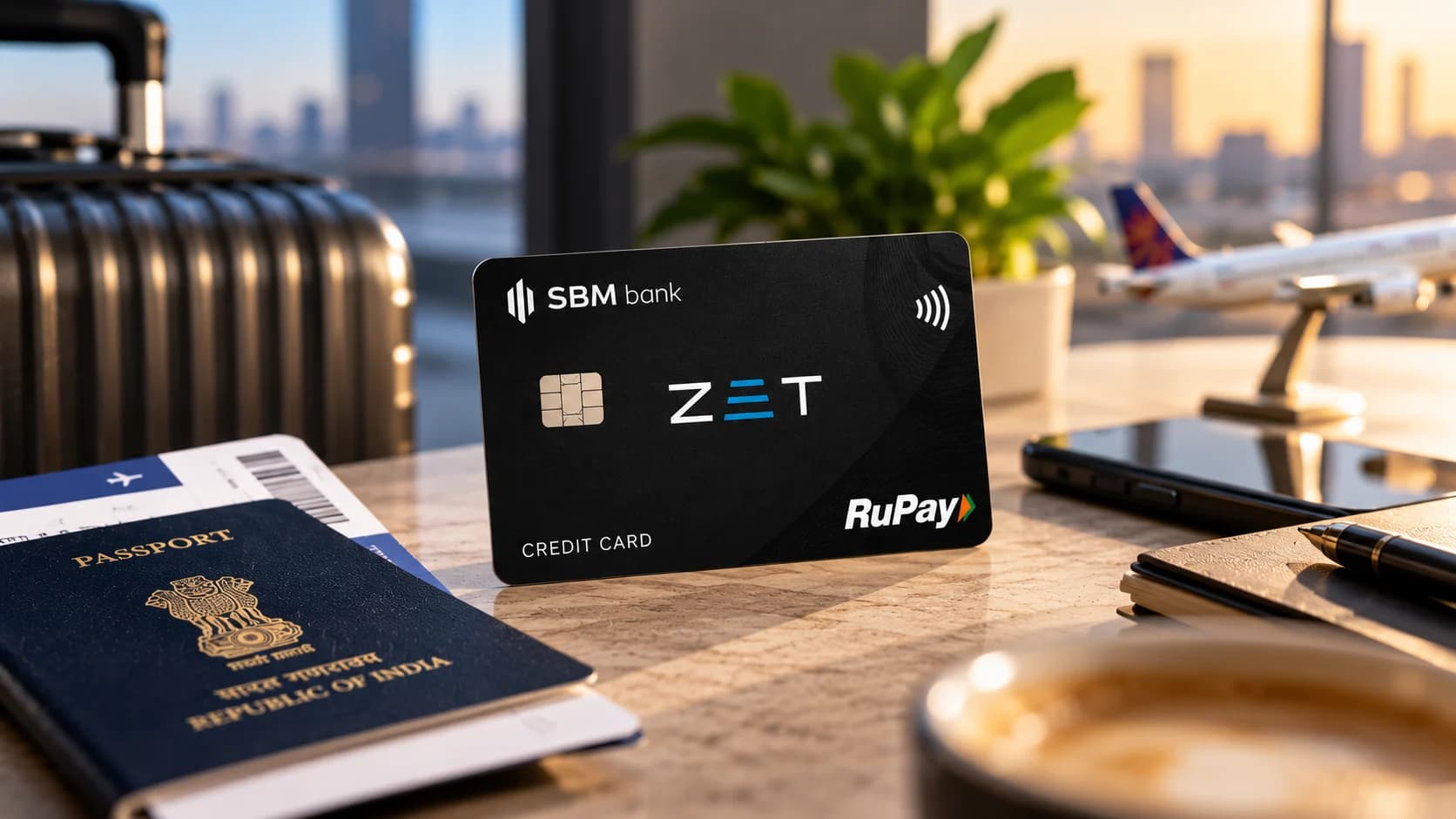
SBM Bank has revised the ZET Credit Card fees from 23 October 2026: late payment charges now scale up to ₹1,000, and the ₹499 cancellation fee applies for two full years. We break down the real exit costs, UPI cashback caveats, and compare top secured alternatives.
Cards Compared
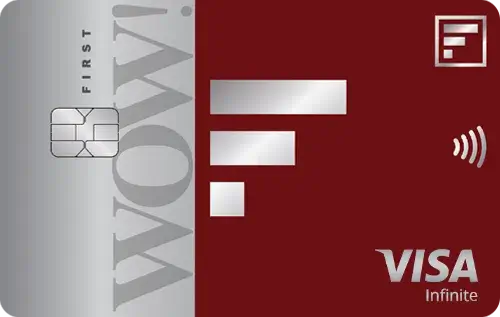
IDFC FIRST WOW! Credit Card
Credit builders, students, freelancers without income proof, and overseas travelers seeking a guaranteed-approval card with zero foreign exchange fees and high FD interest.
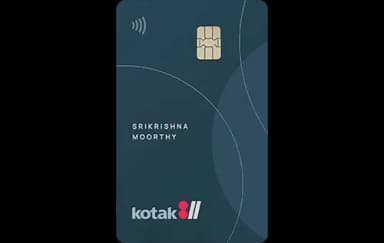
Kotak 811 #DreamDifferent Credit Card
Students, first-time credit card applicants, homemakers, freelancers, and individuals repairing low credit scores who want a zero-fee card backed by FD interest.
In This Guide
The SBM ZET Credit Card is still technically lifetime free.
But from 23 October 2026, closing it early or missing a payment can cost substantially more than before.
SBM Bank has changed two important fees on its FD-backed ZET Credit Card.
The old flat ₹299 late-payment charge has been replaced with:
5% of the total outstanding, subject to a ₹50 minimum and ₹1,000 maximum, plus applicable GST.
At the same time, the existing ₹499 + GST card-cancellation fee now applies if the card is closed within two years of activation, rather than only within the first year.
For a card marketed primarily to first-time borrowers and people trying to build a credit history, the second change matters more than it initially appears.
A common use case for ZET is simple:
open a small FD, build a credit record, qualify for a better unsecured card, then close ZET and release the deposit.
That exit strategy has just become more restrictive.
ZET is still one of the easiest low-deposit routes into a RuPay credit card, with an FD starting at ₹2,000 and no annual fee.
But “lifetime free” now needs an asterisk:
there is no annual membership fee, but leaving within the first two years costs ₹499 + GST.
Terms verified: 24 October 2026
Late payment fee
Before 23 October:
₹299 flat
From 23 October:
5% of Total Outstanding Due
subject to:
Minimum: ₹50
Maximum: ₹1,000
plus applicable GST.
Early card cancellation
Before 23 October:
₹499 + GST if cancelled within the first year.
From 23 October:
₹499 + GST if cancelled within the first two years after activation.
Everything else about the headline membership pricing remains unchanged:
Joining/membership fee: ₹0
Annual/renewal fee: ₹0
SBM's current Key Fact Statement continues to list both at zero.
The New Late Fee Can Actually Be Cheaper on Small Balances
The late-fee change is not a pure increase.
Because the old structure charged everyone ₹299 regardless of how much they owed, someone with a small unpaid balance can now pay less.
The break-even point is:
₹299 ÷ 5% = ₹5,980
So, before GST:
- below ₹5,980 outstanding, the new percentage fee is lower than ₹299
- at roughly ₹5,980, it is the same
- above ₹5,980, it becomes more expensive
- at ₹20,000 outstanding, it reaches the ₹1,000 maximum
Here is what that means in practice.
| Total outstanding | New base late fee | New fee incl. 18% GST | Old ₹299 fee incl. 18% GST |
|---|---|---|---|
| ₹500 | ₹50 minimum | ₹59 | ₹352.82 |
| ₹1,000 | ₹50 | ₹59 | ₹352.82 |
| ₹2,000 | ₹100 | ₹118 | ₹352.82 |
| ₹5,000 | ₹250 | ₹295 | ₹352.82 |
| ₹5,980 | ₹299 | ₹352.82 | ₹352.82 |
| ₹10,000 | ₹500 | ₹590 | ₹352.82 |
| ₹15,000 | ₹750 | ₹885 | ₹352.82 |
| ₹20,000+ | ₹1,000 maximum | ₹1,180 | ₹352.82 |
So CardAdvisor's summary is correct: the new structure is kinder to someone missing a small balance but much harsher once the outstanding becomes meaningful.
₹20,000 Outstanding Now Means a ₹1,180 Late Fee
This is the number ZET users should notice.
At ₹20,000 outstanding:
5% = ₹1,000
The fee is capped there.
At the current 18% GST rate:
₹1,000 + ₹180 GST = ₹1,180
Previously:
₹299 + ₹53.82 GST = ₹352.82
Difference:
₹827.18 more
for the same missed payment scenario.
That is a significant change on a card aimed at users who may be new to credit cards and still learning how billing cycles, minimum amounts due and interest work.
And the Late Fee Is Not the Only Cost of Carrying a Balance
This is even more important.
The late-payment charge is separate from finance charges.
SBM's current Key Fact Statement lists interest on normal POS/e-commerce balances after the interest-free period at:
3.5% per month
or:
42% per annum.
So if you do not pay the Total Amount Due in full, the cost is not simply the ₹50–₹1,000 late fee.
Interest can also apply according to the card terms.
For a credit-building card, that creates a simple rule:
ZET only makes sense if you intend to pay the statement in full every month.
If you routinely carry balances, the rewards and credit-building angle become irrelevant compared with the financing cost.
When Is the Late Fee Charged?
SBM's card terms provide a payment-due grace period of three days for late-payment treatment.
The current documentation states that the card has a payment due date after statement generation plus a three-day margin/grace period, and late-payment charges are applied to the outstanding amount under the applicable terms.
That should not be interpreted as permission to routinely pay late.
A new credit user should set up reminders—or preferably an automatic payment mechanism where supported—and aim to pay before the actual due date.
The purpose of an FD-backed card is to build a clean repayment history.
Missing payments defeats that purpose.
The Bigger Change Is the Two-Year Closure Fee
The late-fee change only affects you if you pay late.
The closure-fee change affects anyone who sees ZET as a temporary credit-building tool.
Previously, the ₹499 + GST cancellation fee applied when the card was closed during the first year.
Now it applies for:
two years from activation.
At 18% GST:
₹499 + ₹89.82 = ₹588.82
So if you open ZET, build your credit for 12–18 months, qualify for an unsecured card and decide you no longer need ZET, closing it can still cost almost ₹589.
That makes the phrase “lifetime free” less straightforward.
There is still no annual membership fee.
But there is now a two-year financial penalty for an early exit.
Why This Matters More on an FD-Backed Card
ZET is not a normal unsecured credit card.
You first place money in a fixed deposit with SBM Bank.
ZET currently advertises an FD starting from:
₹2,000
and SBM's Key Fact Statement says the credit limit is:
90% of the FD amount.
So a ₹10,000 FD generally supports a card limit around:
₹9,000
subject to the bank's terms.
The FD remains the security behind the card.
That is why many people do not intend to hold a secured credit card forever.
The usual strategy is to establish a repayment record and eventually graduate to unsecured credit.
Extending the cancellation-fee period from one year to two years makes that graduation less flexible.
ZET Is Still Very Accessible
This remains the strongest argument for the card.
ZET's current product page advertises:
- FD starting at ₹2,000
- lifetime-free annual pricing
- no income proof
- no existing credit history required
- RuPay/UPI usage
- FD interest while the card remains secured.
That ₹2,000 entry point is unusually low.
For someone who has never had a credit card and does not want to lock ₹10,000–₹20,000 into an FD just to start building a credit history, ZET remains accessible.
The new fees do not change that.
But a ₹2,000 FD Does Not Mean You Should Use the Whole Limit
If the credit limit is 90% of a ₹2,000 FD, the available limit is only around:
₹1,800
That is enough to create repayment history.
But it is not a sensible everyday spending limit.
ZET itself recommends choosing an FD that is several times larger than normal monthly card expenditure so utilisation remains manageable.
The important principle is simple:
do not take a tiny secured-card limit and repeatedly run it close to 100%.
A credit-building card should be used conservatively.
ZET Is a RuPay Card, So UPI Is Useful
The current ZET product is positioned as a RuPay credit card with UPI capability.
ZET allows eligible cardholders to make merchant UPI payments through ZET UPI.
That can be convenient for someone building credit because ordinary QR-code spending can be routed through the credit card rather than requiring separate card swipes.
But there is an important rewards catch.
The Headline 2% UPI Cashback Requires ZET Plus
ZET currently advertises:
2% cashback on ZET UPI
but that cashback requires an active ZET Plus subscription.
The current product page describes ZET Plus at roughly:
₹3 per day
and also displays subscription tiers around ₹49 and ₹99 per month before GST depending on the plan/features shown in the app.
So the ZET card itself is lifetime free.
The best UPI cashback proposition is not.
That distinction matters.
If someone takes ZET primarily for 2% UPI cashback, they need to calculate whether the subscription cost is justified by actual monthly spending.
For a first-time borrower, I would not choose this card primarily for rewards.
I would choose it for access to credit-building with a small FD.
ZET's Rewards Are Secondary to the Credit-Building Use Case
The app currently promotes:
- cashback on selected vouchers
- discounts across multiple merchants
- 5% cashback on selected Amazon Pay and Flipkart vouchers
- up to 15% on certain brand vouchers
- ZET Plus benefits.
These can add value.
But this is not a card I would choose over a strong unsecured cashback card once a borrower qualifies for one.
That is also the consistent theme in current cardholder discussions: people who like ZET generally use it as a credit-history tool, while criticism tends to focus on app/service issues, changing terms and the cost of closing the card early.
Reddit experiences are anecdotal, not issuer facts, but the practical sentiment is useful.
“Lifetime Free” Now Needs Better Explanation
CardRecommend should continue marking the ZET card as:
Joining fee: ₹0
Annual fee: ₹0
because that is exactly what SBM Bank's current Key Fact Statement says.
But the card page should also display prominently:
Early closure: ₹499 + GST if closed within two years of activation
That is not an annual fee.
It should not be incorrectly entered into the annual-fee field.
But hiding it in fine print would make the product look cheaper to exit than it actually is.
A useful CardRecommend presentation would be:
Lifetime free annual pricing — but ₹499 + GST early-closure fee applies during the first two years.
Is the New Late Fee Better or Worse?
For responsible users:
irrelevant.
If you pay at least the required amount on time—and ideally the full statement amount—the late fee does not matter.
For someone who occasionally misses a very small balance:
the new structure can be cheaper.
For someone who misses a large statement:
it is substantially worse.
That is why I would not call the new fee simply a devaluation.
It is a redistribution.
Small delinquent balances get cheaper.
Large delinquent balances get punished more aggressively.
The two-year closure fee, however, is a straightforward negative for someone using the card temporarily.
ZET vs IDFC FIRST WOW!
IDFC FIRST WOW! is one of the most relevant secured-card alternatives for someone who can lock a larger deposit.
IDFC FIRST currently advertises:
- no joining fee
- no annual fee
- no income proof or prior credit history requirement
- 0% forex markup
- rewards on eligible spending
- FD-backed issuance.
Its main drawback for a beginner is the larger FD requirement in the current primary application proposition:
₹20,000 for Indian residents.
That makes the choice fairly straightforward.
Choose ZET if:
- you want to start with a very small FD
- ₹2,000–₹10,000 is the amount you are comfortable locking
- RuPay/UPI is useful
- the card is primarily for building credit history
- you are comfortable keeping it for at least two years
Choose FIRST WOW! if:
- you can lock the larger FD
- you want zero forex
- you value a more travel-oriented secured card
- you want a stronger long-term product rather than simply the cheapest entry into credit
For a ₹2,000 beginner budget, WOW! is not really a competitor.
For someone comfortable depositing ₹20,000, I would compare it carefully before choosing ZET.
Kotak 811 Dream Different Is Another Credit-Building Option
Kotak's 811 Dream Different Credit Card is another relevant secured card.
Kotak currently describes it as:
- lifetime free
- FD-backed
- requiring no income proof
- suitable for users without established credit history
- UPI enabled
- with a credit limit of up to 90% of the linked deposit.
Its current general eligibility material places the term-deposit requirement around ₹10,000.
Again, ZET wins on accessibility because its FD starts much lower.
But once a user can comfortably lock ₹10,000 or more, the fact that ZET now effectively encourages a two-year holding period should be part of the comparison.
Should Existing ZET Users Close the Card?
Not automatically.
If the card is already helping build your credit history and you have no annual fee, keeping it can make sense.
Closing a long-standing credit account simply because its late fee increased is not necessary if you never pay late.
The more relevant question is:
How old is your card, and do you still need the FD?
If you are already beyond the new two-year cancellation window, the fee change matters much less.
If you opened the card recently and expect to need your FD back in 12–18 months, the new closure rule is more important.
And if you have already qualified for better unsecured credit, decide whether keeping the FD tied up is worth the benefit of retaining the account.
Do not close a secured card impulsively purely because Reddit users are angry about the change.
Make the decision based on your own credit profile, account age and need for the deposit.
Should New-to-Credit Users Still Apply?
Yes—but with a much clearer condition than before.
I would consider ZET if:
- you have no credit history
- normal unsecured cards are not available to you
- you want to start with only ₹2,000–₹5,000 of FD
- you understand how credit-card billing works
- you plan to pay in full every month
- you are comfortable holding the card for at least two years
I would not choose ZET if:
- you expect to need the FD back within the next year
- you tend to carry card balances
- you want the card primarily for cashback
- you can already qualify for a good unsecured card
- you can comfortably fund a stronger secured alternative and value its extra benefits
Compare IDFC FIRST WOW! vs Kotak 811 Dream Different
Compare zero forex markup, FD interest rates, minimum deposit requirements, and credit limits between top FD-backed credit cards head-to-head.
Explore India's Best Secured & FD-Backed Credit Cards
Browse credit-builder cards with guaranteed approval, low fixed deposit thresholds, and zero income proof requirements in CardRecommend's directory.
CardRecommend Verdict
The SBM ZET Credit Card is still worth considering as a low-cost entry point into credit—but the new October 23 fees make it harder to call it the obvious beginner card it once was.
The good part remains intact.
There is still:
₹0 joining fee
₹0 annual fee
a minimum FD starting at:
₹2,000
and a credit limit of around:
90% of the FD amount.
For someone with no income proof or credit history and only a small amount available to lock into a deposit, that remains genuinely useful.
The late-payment change does not concern me much for a disciplined cardholder.
Below roughly ₹5,980 outstanding, the new percentage-based late fee is actually lower than the old flat ₹299.
Above that level it becomes more expensive, reaching ₹1,000 + GST once outstanding reaches ₹20,000.
But a credit-building card should never be used on the assumption that late-payment fees are acceptable.
Pay in full and the entire issue disappears.
The bigger negative is the two-year closure-fee window.
ZET is specifically attractive to users who may only need a secured credit card temporarily.
Charging ₹499 + GST to exit for two full years makes that journey less flexible.
So my recommendation is:
Choose ZET if you need one of the lowest-FD entry points into a RuPay credit card and are comfortable keeping it for at least two years.
Skip it if you can afford a larger FD and want a stronger long-term secured card such as IDFC FIRST WOW!, or if you expect to close the account once your credit score improves.
And do not take ZET because of the phrase “2% UPI cashback.”
That benefit requires the ZET Plus ecosystem.
The reason to own ZET is still much simpler:
it gives people with little or no credit history a relatively cheap way to start building one.
The new fees do not destroy that proposition.
They just make exiting it more expensive.
Cards Discussed in This Article
IDFC FIRST WOW! Credit Card
Kotak 811 #DreamDifferent Credit Card
Frequently Asked Questions
Is the SBM ZET Credit Card lifetime free?
Yes in terms of joining and annual membership charges.
SBM Bank's current Key Fact Statement lists both the membership fee and annual maintenance fee as ₹0.
However, a ₹499 + GST cancellation fee now applies if the card is closed within two years of activation.
What is the new ZET late-payment fee?
From 23 October 2026, the late-payment fee is:
5% of Total Outstanding Due
with:
₹50 minimum
and:
₹1,000 maximum
plus applicable GST.
When does the ₹1,000 maximum late fee apply?
At ₹20,000 outstanding:
5% × ₹20,000 = ₹1,000
The base late fee therefore reaches its ceiling at ₹20,000.
At 18% GST, the total charge is ₹1,180.
When is the new late fee cheaper than the old ₹299 fee?
The break-even is approximately:
₹5,980 outstanding
Below that amount, the new base fee is generally lower than ₹299.
Above it, the new fee is higher until it reaches the ₹1,000 cap.
How much is the ZET card closure fee?
The fee is:
₹499 + GST
if the card is cancelled within two years of activation.
At 18% GST, that is approximately:
₹588.82
Does ZET have an annual fee?
No.
The current annual/renewal fee is ₹0.
What is the minimum FD for ZET?
ZET currently advertises an FD starting at:
₹2,000
What credit limit do I get?
SBM Bank's current Key Fact Statement says the credit limit is:
90% of the FD amount
subject to the bank's terms and discretion.
Does ZET support UPI?
Yes.
The current ZET card is a RuPay product and supports eligible UPI usage.
Does ZET give 2% UPI cashback automatically?
No.
ZET advertises 2% cashback through ZET UPI for users with an active ZET Plus subscription.
Is ZET good for building a credit score?
It can be useful for someone without an existing credit history because it is FD-backed and does not require the same type of unsecured-card eligibility.
The important part is responsible usage: keep utilisation sensible and pay every statement on time.
Is IDFC FIRST WOW! better than ZET?
It can be a stronger product for someone who can fund the larger FD requirement because it currently offers zero forex, lifetime-free pricing and rewards.
ZET's biggest advantage is the much lower starting FD.

Founder & Editor, CardRecommend
Founder & Editor of CardRecommend. Dedicated to researching credit card reward structures, fee waivers, airport lounge policies, and calculating real user value across Indian financial products.