Cards Compared

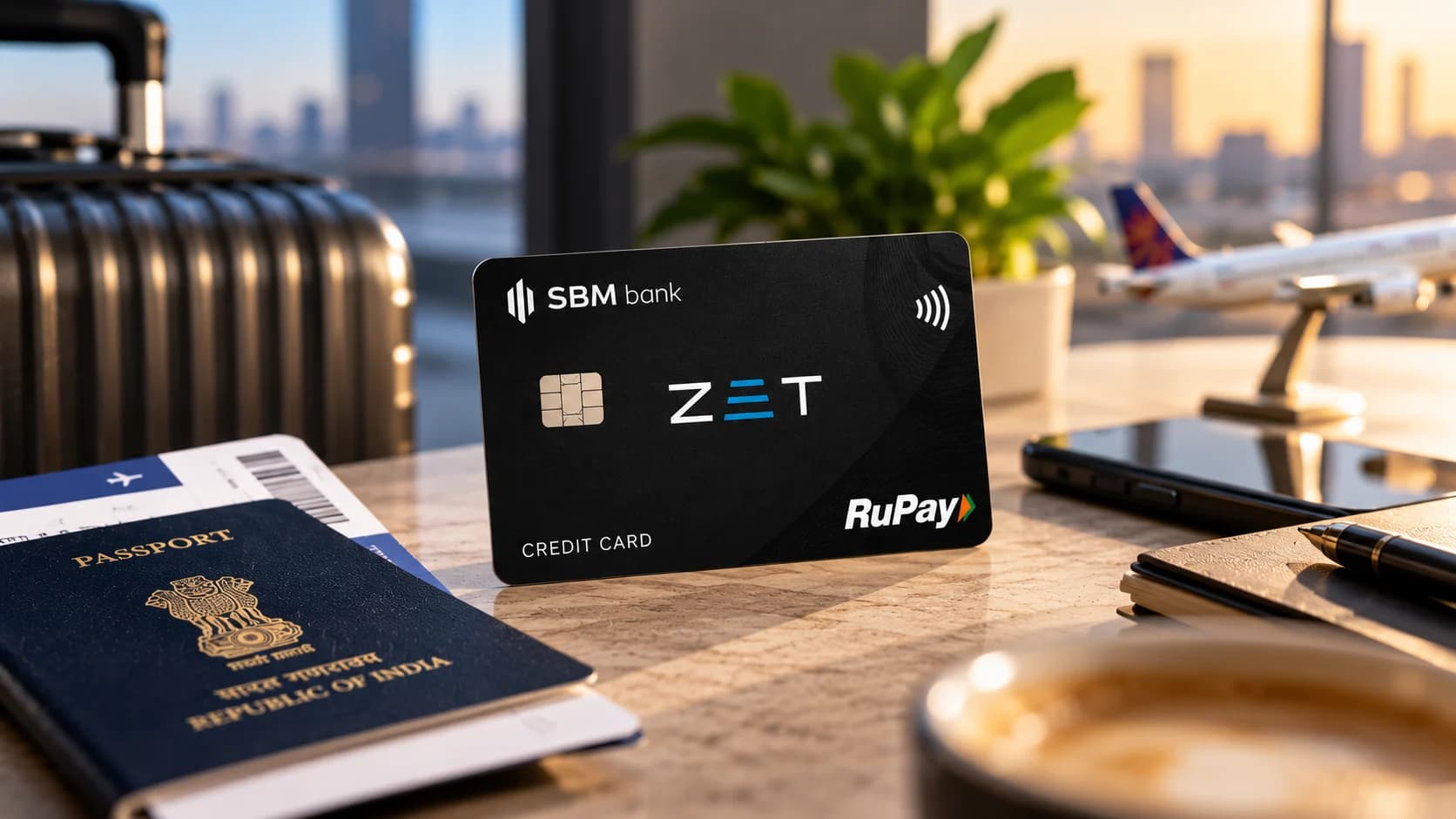
IndusInd Bank Tiger Credit Card
International holidaymakers, weekend fine-dining spenders, and frequent flyers seeking discounted forex markups and airport lounge comfort on an affordable budget.

Axis Bank Horizon Credit Card
Frequent leisure and business travelers seeking accelerated airline booking multipliers, 1:1 airline transfer flexibility, and moderate annual fee overhead.
HSBC TravelOne Credit Card
Frequent Airline Travelers, International Vacationers & Flexible Air Mile Transfer Enthusiasts
In This Guide
The IndusInd Bank Tiger Credit Card has suddenly become much more interesting.
It is still lifetime free.
It still gives domestic and international lounge access.
Its forex markup remains relatively low at 1.5%.
But the benefit that changes the entire card is this:
1 Tiger Reward Point can now transfer to 1 Air India Maharaja Club Point.
Air India's own Maharaja Club partner page currently confirms Tiger at a 1:1 transfer ratio.
That sounds extraordinary because Tiger can earn as many as:
6 Reward Points per ₹100
at its highest spending slab.
So does that mean a lifetime-free card can genuinely deliver:
6 Maharaja Points per ₹100 spent?
Yes.
But that is very different from saying:
“Tiger gives a 6% return.”
And it is also very different from saying someone spending ₹6 lakh a year earns 6 points per ₹100 on the entire ₹6 lakh.
They do not.
Tiger uses a progressive reward structure.
The first ₹1 lakh earns only 1 point per ₹100.
The next ₹1.5 lakh earns 2.
The next ₹2.5 lakh earns 4.
Only spending above ₹5 lakh in the card anniversary year enters the 6-point slab. IndusInd Bank explicitly says incremental spend in each slab earns the applicable multiplier.
That distinction completely changes the real reward rate.
Terms verified: 24 October 2026
Quick CardRecommend Take
Tiger is genuinely one of the most interesting lifetime-free travel cards available in India right now.
But not because everybody earns 6 Maharaja Points per ₹100.
The card becomes unusually attractive only after meaningful annual spending pushes you into the higher reward slabs.
For a low spender at ₹1–2 lakh per year, Tiger is a decent lifetime-free card with lounges and Air India transfer capability.
At ₹3–5 lakh, the economics become much more interesting.
Above ₹5 lakh, every additional ₹100 of eligible spending earns 6 Tiger points, which can currently become 6 Maharaja Points at 1:1.
But your blended rate remains far below 6 points per ₹100 because the earlier spending slabs earned less.
That is the catch.
Air India's current partner table directly confirms Tiger at 1:1. Other IndusInd cards have weaker Air India ratios—for example, Pinnacle and Indulge are currently 2:1 and Legend 4:1.
So Tiger is not merely a generic lifetime-free rewards card anymore.
It now has a credible airline-transfer use case.
That matters because cash redemption remains poor:
1 Tiger RP = ₹0.40 cash credit.
A point that is worth only 40 paise as cash can potentially generate much more value if transferred 1:1 into an airline programme and redeemed well.
Tiger Is Still Genuinely Lifetime Free
This part is straightforward.
The current Tiger MITC lists:
Joining fee: Nil
Annual fee: Nil
Add-on card fee: Nil.
So this is not a spend-waiver version of “lifetime free.”
There is no standard annual membership fee to recover.
That significantly changes how aggressively we need to value the benefits.
A paid ₹5,000 travel card needs to generate enough value to offset its fee every year.
Tiger can sit unused in your wallet without creating the same annual-cost problem.
How Tiger's 1X → 2X → 4X → 6X Rewards Actually Work
IndusInd's current reward table is:
| Annual eligible spend slab | Reward rate |
|---|---|
| Up to ₹1 lakh | 1 RP / ₹100 |
| ₹1,00,001–₹2.5 lakh | 2 RP / ₹100 |
| ₹2,50,001–₹5 lakh | 4 RP / ₹100 |
| Above ₹5 lakh | 6 RP / ₹100 |
The slabs operate on the card anniversary year, not the calendar year.
And most importantly:
the multiplier applies only to incremental spending inside that slab.
IndusInd's own ₹6 lakh example shows exactly this:
First ₹1 lakh:
1,000 RP
Next ₹1.5 lakh:
3,000 RP
Next ₹2.5 lakh:
10,000 RP
Next ₹1 lakh:
6,000 RP
Total at ₹6 lakh:
20,000 Reward Points
not:
36,000 Reward Points.
That means the phrase:
“6 points per ₹100”
describes the marginal reward rate after ₹5 lakh, not the overall return on your entire annual spending.
How Many Points Do You Really Earn?
Here is the actual progressive calculation.
| Annual eligible spend | Tiger RP earned | Maharaja Points at 1:1 | Blended points / ₹100 |
|---|---|---|---|
| ₹1 lakh | 1,000 | 1,000 | 1.00 |
| ₹2 lakh | 3,000 | 3,000 | 1.50 |
| ₹3 lakh | 6,000 | 6,000 | 2.00 |
| ₹5 lakh | 14,000 | 14,000 | 2.80 |
| ₹6 lakh | 20,000 | 20,000 | 3.33 |
| ₹10 lakh | 44,000 | 44,000 | 4.40 |
This is the single most important table in the article.
Someone spending ₹6 lakh does not earn 6 Maharaja Points per ₹100 overall.
They earn:
20,000 points ÷ ₹6 lakh = 3.33 points per ₹100
on a blended basis.
Even at ₹10 lakh annual spending, the blended rate is:
4.4 Maharaja Points per ₹100.
The headline 6X rate becomes increasingly meaningful only as more spending occurs above the ₹5 lakh threshold.
Is “6 Maharaja Points per ₹100” Really a 6% Return?
No.
Maharaja Points are not cash.
There is no guaranteed:
1 Maharaja Point = ₹1
redemption value.
Your actual value depends on:
- the flight
- cabin
- route
- travel dates
- award availability
- taxes and fees
- the number of Maharaja Points required
So the correct statement is:
Tiger can earn 6 Maharaja Points per ₹100 of incremental eligible spending after ₹5 lakh.
It should not be described as a guaranteed 6% monetary return.
What Could Those Points Be Worth?
To illustrate the range, here are four valuation scenarios.
These are CardRecommend scenarios, not guaranteed Air India values.
| Annual Spend | Maharaja Points | ₹0.50/point | ₹0.75/point | ₹1.00/point | ₹1.25/point |
|---|---|---|---|---|---|
| ₹1 lakh | 1,000 | ₹500 | ₹750 | ₹1,000 | ₹1,250 |
| ₹2 lakh | 3,000 | ₹1,500 | ₹2,250 | ₹3,000 | ₹3,750 |
| ₹3 lakh | 6,000 | ₹3,000 | ₹4,500 | ₹6,000 | ₹7,500 |
| ₹5 lakh | 14,000 | ₹7,000 | ₹10,500 | ₹14,000 | ₹17,500 |
| ₹6 lakh | 20,000 | ₹10,000 | ₹15,000 | ₹20,000 | ₹25,000 |
| ₹10 lakh | 44,000 | ₹22,000 | ₹33,000 | ₹44,000 | ₹55,000 |
At ₹6 lakh annual spend, even a relatively conservative ₹0.50-per-Maharaja-Point scenario implies:
₹10,000 of potential flight value
from a card with no annual fee.
At ₹1 per Maharaja Point:
₹20,000.
That is why Tiger has become genuinely interesting.
But if your redemptions produce poor value, those numbers fall rapidly.
The Marginal 6X Rate Is Much Better Than the Blended Rate
Suppose you have already spent ₹5 lakh in your anniversary year.
Your next ₹1 lakh earns:
6,000 Tiger RP
which can currently become:
6,000 Maharaja Points.
At our valuation scenarios:
₹0.50/point:
₹3,000 equivalent travel value
₹0.75:
₹4,500
₹1:
₹6,000
₹1.25:
₹7,500
So once you have crossed ₹5 lakh, Tiger can become an excellent card for additional eligible spend.
That does not mean I would manufacture spending just to reach ₹5 lakh.
Moving unnecessary purchases onto a card simply to unlock a higher multiplier destroys the economics.
The higher tier is valuable only if you naturally spend enough to reach it.
Which Transactions Don't Get the Accelerated Multiplier?
IndusInd's current Tiger page says accelerated Reward Points do not accrue on selected categories including:
- utilities
- insurance
- government services
- educational institutions
- real estate
- rental payments
Fuel transactions earn no Reward Points.
The wording is important.
IndusInd says these selected categories do not receive accelerated rewards.
Fuel is separately stated to earn nothing.
So CardRecommend would not classify all of these categories as universally zero-reward without a more specific MCC-level current term.
But they should absolutely not be included in calculations assuming the 2X/4X/6X accelerator.
All reward tables in this article therefore assume spending that is eligible for the accelerated programme.
Tiger → Air India Maharaja Club at 1:1
This benefit is now confirmed by both sides.
Air India's current IndusInd partner page lists:
Tiger → 1:1
and says transfers normally post within:
2–4 working days.
IndusInd's own redemption page also shows:
100 Reward Points = 100 Maharaja Points.
That removes the biggest uncertainty that existed when the ratio first changed in June.
Minimum Transfer: Official Sources Conflict
There is one documentation conflict.
IndusInd's own Maharaja redemption page says you must accumulate at least:
500 Reward Points
before initiating a transfer, with redemptions in multiples of 100.
Air India's current partner T&C says the minimum transfer is:
100 Maharaja Points
and also requires multiples of 100.
Those two official pages do not align.
For CardRecommend's canonical data, I would use the stricter 500-RP minimum until IndusInd or Air India reconciles the documentation, because IndusInd controls the source redemption process.
Maximum Air India Transfer
IndusInd currently says a maximum of:
25,000 Reward Points per calendar month
can be redeemed into Maharaja Club.
For most Tiger users this is not restrictive.
Even our ₹10 lakh annual-spend example generates 44,000 points across the entire year, which could be transferred over two months.
But it matters if you build a large balance and suddenly need a large Air India award.
Do not wait until the last moment to discover the transfer cap.
Reward Points Expire
Tiger Reward Points currently have a:
24-month validity from accrual.
That makes hoarding indefinitely a poor strategy.
If you use Tiger primarily for Maharaja Club, transfer points when you have a genuine redemption plan—but do not move them prematurely either.
Airline transfers are one-way.
Once Tiger points become Maharaja Points, they cannot be moved back.
Cash Redemption vs Air India Transfer
Tiger's cash value is:
₹0.40 per Reward Point.
So:
10,000 Tiger RP = ₹4,000 gross cash-credit value.
Cash redemption is currently capped at:
5,000 RP per calendar month.
That means redeeming 10,000 points as cash requires at least two monthly redemptions.
IndusInd's current consolidated fee schedule lists a:
₹149 cash-redemption fee
and:
₹100 fee for other redemption categories, plus applicable GST.
At 18% GST, two ₹149 cash-redemption fees would total approximately:
₹351.64
So 10,000 points redeemed as cash across two months could net roughly:
₹3,648
assuming the current fee is charged on each redemption.
Compare that with Air India.
10,000 Tiger Points transferred 1:1
You receive:
10,000 Maharaja Points
If you realise ₹0.50 per Maharaja Point:
₹5,000 travel value
At ₹0.75:
₹7,500
At ₹1:
₹10,000
At ₹1.25:
₹12,500
Even our lowest illustrative airline valuation beats the gross ₹4,000 cash value.
That is why cash is no longer the rational default redemption for an Air India traveller.
One caveat: the Maharaja-specific transfer page does not separately state a transfer fee, while IndusInd's general schedule currently lists ₹100 for non-cash redemptions. Confirm the actual portal fee before transferring rather than assuming it is free.
Domestic Lounge Access: The 2026 Rule Needs Careful Reading
This is where many current Tiger articles are likely to get the facts wrong.
IndusInd announced that from April 2026 it would begin tracking spending for domestic lounge eligibility from the July 2026 quarter onward.
That sounds as though every IndusInd card became spend-gated.
But the actual official lounge T&C lists only:
- Indulge
- Solitaire
- Crest
- Legacy
- Pinnacle
- Celesta
Tiger is not included in that spend-threshold table.
Meanwhile, Tiger's live product page still says:
2 complimentary domestic lounge visits per calendar quarter
using the Tiger Credit Card.
So the current evidence supports this conclusion:
As of 24 October 2026, IndusInd has not published a quarterly spending requirement for Tiger's domestic lounge benefit in the new spend-gated lounge T&C.
I would therefore continue showing:
2 domestic lounge visits per quarter
without attaching a fabricated spend threshold.
But I would also flag the benefit for monitoring because IndusInd's generic update language is broader than the specific card table.
Can We Call That 8 Spend-Free Domestic Lounge Visits?
Practically, the current documents support:
2 per quarter = up to 8 per year
and no Tiger-specific spend requirement appears in the new official spend-threshold table.
But I would avoid marketing copy that aggressively promises:
“8 guaranteed spend-free lounges forever.”
Better wording:
Up to 2 complimentary domestic lounge visits per quarter; no Tiger-specific spend threshold is currently published in IndusInd's 2026 spend-gated lounge terms.
That is both accurate and future-proof.
International Lounge Access
Tiger also gives:
2 complimentary international lounge visits per year
outside India through Priority Pass.
Priority Pass membership must be requested.
Domestic Priority Pass use is not covered under this international benefit, and guest visits are chargeable under the applicable Priority Pass terms.
For a lifetime-free card, two genuine overseas lounge visits remain a meaningful benefit.
Tiger's Forex Markup Is Low — But Not Zero
Tiger charges:
1.5% foreign-currency markup
with GST applicable on the markup.
At 18% GST, the effective issuer markup is approximately:
1.77%
before considering exchange-rate differences.
On ₹1 lakh equivalent of foreign spending:
Forex markup:
₹1,500
GST on markup:
₹270
Approximate issuer forex cost:
₹1,770
That is much better than the 3.5% markup on many mainstream Indian cards.
But it is not zero.
Scapia and ixigo AU currently offer lifetime-free zero-forex alternatives.
Can Tiger's Rewards Offset the Forex Cost?
Potentially.
This depends entirely on your current annual-spend slab.
If you're still in the 1X slab
₹1 lakh eligible international spending earns roughly:
1,000 Tiger RP
At ₹0.50 per Maharaja Point:
₹500 value
Against approximately ₹1,770 forex cost:
net cost ≈ ₹1,270
Even at ₹1.25 per point:
₹1,250 value
still below the forex cost.
So Tiger is not a great overseas-spend card at the base slab.
If you're already above ₹5 lakh annual spend
The same ₹1 lakh marginal eligible foreign spend could earn:
6,000 Tiger RP → 6,000 Maharaja Points
At ₹0.50/point:
₹3,000 value
minus ~₹1,770 forex cost:
~₹1,230 positive theoretical value
At ₹1/point:
₹6,000 value
minus ~₹1,770:
~₹4,230
Now the economics look completely different.
This is why Tiger becomes much more compelling for a high spender who also flies Air India.
But there is a simpler option for travellers who do not care about airline miles:
use a zero-forex card and pay no markup at all.
Always Pay in Local Currency Abroad
IndusInd also levies a Dynamic Currency Conversion fee on applicable INR-denominated transactions at international or overseas-registered merchants under its current card-fee framework.
So do not select INR merely because the terminal offers it.
When travelling internationally:
choose the local currency.
Let the card network perform the conversion.
₹1–2 Lakh Annual Spender: Tiger Is Good, Not Exceptional
At ₹1 lakh annual eligible spend:
1,000 Maharaja Points
At ₹2 lakh:
3,000 Maharaja Points
The blended earning rate at ₹2 lakh is only:
1.5 points per ₹100.
That is not an extraordinary travel-reward engine.
For this user, Tiger's main value comes from:
- lifetime-free pricing
- lounge access
- low-ish 1.5% forex
- golf
- movie benefit
- having an Air India transfer route without paying an annual fee
I would keep Tiger.
I would not aggressively move all spending onto it.
₹3–5 Lakh Annual Spender: This Is Where Tiger Gets Interesting
At ₹3 lakh:
6,000 points
At ₹5 lakh:
14,000 points
The blended earn improves from:
2 points/₹100
to:
2.8 points/₹100.
For an Air India user, that is meaningful because every point currently transfers 1:1.
At ₹1 per Maharaja Point, ₹5 lakh eligible spending could generate:
₹14,000 of theoretical travel value
without an annual card fee.
Even at ₹0.50:
₹7,000.
This is the segment where I begin actively recommending Tiger to an Air India user.
₹6–10 Lakh Annual Spender: Tiger Becomes Unusually Strong
At ₹6 lakh:
20,000 Maharaja Points
At ₹10 lakh:
44,000 Maharaja Points
Blended earn:
3.33 to 4.4 points per ₹100.
And every additional eligible ₹100 above ₹5 lakh continues earning:
6 Maharaja Points
at the current transfer ratio.
For a lifetime-free card, that is genuinely unusual.
A high spender who uses Air India effectively can extract premium-card-like travel rewards without paying a premium-card annual fee.
The catch is that excluded/non-accelerated categories can pull the actual return below these idealised numbers.
Air India Frequent Flyer: This Is Tiger's Best Customer
Tiger makes the most sense if you:
- regularly fly Air India or Air India Express
- understand award availability
- can extract reasonable value from Maharaja Points
- naturally spend ₹3–5 lakh or more annually on eligible categories
- don't want another large annual card fee
For this user, Tiger's lifetime-free status is powerful.
You can keep the card through years where spending is lower without worrying about recovering an annual fee.
Cashback User: Tiger Is Much Less Exciting
If you do not care about Air India, the card loses much of its magic.
Cash value:
₹0.40/RP.
That means the progressive slabs translate to marginal cash-return rates of roughly:
1X:
0.4%
2X:
0.8%
4X:
1.6%
6X:
2.4%
And the blended rate is lower.
At ₹6 lakh annual spend:
20,000 RP × ₹0.40:
₹8,000 gross cash value
which is only:
~1.33% gross blended return
before redemption fees.
For a pure cashback user, there are better cards.
Tiger's 1:1 Air India route is what makes it special.
Lounge-Focused Traveller: Tiger Is Still Excellent for Free
For someone attracted mainly by lounges, Tiger remains unusual.
Current live benefit:
2 domestic lounge visits per quarter
plus:
2 international Priority Pass visits per year.
And unlike several other IndusInd premium cards, Tiger is absent from the current official 2026 spend-threshold table.
That is a very strong benefit set for a ₹0 annual-fee product.
But lounge programmes change frequently.
I would apply for Tiger because the card works overall—not solely because of a benefit that could be modified later.
Tiger vs Scapia
Scapia solves a different problem.
It offers:
- lifetime-free pricing
- zero forex
- a travel-rewards ecosystem
- domestic Airport Privileges
But Scapia foreign-currency transactions do not earn Scapia Coins, and it does not give you a 1:1 Air India transferable-points proposition.
So:
Choose Tiger if you want Maharaja Club points.
Choose Scapia if zero forex and simpler travel economics matter more.
For an Air India traveller spending ₹5 lakh+ annually, Tiger can be much more rewarding.
For someone travelling abroad frequently without loyalty to Air India, Scapia is cleaner.
Tiger vs ixigo AU
ixigo AU is another lifetime-free zero-forex travel card.
Its strengths are:
- 0% forex
- travel discounts
- railway benefits
- lounge access
- straightforward travel positioning.
Its international transactions currently earn no Reward Points.
Tiger charges forex but lets you build Air India points.
Again:
ixigo AU → fee avoidance
Tiger → airline-transfer upside
Neither is universally better.
Tiger vs Axis Horizon
Axis Horizon is the closest paid comparison for someone specifically targeting Air India.
Axis Bank currently transfers:
1 EDGE Mile = 1 Maharaja Point
for Horizon.
Horizon also earns strongly on qualifying direct-airline and Travel EDGE spend.
But Horizon carries an annual fee.
Tiger does not.
So for someone who simply wants a no-fee route into Air India miles, Tiger is exceptionally difficult to beat.
Horizon makes more sense if your spending pattern heavily favours its travel accelerators and the extra rewards justify paying for the card.
Tiger vs HSBC TravelOne
HSBC TravelOne also supports Air India and has a much broader transferable-points ecosystem.
HSBC's rewards platform includes multiple airline and hotel partners, with 1:1 ratios on many TravelOne transfers.
That flexibility is valuable.
Tiger's advantage is:
₹0 annual fee.
If you want one serious transferable-points ecosystem across multiple airlines and hotels, TravelOne is more mature.
If you primarily care about Air India and do not want an annual fee, Tiger is the more unusual value proposition.
What About Air India SBI Cards?
Do not recommend Air India SBI Platinum or Signature to new applicants.
SBI Card officially discontinued new issuance of both variants from:
10 October 2024.
Existing cardholders are a separate question.
For someone applying today, they are not a realistic alternative.
Is Tiger Easy to Get?
The card is currently available through IndusInd's live application page.
IndusInd's general current eligibility guidance cites:
- Indian residency
- salaried or self-employed status
- regular income
- a general minimum income starting around ₹20,000/month
- satisfactory credit history
while explicitly noting that actual requirements can vary by card.
I did not find a separate current Tiger-specific published income threshold that I would be comfortable presenting as fact.
Community reports also show inconsistent approval experiences—including users with strong credit profiles being rejected while others receive rapid approval.
That is anecdotal and should not be interpreted as an approval-rate statistic.
Who Should Apply?
Tiger is particularly compelling if you:
- want a genuinely lifetime-free card
- fly Air India or Air India Express
- can naturally spend ₹3 lakh+ annually on eligible transactions
- expect to cross ₹5 lakh and make use of the 6X marginal tier
- value domestic and international lounge access
- want a low-ish forex card but do not require zero forex
- are comfortable managing airline points rather than cashback
Who Should Skip It?
Tiger is less compelling if:
- you spend less than ₹1–2 lakh annually
- you want simple cashback
- most of your spend is utilities, insurance, rent, government or other non-accelerated categories
- you have no use for Maharaja Club
- zero forex is more important than earning airline points
- you are likely to hoard rewards until they expire
- you are attracted only by the phrase “6% return”
The last point matters most.
There is no guaranteed 6% return.
There is a 6 Maharaja Points per ₹100 marginal earn rate after ₹5 lakh.
Those are not the same thing.
CardRecommend Verdict
IndusInd Tiger has become one of India's most interesting lifetime-free travel cards in 2026—but the “6% Air India return” headline oversells what most cardholders actually earn.
The good news is real.
Tiger is genuinely lifetime free.
The Air India Maharaja Club transfer is genuinely 1:1.
And spending above ₹5 lakh in the anniversary year genuinely earns 6 Tiger Reward Points per ₹100, which can currently become 6 Maharaja Points per ₹100.
That combination is unusually strong for a zero-fee card.
But the progressive structure changes the real numbers dramatically.
At ₹6 lakh annual eligible spend, you earn:
20,000 points
not 36,000.
Your blended rate is:
3.33 Maharaja Points per ₹100.
At ₹10 lakh:
44,000 points
for a blended rate of:
4.4 points per ₹100.
So the card becomes more valuable the further you spend beyond ₹5 lakh.
I would describe the sweet spot as:
₹3–5 lakh+ annual eligible spend for an Air India user, with exceptional marginal value once spending exceeds ₹5 lakh.
For a ₹1 lakh spender, Tiger is mostly a good free lounge card with an airline-transfer option.
For a ₹6–10 lakh spender who actively uses Maharaja Club, it can become a genuinely powerful travel-rewards card.
For cashback users, it is much less impressive because cash redemption is only ₹0.40 per point.
For international travel, the 1.5% forex markup is competitive but not market-leading; zero-forex cards remain better if your objective is simply to minimise overseas transaction costs.
The lounge situation is also better than I expected.
IndusInd's 2026 spend-gated lounge document does not list Tiger, while the live Tiger page continues to advertise two domestic lounge visits per quarter.
So as of 24 October 2026, CardRecommend should not invent a spend threshold that IndusInd has not published.
My recommendation is simple:
Apply for Tiger if you want a lifetime-free Air India transfer card and can naturally push meaningful eligible spending through it.
Keep it if you already have it.
But do not chase ₹5 lakh of spending simply to unlock 6X.
And never call 6 Maharaja Points per ₹100 a guaranteed 6% return.
The real reason Tiger is exceptional is subtler:
it gives a no-annual-fee cardholder access to a 1:1 airline-transfer programme with increasingly strong marginal earning as annual spend rises.
That is rare enough on its own.
Recommended Alternatives
Scapia Federal Bank Credit Card
Zero Forex Markup, Scapia Travel Rewards & RuPay UPI

ixigo AU Credit Card
Budget International Travelers, Train & Flight Bookers, Online Shoppers & UPI Commuters
Cards Discussed in This Article


Scapia Federal Bank Credit Card
Frequently Asked Questions
Is IndusInd Tiger genuinely lifetime free?
Yes.
The current MITC lists ₹0 joining fee, ₹0 annual fee and ₹0 add-on fee.
Does Tiger transfer to Air India Maharaja Club at 1:1?
Yes.
Air India's current official partner page lists:
Tiger: 1:1
Does Tiger really earn 6 points per ₹100?
Yes—but only on incremental eligible spending above ₹5 lakh in the card anniversary year.
It does not retroactively apply 6X to the first ₹5 lakh.
How many points do I earn on ₹6 lakh annual spending?
Approximately:
20,000 Reward Points
assuming all spending qualifies for the progressive reward structure.
How many points on ₹10 lakh?
Approximately:
44,000 Reward Points
under the same assumption.
Is that a 6% return?
No.
Six Reward Points can become six Maharaja Points, but a Maharaja Point has no fixed ₹1 value.
Actual return depends on your flight redemption.
What is one Tiger Reward Point worth as cash?
₹0.40
before considering applicable redemption charges.
What is the Air India transfer minimum?
Official documentation conflicts.
IndusInd currently says you need at least 500 Reward Points, while Air India's partner page references a minimum of 100 Maharaja Points.
Until clarified, use 500 RP as the safer practical minimum.
What is the maximum Air India transfer?
IndusInd currently lists:
25,000 Reward Points per calendar month.
How long do Maharaja transfers take?
Air India says:
2–4 working days.
Do Tiger Reward Points expire?
Yes.
Current IndusInd FAQ material says Tiger Reward Points are valid for:
24 months from accrual.
Does Tiger still offer domestic lounge access without a spend requirement?
Tiger's live product page gives two domestic lounge visits per quarter.
IndusInd's 2026 spend-threshold lounge document does not include Tiger among the cards subject to the new quarterly spend thresholds.
So no Tiger-specific spend requirement is currently published in that document.
How many international lounge visits does Tiger offer?
2 per year
outside India via Priority Pass under current terms.
What is Tiger's forex markup?
1.5% + applicable GST on the markup.
At 18% GST that is approximately 1.77% of the foreign transaction amount before exchange-rate effects.
Is Tiger better than a zero-forex card?
For pure overseas spending, not necessarily.
For a high spender who values Maharaja Points and is already in Tiger's 4X/6X slabs, rewards can potentially outweigh the forex cost.
Is Tiger good for low spenders?
It is a good lifetime-free benefits card.
It is not an exceptional rewards card at the first ₹1 lakh because the base rate is only 1 RP per ₹100.
At what spend does Tiger become genuinely interesting?
Around ₹3–5 lakh annual eligible spend, especially for someone using Air India Maharaja Club.
The strongest marginal rate begins after ₹5 lakh.
Should I apply only for the lounge benefit?
The lounge proposition is unusually good for a lifetime-free card, but lounge programmes can change.
Apply because the overall card fits you, not solely for lounge access.

Founder & Editor, CardRecommend
Founder & Editor of CardRecommend. Dedicated to researching credit card reward structures, fee waivers, airport lounge policies, and calculating real user value across Indian financial products.