Executive Summary
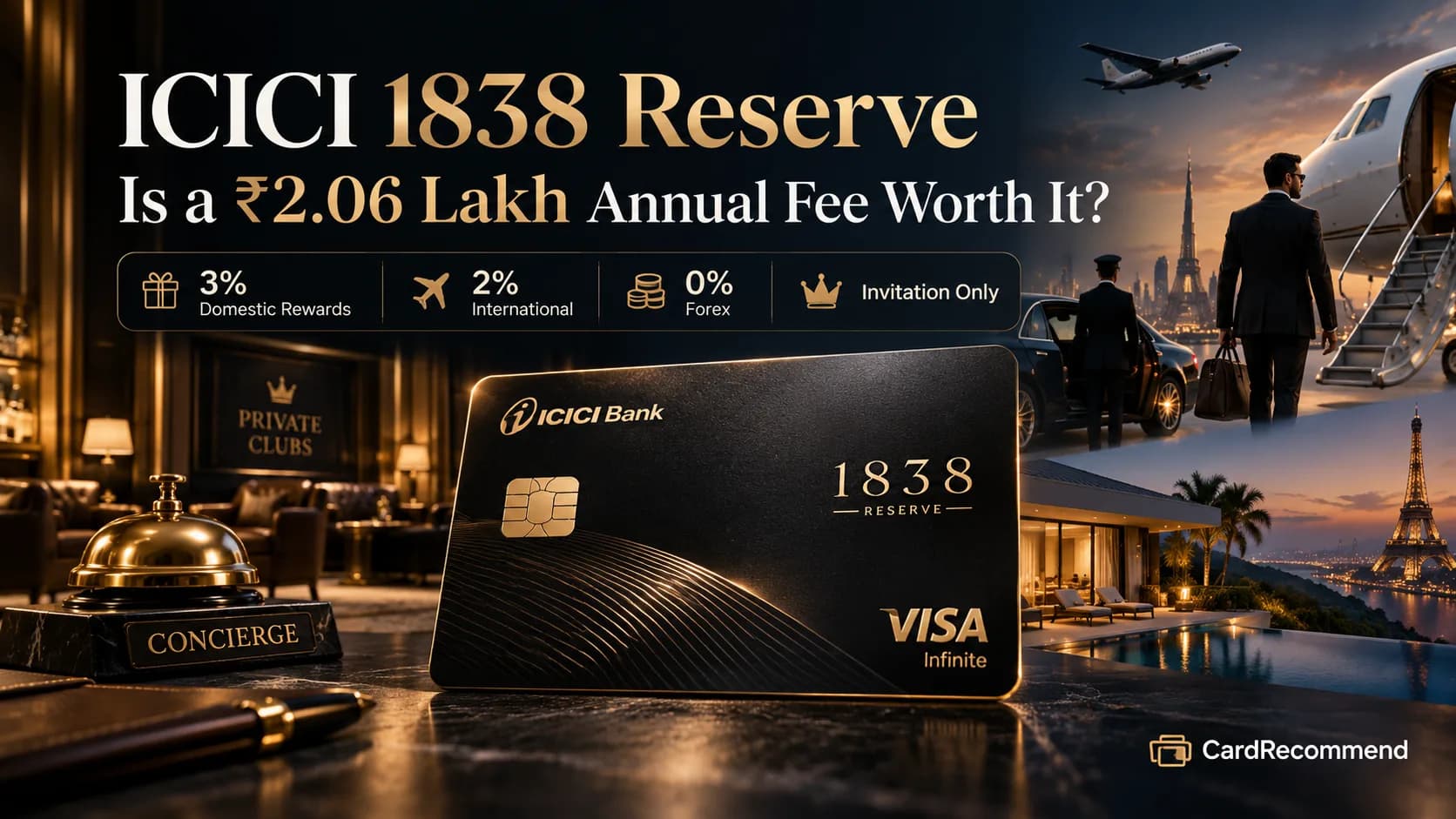
The ICICI 1838 Reserve costs ₹2,06,500 a year after GST. Its 3% domestic rewards and zero forex look strong, but the real value lies in Quorum membership, private-club access and luxury travel privileges. We calculate who can actually justify the fee.
Cards Compared
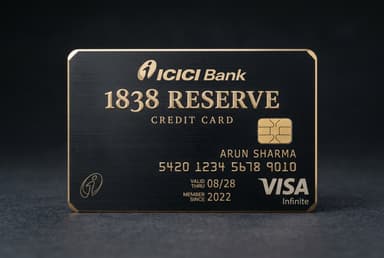
1838 Reserve ICICI Bank Credit Card
UHNI Private Club Access (The Quorum & 280+ Global Clubs), Zero Forex & Luxury International Travel
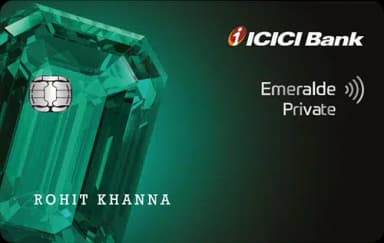
ICICI Bank Emeralde Private Metal Credit Card
Ultra-high-net-worth individuals, luxury hotel loyalists, and elite frequent flyers seeking a top-tier metal card with flat uncapped 3% rewards and zero reward redemption fee.
In This Guide
\ ICICI Bank's 1838 Reserve is not a normal premium credit card.
The annual fee alone makes that clear.
The card costs ₹1,75,000 plus GST to join and another ₹1,75,000 plus GST every year, with no annual-fee waiver. At the current 18% GST rate, that means paying ₹2,06,500 every year simply to keep the card.
In return, ICICI Bank is offering 3% rewards on domestic spending, 2% on international spending, zero forex markup, full-access membership to The Quorum, access to 280+ private clubs globally, concierge services, luxury stays, airport transfers, business-class companion-ticket discounts and a collection of other high-end lifestyle benefits.
The 1838 Reserve therefore needs to be judged very differently from a normal rewards card.
The right question is not whether 3% rewards are good.
They are.
The real question is whether 3% rewards plus the lifestyle package can justify a recurring ₹2.06 lakh annual cost.
For most rewards-focused credit-card users, the answer is no.
For a very specific customer who would independently pay for private-club access, business-class travel and high-touch concierge services, the answer becomes much more interesting.
Terms verified: 18 October 2026
1838 Reserve Is Now Formally Launched
The 1838 Reserve ICICI Bank Credit Card has now moved beyond early teasers and partial disclosures.
The complete product proposition is live on ICICI Bank's website, and the card has received its formal launch in association with The Times of India and Visa.
It remains invitation-only.
ICICI Bank says interested customers can contact their Relationship Manager or register their interest, after which eligibility is assessed by the bank.
There is no published income number or simple public eligibility threshold that guarantees approval.
That makes sense because 1838 Reserve is clearly being positioned as a relationship-led UHNI product rather than a conventional premium card available to anyone meeting a salary requirement.
ICICI 1838 Reserve Benefits at a Glance
| Feature | 1838 Reserve |
|---|---|
| Joining fee | ₹1,75,000 + GST |
| Actual cost at 18% GST | ₹2,06,500 |
| Annual fee | ₹1,75,000 + GST |
| Annual fee waiver | None |
| Domestic rewards | 3% |
| International rewards | 2% |
| Forex markup | 0% |
| Overall reward cap | 1,00,000 Reward Points/month |
| Restricted-category cap | 10,000 Reward Points/month combined |
| Fuel rewards | No |
| Rent rewards | No |
| E-wallet rewards | No |
| EMI rewards | No |
| Quorum membership | Full access |
| Private-club network | 280+ clubs across 52 countries |
| Concierge | Dedicated Crib Life Lifestyle Manager |
| Business-class benefit | 50% off companion ticket, up to ₹50,000, once per quarter |
| International airport transfer | Once per quarter at select locations |
| Airport lounge access | No standard domestic or international lounge benefit |
| Add-on card | Currently not issued |
| Availability | Invitation only |
₹2,06,500 Every Year Changes the Entire Calculation
The headline fee is ₹1.75 lakh, but that is not what the cardholder actually pays.
At 18% GST:
₹1,75,000 × 18% = ₹31,500 GST
So:
₹1,75,000 + ₹31,500 = ₹2,06,500
And unlike many premium cards, there is currently no annual-fee waiver based on spending.
You cannot spend ₹10 lakh, ₹25 lakh or even ₹50 lakh and make the next year's annual fee disappear.
If you keep 1838 Reserve, ₹2,06,500 becomes a recurring annual cost.
That makes break-even calculations essential.
How Much Would You Need to Spend Just to Recover the Annual Fee Through Rewards?
ICICI advertises a 3% reward rate on domestic spending.
If we assume you realise the full advertised 3% value from your rewards, the calculation is:
₹2,06,500 ÷ 3% = ₹68,83,333
That is roughly ₹68.83 lakh of eligible domestic spending every year merely to generate rewards equivalent to the annual card cost.
Or approximately:
₹5.74 lakh of eligible domestic spending every month.
Here is how that looks at different spending levels:
| Annual eligible domestic spend | Advertised 3% reward value | Amount still needed to recover ₹2,06,500 fee |
|---|---|---|
| ₹10 lakh | ₹30,000 | ₹1,76,500 |
| ₹25 lakh | ₹75,000 | ₹1,31,500 |
| ₹50 lakh | ₹1,50,000 | ₹56,500 |
| ₹68.83 lakh | ~₹2,06,500 | ~₹0 |
| ₹1 crore | ₹3,00,000* | Positive before valuing fee/benefits |
*Subject to transaction eligibility, reward caps and the actual value realised when Reward Points are redeemed.
This is why I would not evaluate 1838 Reserve as a pure rewards card.
Even a person putting ₹25 lakh of eligible domestic expenditure on the card would generate only ₹75,000 at the advertised 3% rate — nowhere near the ₹2,06,500 annual carrying cost.
International Spending Doesn't Solve the Fee Equation Either
The card has an excellent combination for overseas spending:
0% forex markup + 2% rewards on eligible international transactions.
There is genuine value here.
Unlike many zero-forex credit cards that remove the markup but provide little or no reward on foreign transactions, 1838 Reserve continues to advertise a 2% international reward rate.
But using international rewards alone to recover the annual fee would require:
₹2,06,500 ÷ 2% = ₹1,03,25,000
That's ₹1.0325 crore of eligible international spending per year.
Nobody should spend ₹1 crore abroad merely to justify holding a credit card.
Zero forex is a very good benefit.
It is not, by itself, a ₹2.06 lakh-a-year benefit.
The First-Year Welcome Package Makes the Maths Better — But Not Cheap
ICICI lists several high-value benefits around the initial membership proposition.
These include:
- A luxury overnight stay at select Lohono Platinum Villas, stated value ₹50,000
- A welcome gift from brands such as Marshall, Smeg, Le Creuset or Good Earth, stated value ₹25,000
- A Klook museum experience for the cardholder and one guest, stated value ₹7,500
The combined stated value is:
₹50,000 + ₹25,000 + ₹7,500 = ₹82,500
If — and this is important — you genuinely value all three at their full face value, the effective first-year gap falls from ₹2,06,500 to:
₹2,06,500 - ₹82,500 = ₹1,24,000
At a 3% domestic reward rate, recovering that remaining amount would require:
₹1,24,000 ÷ 3% = approximately ₹41.33 lakh
That is much better than ₹68.83 lakh.
But it is still a very large amount of eligible annual spending.
And there is a bigger issue with this type of calculation.
A ₹50,000 villa stay is worth ₹50,000 to you only if you would genuinely have paid ₹50,000 for that stay.
A ₹25,000 luxury gift is not automatically ₹25,000 of economic value if it replaces something you would never have purchased.
For a card this expensive, adding every issuer-stated benefit to create a giant theoretical value figure is the wrong way to evaluate it.
The Real Reason to Own 1838 Reserve Is The Quorum
The Quorum is probably the single benefit that can completely change this card's economics for the right person.
ICICI Bank says 1838 Reserve includes full-access membership to The Quorum, plus access to 280+ private clubs across 52 countries.
ICICI assigns the Quorum membership a stated value of ₹3,00,000.
That figure alone is higher than the card's ₹2,06,500 annual cost.
But there are two completely different ways to read that.
If you are an existing Quorum member, were already considering membership, or genuinely use private clubs frequently for meetings, dining, networking and travel, 1838 Reserve suddenly becomes much easier to justify.
You could effectively be buying a private-club membership and receiving a premium credit card plus the other benefits around it.
But if you would never independently pay for The Quorum, calling it a ₹3 lakh saving is meaningless.
This distinction is the entire key to 1838 Reserve.
The card is not primarily selling rewards. It is selling access.
That also explains why standard reward-rate comparisons do not fully capture what ICICI and Times are trying to build.
The Business-Class Companion Benefit Could Be Extremely Valuable
Another benefit that can materially alter the economics is the business-class ticket offer.
The current proposition gives:
Book one business-class ticket and receive 50% off the companion ticket, up to ₹50,000, once per quarter.
If someone naturally uses the maximum benefit in all four quarters:
₹50,000 × 4 = ₹2,00,000 per year
That is just ₹6,500 below the card's ₹2,06,500 annual cost.
This is one of the few benefits where the maths can become genuinely compelling without relying on abstract reward-point valuations.
But it is also a perfect example of why the card will make sense for a tiny audience.
You need to be booking eligible business-class journeys with a companion frequently enough to use the benefit four times a year.
Someone who flies economy most of the time should value this at close to zero rather than ₹2 lakh.
Then Come the Lifestyle Benefits
The package goes significantly beyond rewards.
ICICI currently advertises:
- A dedicated Crib Life Lifestyle Manager with unlimited concierge requests
- Four Truefitt & Hill Royal Signature Services, one per quarter
- Visa assistance covering the primary cardholder, spouse and up to two children
- Two fast-track security entries at select international airports for the primary cardholder and one guest
- One chauffeur-driven international airport transfer per quarter at select locations
- Harrods Gold Tier status
- Accor+ Explorer membership with Gold status
- A stay-three-nights-pay-for-two benefit at participating ITC properties
ICICI assigns substantial values to several of these benefits.
Again, I would not simply add all the brochure numbers and announce that the card gives several lakhs of "free value".
Use a simpler test:
Would you have paid for this benefit without the card?
If yes, include it in your personal calculation.
If no, value it conservatively or at zero.
The Lack of Airport Lounge Access Is Strange at This Price
This is probably the most surprising feature of 1838 Reserve.
ICICI Bank's current Most Important Terms and Conditions explicitly state that domestic or international lounge access is not available on the 1838 Reserve ICICI Bank Credit Card.
That is not the same as saying the card has no airport benefits.
It does offer:
- Fast-track security at select international airports
- Chauffeur-driven international airport transfers at select locations
- Visa-related services
But those are not lounge access.
This becomes particularly unusual when much cheaper ICICI products offer extensive lounge programmes. (You can check exact eligible cards and spend hurdles for every Indian airport in our Airport Lounge Access Checker).
For a card costing ₹2.06 lakh every year, I would have expected standard lounge access to be included even if ICICI believes the target customer usually flies business or first class.
Its absence is a genuine weakness.
Reward Caps and Exclusions Matter
The headline 3% reward rate does not apply without limits.
ICICI confirms an overall cap of 1,00,000 Reward Points per month.
There is also a combined 10,000 Reward Point monthly cap across:
- Utilities
- Telecom
- Government payments
- Tax
- Education
- Insurance
And no Reward Points are earned on:
- Fuel
- Rent
- E-wallet transactions
- EMI transactions
That matters because a UHNI cardholder can easily have very large tax, insurance and other institutional payments.
The 3% headline should therefore never be interpreted as an unrestricted 3% return on every rupee charged to the card.
1838 Reserve vs Times Black vs Emeralde Private Metal
For most ICICI customers considering an expensive premium card, this is the more useful comparison than putting 1838 Reserve beside ordinary travel cards.
| Feature | 1838 Reserve | Times Black | Emeralde Private Metal |
|---|---|---|---|
| Joining fee | ₹1,75,000 + GST | ₹20,000 + GST | ₹12,499 + GST |
| Annual fee | ₹1,75,000 + GST | ₹20,000 + GST | ₹12,499 + GST |
| Fee waiver | None | Over ₹25 lakh annual spend | Over ₹10 lakh annual spend |
| Domestic earn | 3% advertised | 2% advertised | 6 RP / ₹200 eligible retail spend |
| International earn | 2% advertised | 2.5% advertised | Standard reward structure |
| Forex markup | 0% | 1.49% | 2% |
| Domestic lounge | No | Unlimited | Unlimited |
| International lounge | No | Unlimited | Unlimited |
| Quorum | Full membership + global club network | Special membership/access offers | No comparable full Quorum proposition |
| Concierge | Dedicated Crib Life Lifestyle Manager | Crib Life / concierge benefits | 24x7 concierge |
| Positioning | Private-club / UHNI lifestyle membership | Ultra-premium lifestyle card | Premium rewards/travel card |
This table exposes the real trade-off.
1838 Reserve wins decisively on zero forex, private-club access and the depth of some experiential benefits.
But Times Black and Emeralde Private Metal cost dramatically less and provide something 1838 Reserve does not: unlimited airport lounge access.
If your priority is reward optimisation, lounge access and conventional premium-card value, I would look very carefully at those cheaper options before assigning ₹2.06 lakh a year to 1838 Reserve.
Times Black May Actually Make More Sense for Many High Spenders
Times Black is especially relevant because it comes from the same ICICI Bank–Times partnership.
Its annual fee is ₹20,000 plus GST instead of ₹1,75,000 plus GST.
It currently advertises:
- 2% domestic rewards
- 2.5% international rewards
- 1.49% forex markup
- Unlimited domestic lounge access
- Unlimited international lounge access
- Crib Life services
- Quorum-related privileges and offers
- Luxury and travel benefits
Its fee can also be waived after qualifying annual spending above ₹25 lakh.
For a person who likes the Times luxury proposition but does not genuinely need a full Quorum membership, Times Black could be the far more rational product among ultra-premium lifestyle cards.
1838 Reserve gives more exclusivity.
Times Black gives a much easier financial equation.
Emeralde Private Metal Is Even Harder to Ignore
ICICI's own Emeralde Private Metal costs only ₹12,499 plus GST annually, with a fee waiver after qualifying annual expenditure above ₹10 lakh.
It also currently includes:
- Unlimited domestic lounge access
- Unlimited international Priority Pass lounge access
- Unlimited golf
- 24x7 concierge
- Premium hotel and dining benefits
- 6 Reward Points per ₹200 on eligible retail spend
Its weakness against 1838 Reserve is international spending: Emeralde Private Metal currently charges a 2% forex markup.
But for someone whose objective is simply to own a strong premium ICICI credit card, Emeralde Private Metal makes 1838 Reserve's fee look extraordinarily difficult to justify.
What About Axis PRIMUS?
At the true UHNI end of the market, Axis PRIMUS is a more philosophically relevant comparison.
It is also invitation-only and built around highly personalised access, luxury experiences, concierge services and Visa Infinite Privilege.
But PRIMUS is even more expensive for newer cardholders: Axis's current fee schedule lists a ₹5 lakh joining fee and ₹3 lakh annual fee before applicable taxes.
So PRIMUS is not a "better value" alternative to 1838 Reserve.
It is useful mainly as evidence that a small Indian card segment now exists where the product is closer to a luxury membership platform than a conventional rewards credit card.
Reddit's Reaction Shows Exactly Why This Card Is Polarising
The early reaction from Indian credit-card enthusiasts has been heavily focused on two things:
the ₹1.75 lakh recurring fee and the absence of normal lounge access.
Some users have questioned why anyone would pay more than ₹2 lakh annually when cheaper super-premium cards offer strong rewards and unlimited lounges.
Others have arrived at a more useful observation: The Quorum membership may be the benefit that determines whether the card makes sense.
That is the right framework.
Someone comparing 1838 Reserve purely on "reward rate per rupee spent" is probably not its target customer.
But that does not mean the economics should be ignored.
Even UHNI products should provide value to the customer who receives the invitation.
Who Should Consider the ICICI 1838 Reserve?
1838 Reserve can make sense if several of these statements describe you:
- You would independently pay for The Quorum or comparable private-club access
- You frequently travel business class with a companion
- You can naturally use the quarterly companion-ticket discount
- High-touch concierge and lifestyle management genuinely save you time
- You spend substantially overseas and value both zero forex and international rewards
- You will use the airport transfers, hotel memberships and luxury services
- ₹2,06,500 is a reasonable annual membership cost for the access being provided
For that customer, measuring the card only by reward rate is too narrow.
If you want to filter and find cards matching your verified income and spending profile, you can also use the CardRecommend Card Finder.
Who Should Skip It?
Skip 1838 Reserve if your main objective is:
- Maximum rewards on spending
- Airport lounge access
- A premium travel card at a rational annual fee
- Recovering your fee through ordinary card expenditure
- Getting a status card without actually using the lifestyle memberships
A ₹25 lakh or even ₹50 lakh annual spender should not assume that spending alone makes this card worthwhile.
At ₹50 lakh of eligible domestic expenditure, the advertised 3% reward value is ₹1.5 lakh — still below the ₹2,06,500 annual card cost before assigning any value to the lifestyle benefits.
That should tell you how unusual this product is.
CardRecommend Verdict
For most premium-credit-card users, I would skip the ICICI 1838 Reserve.
The 3% domestic reward rate, 2% international reward rate and zero forex markup are excellent features, but they do not independently justify paying ₹2,06,500 every year.
You would need roughly ₹68.83 lakh of eligible domestic annual spending at the advertised 3% rate just to generate rewards equal to the annual fee. There is no annual-fee waiver, and several spending categories are capped or excluded.
The lack of standard domestic and international lounge access is also difficult to ignore at this price, particularly when Times Black and Emeralde Private Metal provide unlimited lounge access for a fraction of the fee.
But 1838 Reserve is not really trying to win that comparison.
The reason to take this card is The Quorum, private-club access, concierge and high-end travel/lifestyle privileges.
If you would already pay for a Quorum membership, regularly use business-class companion tickets, value private-club access globally and can extract genuine value from the lifestyle package, the ₹2.06 lakh fee can become rational.
The business-class companion benefit alone has a theoretical maximum of ₹2 lakh per year if you naturally use the maximum ₹50,000 discount every quarter.
And ICICI itself assigns ₹3 lakh of value to the Quorum membership.
Those are the customers for whom 1838 Reserve can work.
For everyone else, Times Black or Emeralde Private Metal is likely to deliver substantially better credit-card value for far less money.
Do not take 1838 Reserve because 3% sounds attractive.
Take it only if you were already willing to pay for the world around the card.
Recommended Alternatives

Axis Bank PRIMUS Credit Card
Ultra-high-net-worth individuals, conglomerate chairpersons, family office principals, and top executives demanding bespoke global lifestyle privileges.
Cards Discussed in This Review
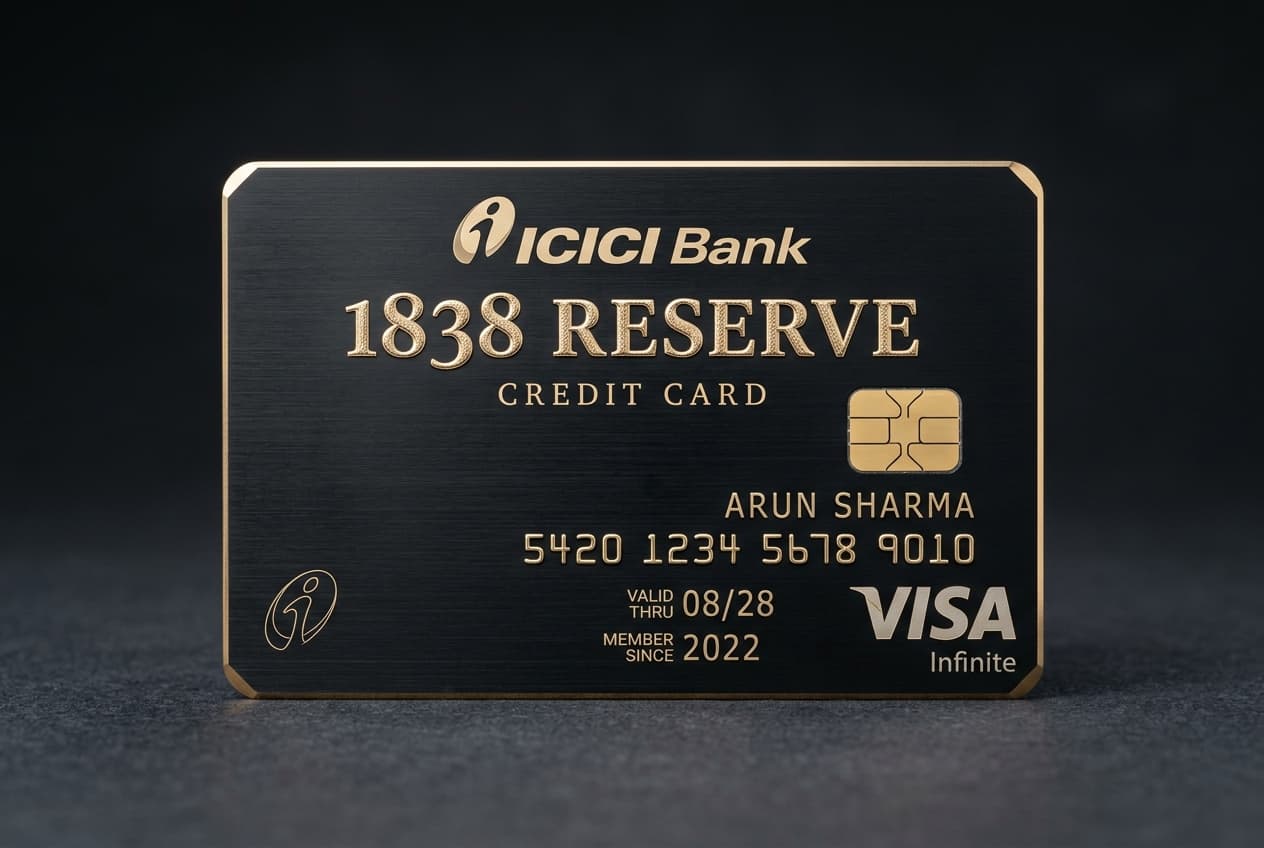
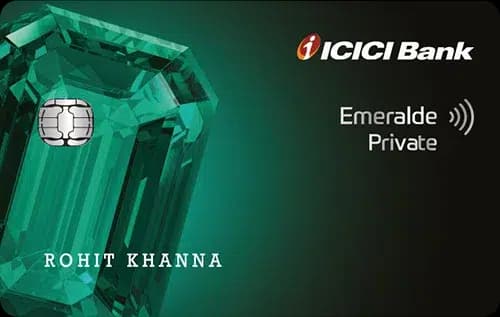
ICICI Bank Emeralde Private Metal Credit Card

Frequently Asked Questions
What is the annual fee of the ICICI 1838 Reserve Credit Card?
The annual fee is ₹1,75,000 plus GST. At the current 18% GST rate, that comes to ₹2,06,500 per year. There is currently no annual-fee waiver.
What is the joining fee for 1838 Reserve?
The joining fee is also ₹1,75,000 plus GST, or ₹2,06,500 at the current GST rate.
How much does 1838 Reserve earn on domestic spending?
ICICI Bank currently advertises 3% rewards on domestic spending, subject to reward caps, excluded transactions and applicable terms.
Does 1838 Reserve have zero forex markup?
Yes. ICICI Bank currently advertises 0% forex markup on international spending. Eligible international spending also earns an advertised 2% reward rate.
Does ICICI 1838 Reserve offer airport lounge access?
According to ICICI Bank's current MITC, standard domestic and international lounge access is not available on the 1838 Reserve. The card separately offers selected airport-related privileges such as fast-track security and quarterly international airport transfers.
What is the maximum reward cap?
ICICI Bank currently caps total earnings at 1,00,000 Reward Points per month. Utilities, telecom, government, tax, education and insurance collectively have a separate 10,000 Reward Point monthly cap. Fuel, rent, e-wallet and EMI transactions do not earn Reward Points.
Is 1838 Reserve better than Times Black?
For most rewards-focused users, probably not. 1838 Reserve has zero forex, higher domestic rewards and significantly deeper private-club/lifestyle access, but costs ₹1.75 lakh plus GST every year. Times Black costs ₹20,000 plus GST, offers unlimited domestic and international lounge access and can have its annual fee waived after qualifying spending. 1838 Reserve makes more sense only if you genuinely value its higher-end lifestyle membership package.
Who can apply for the ICICI 1838 Reserve?
The card is invitation-only. ICICI Bank asks interested customers to contact their Relationship Manager or register their interest. The bank has not published a simple income threshold that guarantees eligibility.
.jpeg&w=1920&q=75&dpl=dpl_EBjmh9fn32oNkjW6YHgb2w7iTowb)
Founder & Editor, CardRecommend
Founder & Editor of CardRecommend. Dedicated to researching credit card reward structures, fee waivers, airport lounge policies, and calculating real user value across Indian financial products.