Executive Summary
Roarbank is difficult to judge like a normal credit card because it isn't really sold as one. You get a RuPay credit card bundled with a compulsory Unity SFB savings account. We break down the real savings-first funding architecture, 20% cashback conditions, ₹2,500 monthly cap, and fees in 2026.
In This Guide
Roarbank is difficult to judge like a normal credit card because it isn't really sold as one.
When you sign up, you get a RuPay credit card issued by Unity Small Finance Bank and a linked Roarbank savings account with the same bank. Card purchases can use your savings automatically before leaving anything outstanding on the credit line. The card can also be linked to UPI apps for merchant QR payments on UPI.
Then there are the headline numbers: no joining or annual fee, cashback of up to 20%, savings interest of up to 7%, a credit limit advertised up to ₹3 lakh and as much as 62 days without credit-card interest.
Some of that is genuinely useful.
But the most important thing to understand before applying is that Roarbank does not give you a permanent 20% cashback card. You select two cashback categories, their rates can change every month, and the bank caps total cashback at ₹2,500 per calendar month.
There is also no option to take the Roarbank credit card while skipping the bundled savings account.
That makes the real question much more interesting than “Does this card give 20% cashback?”
Does combining savings, credit and UPI actually make everyday spending better?
Our answer: sometimes — particularly for someone new to credit — but it also creates complexity that someone looking for a simple UPI rewards card probably doesn't need.
Roarbank Credit Card: The Important Numbers
| Feature | Current position |
|---|---|
| Issuer | Unity Small Finance Bank |
| Network | RuPay |
| Joining fee | ₹0 |
| Annual/renewal fee | ₹0 |
| Savings account | Compulsory as part of Roarbank onboarding |
| Minimum balance | ₹0 |
| Credit limit | Advertised up to ₹3 lakh; actual limit is profile-based |
| Credit history | Roarbank says no previous credit history is required |
| Cashback | Up to 20% in two selected categories |
| Monthly cashback cap | ₹2,500 |
| Cashback redemption | Minimum ₹250 accumulated; current KFS requires card outstanding for withdrawal |
| Savings interest | 4.5% / 6% / 7% depending on balance slab |
| Interest-free credit period | 30–62 days, subject to full repayment conditions |
| Credit-card interest | 3.3% a month / 39.6% APR |
| Forex markup | 3.5% |
| FD required | No FD requirement disclosed |
| UPI | RuPay credit card can be linked for merchant UPI payments |
First: Is This a Savings Account or a Credit Card?
It's both, but not in the way the marketing can initially make it sound.
The Roarbank Savings Account is a Unity Small Finance Bank savings account. The Roarbank Credit Card is also issued by Unity Small Finance Bank. The two are linked as part of the same Roarbank relationship. Applying for the card also includes an application for the savings account.
You therefore shouldn't think of this as:
“I have a normal savings account, plus an unrelated credit card.”
The better mental model is:
One Roarbank setup with your own money sitting underneath a credit facility.
And the funding mechanism is the most unusual part.
When You Spend ₹1,000, Where Does the Money Actually Come From?
Roarbank describes the experience as spending from savings first and credit second.
Economically, that's correct.
Technically, there is an extra step.
The bank's MITC says transactions are first processed through the card's available credit facility. Roarbank then checks the linked savings account and automatically debits available savings in real time to settle the corresponding card amount. Only the portion that cannot be covered by savings remains outstanding as credit.
Take a ₹1,000 merchant payment.
Suppose you have:
Roarbank savings: ₹600
Available credit: sufficient to complete the purchase
Roarbank authorises the ₹1,000 card transaction. It then auto-debits the ₹600 sitting in savings and applies it against the card transaction.
Your result is effectively:
₹600 paid from your own money + ₹400 borrowed on the credit card.
You don't receive two separate transactions at the merchant.
Roarbank itself gives a similar example: a customer with ₹3,000 in savings and ₹4,000 of credit spends ₹1,500, which is fully covered from savings. A later ₹3,500 purchase, when only ₹1,500 remains in savings, uses that ₹1,500 and leaves ₹2,000 on the credit line.
What if your savings balance is ₹0?
Then the purchase can use the available credit limit, just like a conventional credit card.
What if savings covers the entire transaction?
Your savings is automatically debited and the corresponding credit utilisation is settled. Economically, you have spent your own money rather than borrowed.
Can you tell Roarbank to preserve your savings and use credit instead?
The current product documents don't describe such a switch for ordinary card transactions.
The savings-to-credit waterfall is automatic.
This matters more than it sounds. Someone who deliberately keeps ₹30,000 in Roarbank savings cannot normally make a ₹5,000 card purchase and choose to leave that ₹30,000 untouched while borrowing ₹5,000 simply because they want to maximise cash flow.
Roarbank is designed to consume the linked savings balance first.
What if money arrives later?
There is another unusual rule.
If you already have Roarbank credit-card outstanding and money subsequently arrives in your linked savings account, the bank's terms allow that money to be automatically debited towards the outstanding card amount, restoring the credit limit.
This is closer to an auto-sweeping savings-plus-credit facility than a conventional credit card sitting independently beside your bank account.
What Happens With UPI?
This is where the RuPay network becomes useful.
Roarbank says the credit card can be linked to third-party UPI apps, and its instructions specifically demonstrate Google Pay. Its payment material also refers to apps such as PhonePe and Paytm. NPCI permits RuPay credit cards to be linked to supported UPI apps including BHIM.
When you scan an eligible merchant QR and choose the Roarbank RuPay Credit Card as the payment source, it is a credit-card-on-UPI transaction.
The same Roarbank funding architecture then applies: available savings can automatically settle the transaction, with any uncovered portion remaining on credit.
That doesn't turn the RuPay credit card into a general-purpose UPI bank account.
NPCI does not permit ordinary person-to-person transfers, P2P merchant-like transfers, cash withdrawal at merchants or card-to-card transfers using a RuPay credit card on UPI.
Roarbank's own MITC likewise says transfers to non-merchants can be made only from the savings balance.
So:
Merchant QR → RuPay credit card can be used.
Sending ₹1,000 to a friend's personal UPI ID → credit line cannot fund it; this requires your own bank-account funds.
Roarbank's savings-account terms permit digital transfers through Roarbank and third-party channels, but the public material is much clearer about linking the credit card to UPI apps than it is about setting up the Roar savings account as an ordinary third-party UPI bank account.
We therefore wouldn't promise seamless savings-account UPI linking across every third-party app purely from the current documentation.
Now the Big Claim: Is Roarbank Really a 20% Cashback Card?
Not in the way that phrase normally sounds.
Roarbank's current KFS allows users to select two cashback categories. Examples given by the bank include groceries, fuel, restaurants, conveyance and entertainment.
The important part is this:
The category rates can change from month to month.
They may also be altered around seasonal or promotional events. Your category selection resets each month. Once selected, it normally stays locked for that month, although Roarbank says support can change it if you haven't yet transacted in the selected categories.
That means there is no permanent public rule saying:
Groceries = 5%
Dining = 10%
Movies = 20%
The bank currently does not publish a fixed long-term table like that.
The rate available in your app for that month is what matters.
That substantially changes how we would value this card.
The ₹2,500 Cashback Cap Matters More Than 20%
Total cashback is capped at ₹2,500 per calendar month.
If you genuinely receive a 20% category and all your spending qualifies, you need only:
₹12,500 × 20% = ₹2,500
to exhaust the monthly cashback allowance.
The equivalent spend needed to hit ₹2,500 at different rates looks like this:
| Cashback rate available | Eligible spend needed for ₹2,500 |
|---|---|
| 20% | ₹12,500 |
| 10% | ₹25,000 |
| 5% | ₹50,000 |
| 2% | ₹1,25,000 |
| 1% | ₹2,50,000 |
This illustrates why knowing that a card offers “up to 20%” isn't enough.
At 20%, the cap is generous.
At 1%, the same ₹2,500 cap is practically irrelevant to an ordinary spender.
And Roarbank doesn't guarantee that you'll receive a useful 20% category every month.
Does Spending From Savings Still Earn Cashback?
Yes — and this is one of the strongest parts of the product design.
The current KFS explicitly says the cashback percentage is the same regardless of whether the transaction is ultimately funded using the customer's own savings or the credit facility.
So you don't have to borrow money simply to receive Roarbank cashback.
If a ₹2,000 eligible restaurant purchase is entirely settled using money from the linked savings account, it can still qualify for the selected restaurant cashback rate.
That's useful because it separates rewards from the decision to carry debt.
What Doesn't Earn Cashback?
The current KFS excludes gift cards and stored-value instruments, wallet/card top-ups and transactions that the bank considers inconsistent with genuine retail use, including certain gaming-type activity or implausibly large transactions for categories such as fuel, groceries or restaurants. Merchant classification is determined using MCCs.
There is no separately published universal cashback rate for everything outside your two selected categories in the latest KFS.
There is also an awkward documentation discrepancy worth knowing about.
An older Roarbank MITC described 1% cashback on utility and mobile top-up transactions irrespective of the selected categories. The newer September 2026 KFS instead says customers who haven't selected their categories are not eligible for cashback until they do so, and its cashback section doesn't repeat that older guaranteed 1% benefit.
We would follow the newer KFS and not value the card assuming a guaranteed 1% utility/mobile return unless Roarbank confirms it in your current app.
Utilities, fuel and wallet transactions can also attract separate fees after specified monthly thresholds, which can reduce their effective reward.
Does Cashback Automatically Reduce the Bill?
The public product page says earned cashback is adjusted against the card balance.
The current KFS is more specific: cashback accumulates, and a user can withdraw it to the Roarbank card once the accumulated balance reaches ₹250. It also says withdrawal isn't available when there is no outstanding card balance.
For practical purposes, we'd rely on the newer KFS rather than interpret this as instant automatic statement credit after every transaction.
No ordinary fixed cashback-expiry period is clearly disclosed in the current KFS.
How Much Cashback Can a Normal User Actually Earn?
This is one area where giving readers a precise ₹ figure would be misleading.
Roarbank's rates are dynamic and aren't published as a permanent public category table. We can't responsibly take ₹10,000, ₹20,000 and ₹40,000 monthly spends and pretend that groceries will always earn X%, dining Y% and fuel Z%.
What we can calculate is how the headline behaves when only part of your total spending lands in a high-rate category.
Suppose — purely as an illustration — that your app offers a 20% rate on a category you genuinely use:
| Total monthly spending | Spend qualifying at 20% | Cashback | Effective return across all spending |
|---|---|---|---|
| ₹10,000 | ₹3,000 | ₹600 | 6.0% |
| ₹20,000 | ₹5,000 | ₹1,000 | 5.0% |
| ₹40,000 | ₹12,500 | ₹2,500 cap | 6.25% |
Those are not promised Roarbank returns. They demonstrate why the words “up to” matter.
If the month's useful categories are only paying 5%, the same eligible spending produces one-quarter as much cashback.
And if your largest expenses don't fall into the two categories you selected, your effective return across total spending can be much lower than the headline rate.
A recent community report even showed one user's in-app category rates below the advertised maximum for that month. That's anecdotal rather than an official tariff, but it reinforces the important point: apply based on the monthly-category system, not on the assumption that 20% will always be available.
The Roarbank Savings Account: Is “Up to 7%” Good?
The savings account is genuinely zero-balance. Roarbank's savings MITC says there is currently no minimum-balance requirement, and interest is calculated on the daily closing balance and paid monthly.
The Roarbank-specific tariff currently lists:
| Balance slab | Interest rate |
|---|---|
| Up to ₹1 lakh | 4.50% p.a. |
| Above ₹1 lakh up to ₹10 lakh | 6.00% p.a. |
| Above ₹10 lakh | 7.00% p.a. |
So the marketing phrase “up to 7%” should not be interpreted as a ₹20,000 or ₹50,000 Roar balance earning 7%.
The 7% headline belongs to the above-₹10 lakh slab.
The account is also more limited than a conventional full-service savings account. Roarbank doesn't issue a separate debit card: the combined Roar card provides ATM access. The MITC says there is no net-banking facility for this account, with digital servicing centred around the Roarbank app and permitted digital transfer channels.
Domestic withdrawal of your own savings through the card is currently listed at nil charge, while taking cash from the credit facility is a different matter and carries a 3.5% charge.
Unity Small Finance Bank is registered with DICGC, so eligible deposits receive the standard deposit-insurance protection of up to ₹5 lakh under DICGC rules.
One Closure Rule You Should Know
The bundling doesn't disappear when you want to leave.
Roarbank's savings terms say the savings account can be closed only after the Roarbank credit card has been fully closed. The credit-card terms also contemplate closure of the linked savings relationship when the card is closed.
That's another reason not to view the savings account as an optional cashback wallet sitting beside an independent card.
The two products are deliberately tied together.
Is Roarbank Really Lifetime Free?
Yes, under the current KFS.
Joining fee: Nil
Annual membership fee: Nil
Renewal fee: Nil
There is no annual-spending threshold required to make the card free.
“Lifetime free” obviously doesn't mean every possible card charge is zero.
The important current charges include:
| Charge | Current rate |
|---|---|
| Credit-card interest | 3.3% per month / 39.6% APR |
| Forex markup | 3.5% |
| Credit cash withdrawal | 3.5% |
| Late fee, credit limit below ₹5,000 | ₹100 |
| Late fee, credit limit ₹5,000+ | 2% of amount due, minimum ₹750, maximum ₹1,200 |
| Rent transactions | 1% |
| EMI interest | 1% fixed per month on principal |
| Over-limit | Facility not available |
| GST | 18% on applicable fees, interest, penalties and charges |
The revised late-payment pricing applies from 1 October 2026.
There are also current fee rules for certain high monthly utility, fuel and wallet-loading activity, so those shouldn't automatically be treated as free routes to cashback.
What Does “Up to 62 Days Interest-Free” Actually Mean?
This isn't 62 days of free credit after every purchase.
Roarbank's current KFS states an interest-free period of 30 to 62 days, including a three-day grace period, depending on when a transaction occurs relative to the billing cycle and payment due date.
A purchase made near the beginning of a billing cycle can get close to the maximum period.
A purchase much closer to statement generation gets substantially less.
More importantly, the interest-free facility depends on previous outstanding dues being paid in full.
If you revolve a balance instead of paying the total amount due, the normal interest-free treatment can be suspended.
So 62 days is a legitimate maximum, but it isn't a reason by itself to choose Roarbank over another credit card.
Pay the statement in full and treat 62 days as a cash-flow feature, not free long-term borrowing.
Can Someone With No CIBIL History Get Roarbank?
This is one of the more interesting use cases.
Roarbank explicitly markets the card as requiring no previous credit history, and says customers without sufficient credit history can receive a starter credit limit that may grow with responsible repayment. (Compare with other starter credit cards or FD-backed credit cards).
The current card FAQ states that Indian citizens aged 21 to 60, including students within that age range, can apply. Application involves PAN, income information and KYC.
Roarbank does not publish a guaranteed minimum income requirement on the material we reviewed.
That does not mean approval or a particular limit is guaranteed.
The bank determines the available credit limit using credit and other internal assessments.
The advertised maximum is currently ₹3 lakh.
And despite the bundled savings account, this should not be described as an FD-backed credit card.
Roarbank's onboarding material doesn't require you to lock an FD to receive the credit facility. Putting ₹20,000 into the Roar savings account gives the payment system ₹20,000 of your own money to use; it doesn't automatically turn that money into ₹20,000 of additional bank-issued credit.
Is Roarbank Good for UPI?
Yes — but the reason isn't simply that it is RuPay.
For a new-to-credit user, having one product that can handle savings-funded purchases today and automatically use credit if savings is insufficient is genuinely convenient.
Cashback continuing to apply even when your own savings pays for the purchase is also a clever feature.
And linking a RuPay credit card to Google Pay, PhonePe, Paytm or another supported UPI app means small merchant transactions don't require carrying the physical card.
But if your only goal is:
“I want the best simple reward every time I scan a merchant QR”
Roarbank becomes harder to recommend.
That's because its advantage depends heavily on which two categories and rates happen to appear in a given month.
Roarbank vs Simpler UPI Credit-Card Alternatives
| Product | UPI proposition | Main trade-off | Action |
|---|---|---|---|
| Currently advertises 1.5% flat cashback on eligible Scan & Pay transactions; higher rewards available with paid Kiwi Neon | Simpler baseline, but highest rewards require paid programme | ||
| Newly launched with up to 2% rewards on eligible Paytm UPI payments, plus higher Paytm ecosystem rewards | More Paytm-centric (AU Small Finance Bank) | ||
| Slice UPI Credit Card | Advertises up to 3% cashback on Scan & Pay | “Up to” structure also needs scrutiny rather than assuming 3% everywhere | Compare → |
For someone interested only in predictable everyday UPI rewards, we currently prefer the simplicity of Kiwi's lifetime-free 1.5% Scan & Pay proposition over building a payment routine around Roarbank's changing monthly categories. (See our best RuPay credit cards for UPI guide for the full category ranking).
Roarbank can absolutely beat 1.5% during a good month when one of its high-rate categories matches spending you were already going to make.
It just can't be assumed to do so every month.
What About App Reliability and Customer Support?
This is worth discussing carefully because Roarbank is unusually dependent on software.
If a normal credit-card app is temporarily annoying, you can often still use your separate bank account normally.
Roarbank puts savings, credit, cashback and much of the servicing experience into the same relationship.
We found multiple user reports during 2026 involving problems such as UPI/card linking, savings-fund access, balance display, transaction reversals and difficulty getting support. One February Reddit report described trouble accessing savings during a period that commenters associated with a Unity system upgrade; another discussion concerned the correct Unity/RuPay identification when linking the card.
These are user reports, not evidence that every customer experiences the same problems or that those issues remain unresolved today.
The app has continued receiving updates, and its aggregate ratings are much broader than individual complaints.
Still, software reliability matters more here than on a conventional standalone credit card because your own savings can also sit inside the Roarbank setup.
Who Should Get the Roarbank Credit Card?
Roarbank makes the most sense for someone new to credit who wants a genuine lifetime-free RuPay card, doesn't mind opening a new zero-balance savings account and is willing to check the cashback categories every month.
It becomes especially interesting if the app regularly gives you high cashback rates in categories where you already spend.
Using savings to settle purchases immediately also reduces the temptation to treat the available credit limit as extra income.
Who Should Avoid It?
We wouldn't choose Roarbank if you already have a primary bank account you like and don't want another savings relationship simply to obtain a credit card.
We also wouldn't choose it purely because an advertisement says “20% cashback.”
Someone who wants a predictable UPI reward rate without selecting changing categories is likely to find a conventional RuPay cashback setup easier.
And if you deliberately use credit cards to preserve money in your bank account until the statement due date, Roarbank's savings-first auto-debit architecture works against that strategy.
The Biggest Catch Isn't a Hidden Annual Fee
There isn't one.
The bigger catch is that two of Roarbank's most attractive numbers are conditional headline numbers.
“Up to 20% cashback” depends on the categories and rates available that month, and total cashback stops at ₹2,500.
“Up to 7% savings interest” requires reaching the applicable high-balance slab; smaller balances earn the lower Roarbank savings rates.
Then there is the forced product bundling.
The account is zero-balance, so keeping it open doesn't create the same burden as maintaining a high minimum balance. But it is still another bank account, another KYC relationship and another piece of financial infrastructure tied to your card.
Explore Lifetime Free & RuPay UPI Cards
Research India's top lifetime-free RuPay credit cards with transparent rewards and zero compulsory savings account bundling.
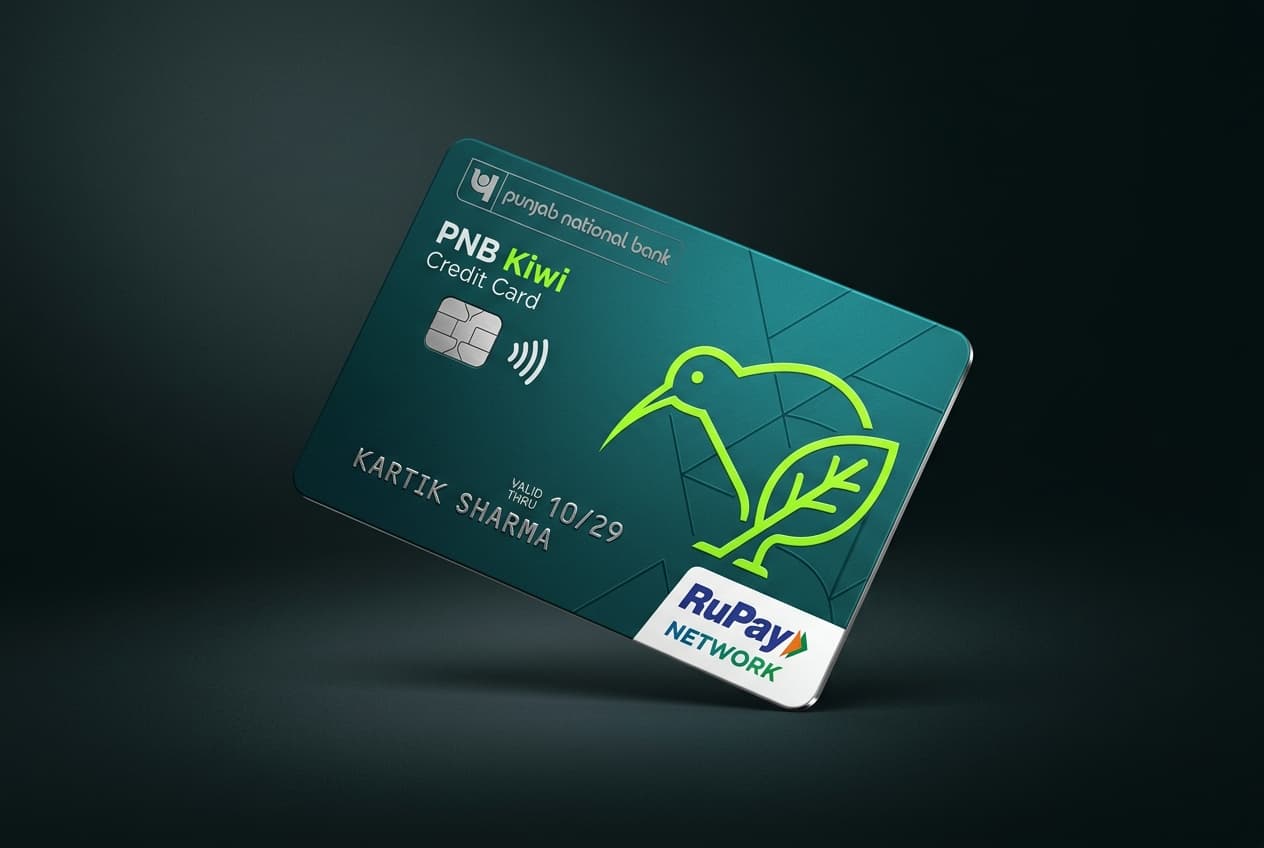
Top UPI Alternative: PNB Kiwi Credit Card
Prefer flat 1.5% everyday cashback on Scan & Pay without changing monthly categories or opening a mandatory bank account? Explore PNB Kiwi.
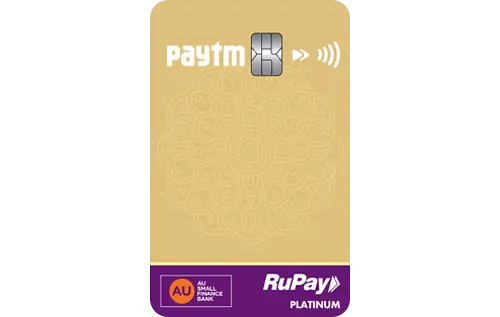
Ecosystem Alternative: Paytm AU SFB Credit Card
AU Small Finance Bank and Paytm offer dedicated merchant rewards and up to 2% cashback on eligible Paytm UPI payments.
CardRecommend Decision Summary: Roarbank vs Alternatives
Choose Roarbank if you want a zero-FD credit starter with automatic savings-first payments. Pick PNB Kiwi or Axis KWIK for straightforward, predictable UPI cashbacks.
CardRecommend Verdict
Roarbank is more interesting than a generic lifetime-free RuPay card, but not because of the 20% cashback headline.
Its best idea is actually the funding architecture.
You can keep your own money in a linked savings account, spend through one RuPay card or merchant UPI interface, continue earning eligible cashback on savings-funded transactions, and automatically fall back on credit when savings isn't enough.
For a first-time credit-card user, that can work surprisingly well. The card is genuinely lifetime free under the current KFS, requires no FD, openly accepts applicants without prior credit history, and gives them a route into RuPay UPI without forcing them to borrow on every transaction.
But Roarbank has also made a credit card more complicated.
The savings account is compulsory. Savings are automatically swept against card usage. The two accounts are linked even during closure. And most importantly, the reward programme is too dynamic for us to value Roarbank as a permanent “20% cashback card.”
We'd get Roarbank if we were new to credit, comfortable with the bundled Unity savings account and willing to optimise the two cashback categories every month.
We wouldn't get it purely for UPI cashback. For that use case, a simpler lifetime-free product such as a Kiwi-linked RuPay card with a predictable everyday Scan & Pay rate is currently easier to understand and optimise.
Roarbank's 2-in-1 model does solve a real problem.
It just doesn't eliminate the need to read the fine print every month.
Recommended Alternatives
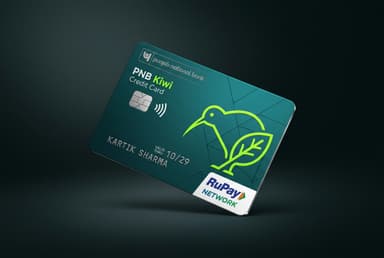
PNB Kiwi Credit Card
Daily digital spenders, mobile UPI QR payments, and consumers looking for a lifetime free RuPay credit card with direct cashback conversion.

Axis Bank KWIK RuPay Credit Card
UPI Power Users, Small-Ticket Daily Spenders & QR Code Cashback Seekers
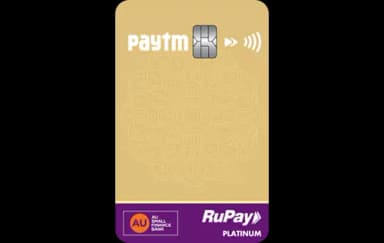
Paytm AU Credit Card
Paytm UPI spends, Paytm Travel flight bookings, and Paytm Gold
Cards Discussed in This Review

Frequently Asked Questions
Is Roarbank a savings account or a credit card?
It is both. When you sign up, you get a RuPay credit card issued by Unity Small Finance Bank and a linked zero-balance savings account with the same bank. Applying for the card includes an application for the bundled savings account.
When I spend ₹1,000 on Roarbank, where does the money come from?
Roarbank authorises the transaction through the credit facility, then automatically debits available savings in real time to settle the corresponding card amount. Only the portion that cannot be covered by savings remains outstanding as credit.
What happens if my Roarbank savings balance is ₹0?
If your savings balance is ₹0, the purchase uses the available credit line just like a conventional credit card.
What if savings covers the entire Roarbank transaction?
Your savings is automatically debited and the corresponding credit utilisation is settled immediately. Economically, you have spent your own money rather than borrowed.
Can I tell Roarbank to preserve my savings and use credit instead?
No. Current product terms do not describe a switch to override the automatic waterfall. Roarbank is designed to consume available linked savings first before leaving anything on credit.
What happens if money arrives in Roarbank savings after a credit purchase?
If you already have credit-card dues and funds subsequently arrive in your linked savings account, Roarbank terms permit that money to be automatically debited towards the outstanding card balance, restoring your available limit.
Can Roarbank RuPay credit card be linked to UPI apps?
Yes. The RuPay credit card can be linked to third-party UPI apps including Google Pay, PhonePe, and Paytm for merchant QR payments. However, NPCI rules prohibit person-to-person (P2P) transfers, cash withdrawals, and card-to-card payments from a credit line on UPI.
Is Roarbank really a 20% cashback credit card?
Not permanently. Roarbank lets users pick two cashback categories, but the categories and rates can change every month. There is no permanent, fixed public tariff guaranteeing 20% on any category.
What is the monthly cashback cap on Roarbank?
Total cashback is strictly capped at ₹2,500 per calendar month across all eligible spending. At a 20% rate, ₹12,500 of eligible spending exhausts the entire monthly allowance.
Does spending from savings still earn Roarbank cashback?
Yes. The current KFS explicitly states that the cashback percentage is identical regardless of whether the purchase is settled using savings or funded through the credit facility.
What transactions do not earn Roarbank cashback?
Cashback excludes gift cards, stored-value instruments, wallet/card top-ups, transactions inconsistent with retail use, and certain gaming activity. Customers who have not selected their monthly categories are not eligible for cashback until they do so.
Does Roarbank cashback automatically reduce the statement bill?
Cashback accumulates and can be withdrawn to the Roarbank card once the balance reaches a minimum of ₹250, provided there is an outstanding card balance.
How much interest does the Roarbank savings account pay?
Roarbank pays 4.50% p.a. on balances up to ₹1 lakh, 6.00% p.a. on balances above ₹1 lakh up to ₹10 lakh, and 7.00% p.a. only on the portion above ₹10 lakh. Smaller everyday balances do not earn 7%.
Can I close the Roarbank savings account and keep the credit card?
No. Roarbank savings terms specify that the savings account can only be closed after the credit card has been fully closed. The two products are permanently bundled.
Is Roarbank truly lifetime free?
Yes. Under the current KFS, the joining fee is ₹0, the annual fee is ₹0, and the renewal fee is ₹0 with no minimum annual spend threshold required. Standard charges apply for revolving interest (39.6% APR), forex markup (3.5%), and late payments.
What does up to 62 days interest-free mean on Roarbank?
Depending on when a purchase occurs relative to the billing cycle and grace period, the interest-free window ranges from 30 to 62 days. This applies only if previous statement dues are paid in full.
Can someone with no credit history get the Roarbank card?
Yes. Roarbank explicitly markets the card as requiring no prior credit history. Applicants aged 21–60 can apply with PAN, income info, and KYC to receive a profile-based starter credit limit up to ₹3 lakh.
Is Roarbank an FD-backed credit card?
No. Roarbank does not require a fixed deposit. Putting money into the bundled zero-balance savings account provides liquid funds for the auto-debit waterfall, but does not lock an FD.
Who should get Roarbank and who should avoid it?
Roarbank is best for first-time credit users wanting a lifetime-free RuPay card with built-in savings-first safeguards and dynamic category rewards. Avoid it if you dislike opening another bank account or prefer flat, predictable UPI cashback like PNB Kiwi (1.5% Scan & Pay).

Founder & Editor, CardRecommend
Founder & Editor of CardRecommend. Dedicated to researching credit card reward structures, fee waivers, airport lounge policies, and calculating real user value across Indian financial products.